
SGI-320 is a hot extractive emission monitoring system: a probe with auto-blowback, heated line, Peltier conditioner and analysers for NO, SO2, CO, CO2 and O2. It suits samples with SO2, NO and CO below 1000 ppm and excludes HCl, HF and H2S.
The measurement and why it matters
An extractive emission monitoring system pulls gas from the stack and delivers it to analysers. Between the stack and the analyser the gas must stay hot enough to avoid condensation, then be cooled and dried in a controlled way so that soluble gases such as SO2 and NO2 are not lost. Most failures of such systems are in the sampling, not the analysers.
SGI-320 is built on the i-Cons approach. It controls cyclic blowback of the probe filter, with an automatic blowback if sample flow fails. It controls the heated hose temperature using a Pt100 input. A Peltier cooler with a PTFE heat exchanger and an inbuilt condensate sensor removes moisture, and the sample pump stops during blowback, calibration, condensate detection and hardware fault. The system keeps records of faults and of consumable use, and prompts for replacement.
The measurement uses NDIR, paramagnetic and electrochemical techniques. Ranges per the SGI-320 datasheet are 0 to 200 or 0 to 1000 ppm for NO, SO2 and CO, 0 to 20 percent for CO2 by NDIR, and 0 to 25 percent for O2. An optional NOx converter and remote auto-calibration are available.
Models and ranges
| Model | Measures | Range | Sensor and notes |
|---|---|---|---|
| NO | Nitric oxide | 0 to 200 or 0 to 1000 ppm | Per SGI-320 datasheet |
| SO2 | Sulphur dioxide | 0 to 200 or 0 to 1000 ppm | Per SGI-320 datasheet |
| CO | Carbon monoxide | 0 to 200 or 0 to 1000 ppm | Per SGI-320 datasheet |
| CO2 | Carbon dioxide | 0 to 20 % | NDIR |
| O2 | Oxygen | 0 to 25 % | Paramagnetic or electrochemical |
Process notes
Boilers, HRSG, incinerators and engine exhaust
Each source has its own dust, moisture and temperature. A coal boiler needs a probe that survives dust, a gas engine needs a sample line that handles pulsation, and an incinerator may need materials chosen for chlorinated gases. Send the source details and we will configure the probe, line and conditioner.
Maintenance and diagnostics
SGI-320 detects a choked probe filter and starts a blowback to clear it. When it detects condensate carryover it removes the water before restarting the sample. It tracks the health of the system and shuts it down safely if a component fails, so a fault does not damage the analysers.
Sampling and installation
- Not suitable for samples containing HCl, HF, H2S or other highly corrosive, toxic or flammable gases.
- Intended for samples where SO2, NO and CO are below 1000 ppm at the tapping point.
- Send the sample composition for an application check before ordering.
- We make no claim of statutory approval for emission reporting; send your regulatory requirement and we will say what the system meets.
Send us your process data
The same pre-order design inputs our engineers design from, online. Fill in what you know, leave the rest. Your draft saves as you go, and you can print or send it when ready.
What the data sheet asks for
Send what you have and we will ask for the rest.
- The gases to measure, the range, and the accuracy you need
- Background gases and their typical composition
- Sample temperature, pressure and dew point at the tapping point
- Dust level, and whether the gas carries tar, oil or condensable vapour
- Process connection and, for ducts, the duct diameter
- Where the sample vents to, and at what pressure
- Area classification of the tapping point and of the analyser location, and the IP protection needed
- Distance between the tapping point and the analyser
- Outputs you need: 4-20 mA, dual range, relays, Modbus RTU
- Calibration approach, calibration gas available, and whether blowback is required
- Utilities at site: power supply, instrument air, nitrogen, steam and cooling water, and the ambient temperature range
- Which pollutants you must report, and your regulatory requirement
Recommended Sarvesh products
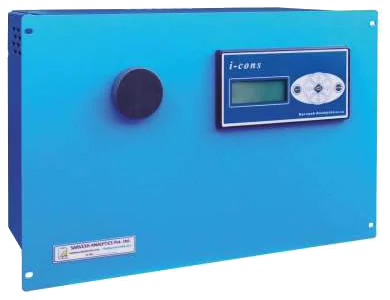
i-Cons
The conditioner at the heart of SGI-320.
View i-Cons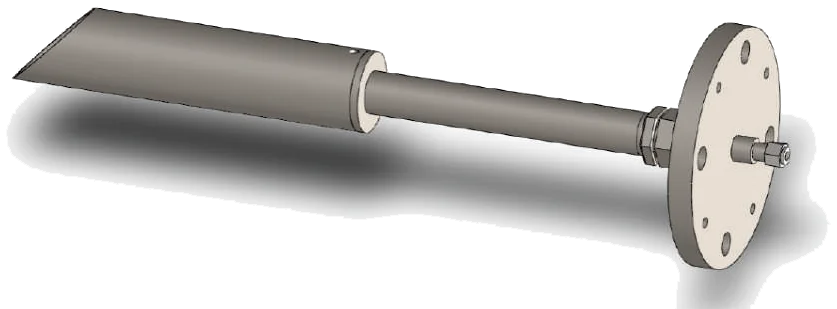
SP and SRP sample probes
Heated probes with blowback.
View SP and SRP sample probes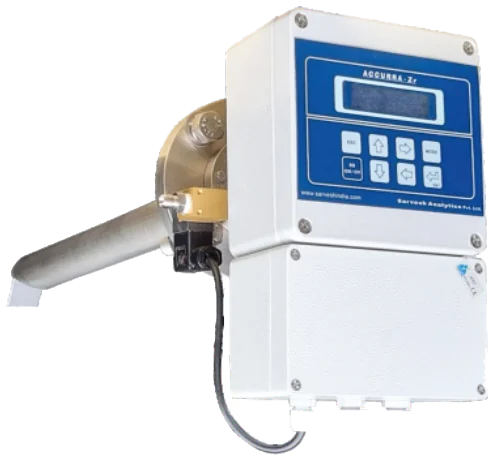
ACCURRA-Zr
In-situ oxygen where extraction is not needed.
View ACCURRA-ZrFrequently asked questions
Is SGI-320 approved for statutory emission reporting?
We make no statutory approval claim. Send your regulatory requirement and we will state what the system meets.
What gases can it measure?
NO, SO2 and CO to 200 or 1000 ppm, CO2 to 20 percent and O2 to 25 percent, per the datasheet. An optional NOx converter is available.
Where can I not use it?
On samples containing HCl, HF, H2S or other highly corrosive, toxic or flammable gases.
How long does commissioning take?
The system arrives as a complete assembly, which cuts site work. The time depends on your installation.
More in Power, boilers and emissions
- Boiler and furnace oxygen (flue gas)
- Thermal oxidiser and scrubber efficiency
- Cement kiln and precalciner O2 and CO
- Coal mill inerting and fire protection
- Waste-heat recovery boilers and kiln WHRS
- Biomass, bagasse and rice-husk boiler combustion trim
- Thermic-fluid heaters and hot-air generators
- Glass melting furnace combustion trim
- Boiler and burner factory test benches
- All power, boilers and emissions applications
- Browse analysers by gas