
ACCURRA-TCD measures helium in a binary mixture by thermal conductivity, with no reference gas. Helium conducts heat about six times better than nitrogen, so the signal is strong. It cannot separate helium from hydrogen in one analyser.
Specifications
| Item | Specification | Notes |
|---|---|---|
| Gas | Helium in a binary mixture | |
| Sensor | Platinum thermal conductivity | |
| Repeatability | Below 1 % of full scale | Linearity below 1 % of range |
| Errors and drift | Below 1 % of full scale per week | |
| Response time | T90 below 10 s at 0.6 LPM | |
| Reference gas | Not required |
From the current Sarvesh product datasheets and company profile. Specifications may change without notice as products improve. The final responsibility to check that a product meets the process and analyser requirement remains with the customer.
Key features
- Binary helium measurement in nitrogen, air or argon
- Isolated 4-20 mA, programmable alarms and Modbus RTU
- No reference gas
How it works
Helium is the second most thermally conductive gas after hydrogen, about six times better than nitrogen. A thermal conductivity detector is therefore very sensitive to helium, and it is the standard way to measure helium purity and helium concentration in binary mixtures.
Helium is expensive, so purity checks at filling, in welding and leak-test supply, and in recovery systems pay for themselves. The same analyser can read helium in air or nitrogen as a diluent, which is useful when helium is used as a tracer.
Requirements and limits
- Binary mixtures only; a varying third component shifts the reading.
On site: utilities and calibration gases
What to have ready at your plant before installation and commissioning.
| Item | Requirement | Notes |
|---|---|---|
| Power at the analyser | 100 to 240 V AC, 50/60 Hz, 45 W | |
| Zero gas | Zero-grade nitrogen, 99.999 % | 10 litre cylinder with regulator |
| Span gas | The measured gas at zero grade, 99.999 %: hydrogen, helium, argon or nitrous oxide | 10 litre cylinder with regulator |
| Sample at the analyser | 2 to 10 psig, 0.6 LPM, 5 to 40 °C, dust below 3 micron | Pressure and flow regulated by the user |
| Mounting | 19 inch rack or panel, in a safe area |
Selection guidance
Choose ACCURRA-TCD for helium purity and helium in nitrogen, air or argon. Helium and hydrogen conduct heat similarly, so they cannot be told apart in a single analyser; tell us if both can be present.
Applications
Application pages where this is part of the recommended solution:
- Gas purity certification and cylinder filling
- Welding and laser gas mixtures
- Aerospace, nuclear and research laboratories
Compatible products
ACCURRA-TCD
Thermal conductivity analyser for binary mixtures of H2, He, Ar, N2 and others, with no reference gas.
View ACCURRA-TCD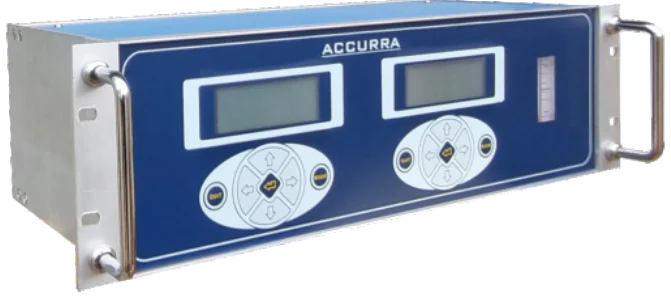
ACCURRA-S
Online analyser for trace, percent and purity O2, CO, CO2, CH4 and dew point; can measure two gases from one sample.
View ACCURRA-SHeadline filters
Particulate, coalescing and PTFE membrane filters from Headline Filters, UK, for analyser protection.
View Headline filtersFrequently asked questions
Does it need a reference gas?
No.
Can I measure helium and hydrogen together?
They have similar conductivity, so one TCD cannot separate them. Tell us if both can be present.
What accuracy?
Repeatability below 1 percent of full scale, linearity below 1 percent of range, and errors and drift below 1 percent of full scale per week.
Which backgrounds?
Nitrogen, air or argon, with ranges of 0 to 100, 0 to 3 or 97 to 100 percent helium.