
Nitrogen blanketing is monitored with ACCURRA-S 3015 for ppm oxygen (0 to 1000 ppm) or 3030 and 3130 for percent (0 to 25 %). In hazardous areas use ACCURRA-Hz or INFINITY-Tx, a loop-powered transmitter that works on very low flow and pressure.
The measurement and why it matters
Active pharmaceutical ingredients, intermediates and flammable solvents are sensitive to oxygen. Uncontrolled ingress can oxidise the product, reducing efficacy and forming impurities, and can create a flammable atmosphere with volatile solvents. Continuous oxygen monitoring in the nitrogen or argon blanket is the control.
For ppm-level blanketing, ACCURRA-S 3015 reads trace oxygen from 0 to 1000 ppm. Its alarm relays can drive your DCS to trigger a purge or process hold. Reading oxygen continuously also lets you use nitrogen only when needed, which reduces nitrogen consumption. For percent-level inerting, 3030 or 3130 cover 0 to 25 and 0 to 100 percent.
In hazardous areas, INFINITY-Tx is a loop-powered two-wire transmitter with an inbuilt filter and scrubber, and works on very low flow or pressure samples, which suits headspace and vent points. ACCURRA-Hz is the panel analyser where more features are needed.
Models and ranges
| Model | Measures | Range | Sensor and notes |
|---|---|---|---|
| 3015 | Oxygen ppm | 0 to 1000 ppm | ACCURRA-S, electrochemical |
| 3030 / 3130 | Oxygen percent | 0 to 25 % | ACCURRA-S |
| ACCURRA-Hz | Oxygen, hazardous area | Percent and trace | Gas Group IIC, Zone 1 and 2, T6 |
| INFINITY-Tx | Oxygen transmitter | Percent O2 | Loop powered, inbuilt filter and scrubber |
Process notes
Lyophilisation and vial headspace
After a freeze-drying cycle, vials are back-filled with dry nitrogen. Residual oxygen or moisture degrades the lyophilised cake over shelf life. A dual-channel ACCURRA-S, 3015 plus M015, measures both contaminants in one unit, with M015 reading dew point down to minus 100 C. The sensor bypass valve isolates the trace sensors during start-up or line purging, so they stay quick and long-lived. The optional internal sample pump supports offline checks of a sample taken from a vial headspace.
Nitrogen generators as the source
Where the plant makes its own nitrogen, the generator outlet needs a purity check, since a failing generator feeds every blanketed vessel. A purity oxygen analyser at the outlet acts as the gatekeeper, with calibration history for audits.
Nitrogen blanketing
Blanketing holds a small positive pressure of nitrogen above a liquid in a tank so that air cannot enter as the tank breathes. It protects flammable solvents from ignition and sensitive products from oxidation. The nitrogen is supplied through a regulator and consumed as the level moves and temperature swings.
Oxygen in the headspace tells you whether the blanket is working. An analyser with alarms warns when the oxygen has climbed, for instance after a manway was opened, and can prompt a purge. INFINITY-Tx or an ACCURRA-Hz panel analyser suit solvent areas, depending on how many tanks you want on one instrument.
Select the range from your alarm points. If you alarm at a few percent oxygen, a 0 to 25 % range gives good resolution, while sensitive products may want a ppm range. Check the analyser against air, which reads about 20.9 % oxygen, to confirm it is working, then against a span gas close to your alarm value.
Reactor inerting and safety
Inerting replaces air in a reactor, vessel or tank with nitrogen or another inert gas so that a flammable vapour cannot burn. The limiting oxygen concentration, the level below which a mixture will not propagate a flame, depends on the fuel and inert gas. For many organic vapours in nitrogen it sits somewhere between about 8 and 12 % oxygen, and plants keep a margin below it.
That margin is only real if someone measures it. An oxygen analyser on the headspace, the vent or the nitrogen supply line closes the loop, and a relay output can prompt purge, interlock charging or trip a heater. INFINITY-Tx suits remote vessels, where a loop-powered two-wire transmitter saves long sample lines.
Sampling and installation
- INFINITY-Tx has an inbuilt filter and scrubber and works on very low flow or pressure samples, which suits headspace and vent points.
- Take the sample from the vent or headspace, not a dead leg.
- Protect the analyser from vapour carry-over with a filter.
ACCURRA-S sample specification: non-corrosive, non-toxic, non-flammable, non-condensing and dry, free from entrained oil; sample pressure 2 to 10 psig, regulated externally; flow about 1 LPM; dust below 3 micron. Where your sample differs, we design conditioning around it.
Send us your process data
The same pre-order design inputs our engineers design from, online. Fill in what you know, leave the rest. Your draft saves as you go, and you can print or send it when ready.
What the data sheet asks for
Send what you have and we will ask for the rest.
- The gases to measure, the range, and the accuracy you need
- Background gases and their typical composition
- Sample temperature, pressure and dew point at the tapping point
- Dust level, and whether the gas carries tar, oil or condensable vapour
- Process connection and, for ducts, the duct diameter
- Where the sample vents to, and at what pressure
- Area classification of the tapping point and of the analyser location, and the IP protection needed
- Distance between the tapping point and the analyser
- Outputs you need: 4-20 mA, dual range, relays, Modbus RTU
- Calibration approach, calibration gas available, and whether blowback is required
- Utilities at site: power supply, instrument air, nitrogen, steam and cooling water, and the ambient temperature range
- Vessel type, solvent, headspace pressure and the oxygen limit
Recommended Sarvesh products
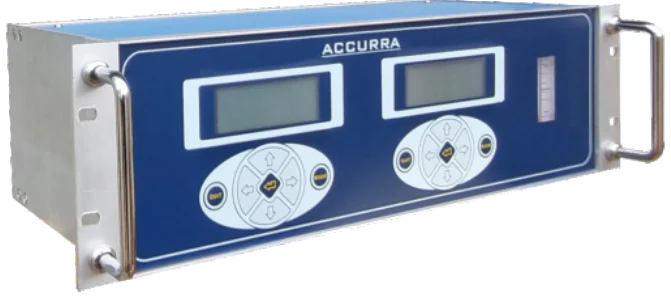
ACCURRA-S
3015, 3030, 3130 and the dual-channel 3015 plus M015.
View ACCURRA-S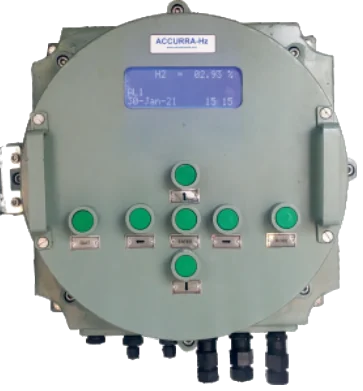
ACCURRA-Hz
Hazardous-area panel analyser.
View ACCURRA-Hz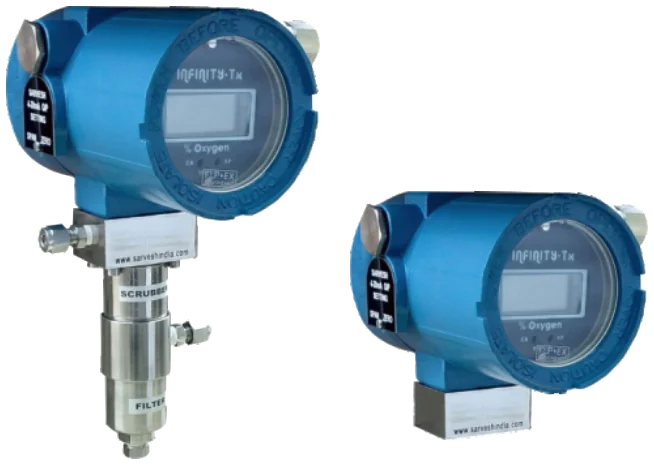
INFINITY-Tx
Loop-powered field transmitter.
View INFINITY-TxHeadline filters
Filters for solvent vapour.
View Headline filtersFrequently asked questions
What oxygen alarm should I set on a blanketed tank?
From your hazard study, as a margin below the limiting oxygen concentration. Many plants alarm in the low single digits of percent, lower for sensitive products. Alarm points are configurable.
Which analyser for ppm-level blanketing?
ACCURRA-S 3015, 0 to 1000 ppm with a 0 to 100 ppm minimum range.
Can one analyser cover several tanks?
Yes, with a sample selection arrangement designed for your plant, or individual transmitters per tank.
Do your analysers keep records?
ACCURRA-S saves calibration, alarm and fault history, and passwords protect set-up and calibration.
More in Pharma, chemicals and petrochemicals
- Reactors, hydrogenation and polymerisation
- Closed-loop dryers and spray dryers
- Fermenter and bioreactor off-gas
- Pyrolysis, gasification and syngas
- Autoclaves
- Flare-gas recovery oxygen ingress
- Dust-collector, mill and silo inerting
- Solvent-recovery and distillation columns under inert gas
- All pharma, chemicals and petrochemicals applications
- Browse analysers by gas