
A thermal oxidiser needs a measured excess of oxygen to destroy its load. ACCURRA-Zr reads oxygen in the exhaust in situ, to 1400 C with the high-temperature option. Scrubber efficiency needs inlet and outlet analysis chosen for the target gas.
The measurement and why it matters
A thermal oxidiser destroys volatile organic compounds and odorous gases by heating them with a burner in a chamber, often with heat recovery. Destruction efficiency depends on temperature, residence time and having enough oxygen to complete the reaction. An oxygen reading on the exhaust confirms there is excess air. Too low risks incomplete destruction and carbon monoxide, and too high wastes fuel.
ACCURRA-Zr works in-situ, so there is no sample line to condense or block, and its single-point air calibration keeps routine service short. The high-temperature option goes up to 1400 C.
Scrubber efficiency is the fall in concentration of the target gas between inlet and outlet. Measuring it takes two sample points and analysers suited to the gas. Chlorinated or acid-gas streams need a materials review before selection, so send the composition and temperature first.
Models and ranges
| Model | Measures | Range | Sensor and notes |
|---|---|---|---|
| ACCURRA-Zr | Oxygen in oxidiser exhaust | Percent | In-situ zirconia |
| SGI-320 | Scrubber outlet gases | Application specific | Extractive system |
Process notes
Thermal oxidisers
A thermal oxidiser destroys volatile organic compounds and odorous gases by heating them with a burner in a chamber, sometimes with heat recovery. Destruction efficiency depends on temperature, residence time and enough oxygen to complete the reaction.
A zirconia oxygen analyser on the outlet confirms that the combustion has excess air. Too low an oxygen reading risks incomplete destruction and CO, too high wastes fuel. ACCURRA-Zr works in-situ, so there is no sample line to condense or block, and its single-point air calibration keeps maintenance simple.
Specify the process temperature, the likely dust or condensable load and the length of duct available for probe insertion. Single-point calibration with air keeps routine service short. For regenerative or recuperative oxidisers, check the location of the probe relative to the bed switching to avoid reading a stratified or reversing flow.
Scrubber efficiency
A scrubber removes unwanted gas by contacting it with liquid, often alkali or water, or by passing it over solid adsorber. Its efficiency is the fall in concentration between inlet and outlet. Comparing the two tells you when reagent is exhausted or packing is fouled.
Measuring that takes two sample points and analysers suited to the target gas. Where the target gas is within our listed range, for example carbon dioxide scrubbed from a gas stream, ACCURRA-S can measure it. For acid gases such as SO2 or HCl, the analyser is outside the ranges in our current brochures, so please enquire and we will confirm whether we can help.
Start with the gas you want to track and the concentration range at inlet and outlet. Then we can say whether our analysers fit, and whether you also need conditioning for wet or acidic gas. Where they do, Headline filters and scrubber elements protect the analyser. i-Cons is not suitable for samples containing HCl, HF or H2S, so for acidic gas we choose other conditioning and design the materials of construction to match your scrubber chemistry.
Sampling and installation
- Chlorinated or acid-gas streams need a materials review before selection. Send the composition and temperature.
- i-Cons and SGI-320 are not suitable for samples containing HCl, HF or H2S.
- For regenerative oxidisers, place the probe away from bed switching, where flow reverses.
Send us your process data
The same pre-order design inputs our engineers design from, online. Fill in what you know, leave the rest. Your draft saves as you go, and you can print or send it when ready.
What the data sheet asks for
Send what you have and we will ask for the rest.
- The gases to measure, the range, and the accuracy you need
- Background gases and their typical composition
- Sample temperature, pressure and dew point at the tapping point
- Dust level, and whether the gas carries tar, oil or condensable vapour
- Process connection and, for ducts, the duct diameter
- Where the sample vents to, and at what pressure
- Area classification of the tapping point and of the analyser location, and the IP protection needed
- Distance between the tapping point and the analyser
- Outputs you need: 4-20 mA, dual range, relays, Modbus RTU
- Calibration approach, calibration gas available, and whether blowback is required
- Utilities at site: power supply, instrument air, nitrogen, steam and cooling water, and the ambient temperature range
- Oxidiser type, outlet temperature and the target gas of the scrubber
Recommended Sarvesh products
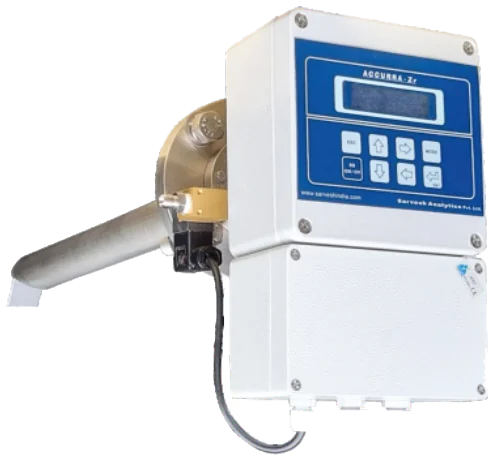
ACCURRA-Zr
In-situ oxygen for oxidisers.
View ACCURRA-Zr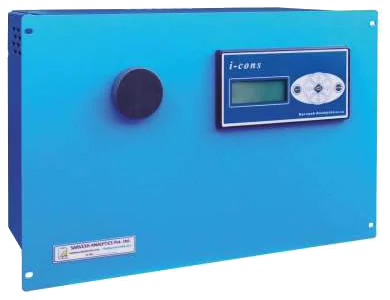
i-Cons
Conditioning where a sample is extracted.
View i-ConsHeadline filters
Headline filters and scrubber elements.
View Headline filtersFrequently asked questions
Can you measure SO2 or HCl removal?
These gases are outside the ranges in our current ACCURRA-S catalogue. The SGI-320 datasheet lists SO2 up to 1000 ppm. Please enquire and we will confirm whether we can help.
How hot can the oxidiser gas be?
The high-temperature probe option goes up to 1400 C.
Does the oxygen probe need cleaning?
ACCURRA-Zr has built-in automatic blowback and a high dust option.
Can I monitor carbon monoxide as well?
CO can be measured on an extractive sample with ACCURRA-S or SGI-320.
More in Power, boilers and emissions
- Boiler and furnace oxygen (flue gas)
- Stack and emission monitoring
- Cement kiln and precalciner O2 and CO
- Coal mill inerting and fire protection
- Waste-heat recovery boilers and kiln WHRS
- Biomass, bagasse and rice-husk boiler combustion trim
- Thermic-fluid heaters and hot-air generators
- Glass melting furnace combustion trim
- Boiler and burner factory test benches
- All power, boilers and emissions applications
- Browse analysers by gas