
Nitrogen purity is measured as residual oxygen. ACCURRA-S 3015 reads trace oxygen from 0 to 1000 ppm, with a minimum range of 0 to 100 ppm, using an electrochemical sensor. Dew point can be added from model M015 in the same dual-channel enclosure.
The measurement and why it matters
A PSA nitrogen generator holds back oxygen on a carbon molecular sieve, a membrane unit lets oxygen permeate through hollow fibres, and a cryogenic plant distils it out. In all three the product is nearly pure nitrogen, and the useful measurement is the residual oxygen. Purity is set by flow: the harder the plant is pushed, the more oxygen gets through.
An online trace oxygen analyser tells the generator control when to trade flow for purity, warns when a bed is tiring or a membrane is fouling, and tells downstream users, laser cutting, food packing, heat treatment, pharma blanketing, that the gas is fit for them.
Model 3015 has a minimum range of 0 to 100 ppm and a maximum of 0 to 1000 ppm. The catalogue states a sensor life of more than 18 months, and the optional sensor bypass valve isolates the sensor during start-up or line purging so that it recovers quickly.
Models and ranges
| Model | Measures | Range | Sensor and notes |
|---|---|---|---|
| 3015 | Trace oxygen | 0 to 1000 ppm (min 0 to 100 ppm) | Electrochemical |
| 3015 + M015 | Oxygen ppm with dew point | O2 ppm; -80 to +20 C dew point | Dual channel in one enclosure |
| 3190 | Oxygen purity | 95 to 100 % | For oxygen-rich lines, not nitrogen |
Process notes
PSA and membrane gas generators
Pressure swing adsorption separates gases using a bed of adsorbent that holds one component under pressure and releases it when the pressure drops. Two or more beds alternate, so product flows continuously. Membrane generators separate by permeation through hollow fibres. In both, purity and flow trade against each other: the harder you push flow, the more impurity gets through.
An oxygen analyser on the product line lets the generator control that trade-off, and gives you a warning as adsorbent ages or a membrane loses performance. Because alarms and the 4-20 mA output are configurable over the full range, the same ACCURRA-S can serve a 10 ppm nitrogen generator or a 95 % oxygen concentrator.
Sampling and installation
- Internal fine filter and rotameter are standard; a sensor bypass valve is supplied on models 3015 and M015.
- Auto-calibration valves and an internal sample pump are not available on 3015 and M015, so plan an external pump or a regulated pressure source.
- Keep the sample line short, stainless and leak-tight: at ppm level a small leak dominates the reading.
- Verify zero with oxygen-free gas after installation.
ACCURRA-S sample specification: non-corrosive, non-toxic, non-flammable, non-condensing and dry, free from entrained oil; sample pressure 2 to 10 psig, regulated externally; flow about 1 LPM; dust below 3 micron. Where your sample differs, we design conditioning around it.
Send us your process data
The same pre-order design inputs our engineers design from, online. Fill in what you know, leave the rest. Your draft saves as you go, and you can print or send it when ready.
What the data sheet asks for
Send what you have and we will ask for the rest.
- The gases to measure, the range, and the accuracy you need
- Background gases and their typical composition
- Sample temperature, pressure and dew point at the tapping point
- Dust level, and whether the gas carries tar, oil or condensable vapour
- Process connection and, for ducts, the duct diameter
- Where the sample vents to, and at what pressure
- Area classification of the tapping point and of the analyser location, and the IP protection needed
- Distance between the tapping point and the analyser
- Outputs you need: 4-20 mA, dual range, relays, Modbus RTU
- Calibration approach, calibration gas available, and whether blowback is required
- Utilities at site: power supply, instrument air, nitrogen, steam and cooling water, and the ambient temperature range
- Nitrogen generator type and the guaranteed outlet purity
Recommended Sarvesh products
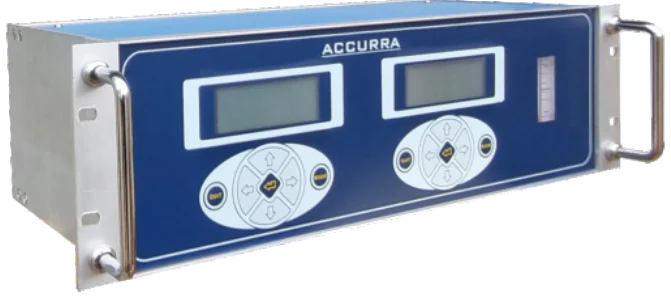
ACCURRA-S
3015 trace oxygen and the dual-channel combinations.
View ACCURRA-SHeadline filters
Headline filters upstream of the analyser.
View Headline filtersFrequently asked questions
What range for 99.99 % nitrogen?
99.99 percent nitrogen means up to 100 ppm of impurity, mostly oxygen. Range 0 to 100 ppm or 0 to 1000 ppm on the 3015 is usual.
Can I measure oxygen and moisture together?
Yes. The dual-channel 3015 plus M015 reads oxygen in ppm and dew point from one sample, each with its own electronics and outputs.
How often does the sensor need replacing?
The catalogue gives a sensor life above 18 months for 3015. The stored calibration history shows drift and helps you plan replacement.
Can it shut down or alarm the generator?
Two failsafe relays with user-configurable set points are available, and a fault relay reports calibration or instrument failure.
More in Air separation and industrial gases
- Oxygen purity in air separation plants
- Medical oxygen plant purity monitoring
- Dew point and trace moisture in process gases
- Gas purity certification and cylinder filling
- Liquid oxygen, nitrogen and argon tanker and bulk-storage quality check
- Argon recovery and purification
- Helium purity and recovery
- Dry ice and liquid CO2 plant purity
- Food-grade CO2 recovery from distilleries, breweries and fermentation
- Medical nitrous oxide purity
- Compressed-air and instrument-air dew point (ISO 8573)
- Medical-air and breathing-air quality
- Laser-cutting nitrogen and oxygen assist-gas purity
- All air separation and industrial gases applications
- Browse analysers by gas