
An online oxygen purity analyser reads 95 to 100 % O2 on the product line of an air separation, PSA or VPSA plant. ACCURRA-S 3090 and 3190 correct the reading for ambient pressure and temperature, cutting an uncompensated day-and-night error of up to 10 % to below 0.5 %.
The measurement and why it matters
High-purity oxygen is hard to measure well, and the reason is the weather. Oxygen sensors respond to the amount of oxygen in the sensing volume, which depends on pressure. When barometric pressure falls by 5 percent, the partial pressure of oxygen falls by 5 percent, even though the gas is exactly as pure as before. The ACCURRA-S catalogue notes that a day and night ambient pressure variation can give rise to a 10 percent error in an uncompensated reading above 90 percent oxygen.
ACCURRA-S 3090 and 3190 measure ambient pressure and temperature inside the analyser and correct the reading. With the compensation the error is reduced to below 0.5 percent. That matters most near the top of the scale, where an allowed impurity of half a percent is the whole margin.
The same hardware platform serves the rest of an air separation plant. Trace oxygen on nitrogen and argon lines uses model 3015, dew point on dry product uses M015, and helium or argon purity can be measured by ACCURRA-TCD.
Models and ranges
| Model | Measures | Range | Sensor and notes |
|---|---|---|---|
| 3090 | Oxygen purity | 0 to 100 %, compensated | Electrochemical, pressure and temperature compensated |
| 3190 | Oxygen purity | 95 to 100 % | Paramagnetic sensor, pressure and temperature compensated |
| 3030 | Oxygen percentage | 0 to 25 % and 0 to 100 % | Electrochemical |
| 3130 | Oxygen percentage | 0 to 100 % | Paramagnetic |
| 3015 | Trace oxygen | 0 to 1000 ppm (min range 0 to 100 ppm) | Electrochemical |
| M015 | Dew point | -80 to +20 C | Ceramic sensor |
| ACCURRA-TCD | He or Ar purity | Binary mixtures | Thermal conductivity, no reference gas |
Process notes
Cryogenic plants: product line, column and liquid draw
A cryogenic plant cools and liquefies air, then separates oxygen, nitrogen and argon by distillation. Gaseous oxygen typically leaves at purities well above 99 percent, and the plant sells it as gas or liquid. Analysers sit on the gaseous product, and where the sample is drawn from liquid, a cryogenic vaporiser turns the draw into gas before the analyser so that the light components do not boil off first.
SV-200, our cryogenic sample vaporiser, does this with a bypass line for quick flushing.
VPSA and PSA oxygen
Vacuum and pressure swing adsorption plants produce oxygen at lower purity, typically in the low 90s. For these streams use the percentage models, 3030 or 3130 across 0 to 100 percent. See the medical oxygen plant page for the pharmacopoeia ranges.
Sampling and installation
- Models 3130 and 3190 are supplied without an internal sample pump, which suits pressurised product lines. Tell us the sample pressure and we will confirm the sample path.
- Every ACCURRA-S has an internal fine filter and rotameter. Regulate sample pressure and flow externally; the catalogue recommends about 1 LPM and a sample pressure of 2 to 10 psig.
- Take gas samples after the main exchanger where possible and keep sample lines short and clean.
- Use an SV-200 vaporiser for liquid draws.
ACCURRA-S sample specification: non-corrosive, non-toxic, non-flammable, non-condensing and dry, free from entrained oil; sample pressure 2 to 10 psig, regulated externally; flow about 1 LPM; dust below 3 micron. Where your sample differs, we design conditioning around it.
Send us your process data
The same pre-order design inputs our engineers design from, online. Fill in what you know, leave the rest. Your draft saves as you go, and you can print or send it when ready.
What the data sheet asks for
Send what you have and we will ask for the rest.
- The gases to measure, the range, and the accuracy you need
- Background gases and their typical composition
- Sample temperature, pressure and dew point at the tapping point
- Dust level, and whether the gas carries tar, oil or condensable vapour
- Process connection and, for ducts, the duct diameter
- Where the sample vents to, and at what pressure
- Area classification of the tapping point and of the analyser location, and the IP protection needed
- Distance between the tapping point and the analyser
- Outputs you need: 4-20 mA, dual range, relays, Modbus RTU
- Calibration approach, calibration gas available, and whether blowback is required
- Utilities at site: power supply, instrument air, nitrogen, steam and cooling water, and the ambient temperature range
- Sample pressure at the tapping point and whether the sample is gas or liquid
Recommended Sarvesh products
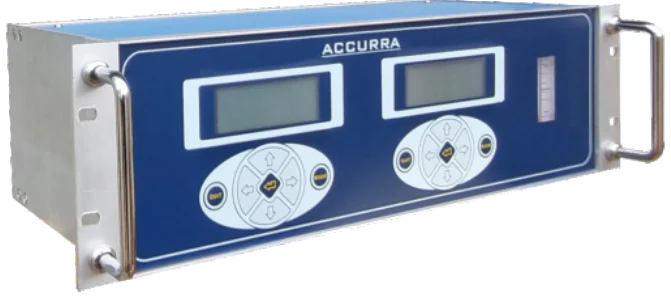
ACCURRA-S 3090
Oxygen purity models 3090 and 3190 with compensation.
View ACCURRA-S 3090ACCURRA-S
Trace oxygen and dew point on the same panel.
View ACCURRA-SSV-200 / SV-400 vaporisers
SV-200 for cryogenic liquid draws.
View SV-200 / SV-400 vaporisersACCURRA-TCD
Helium and argon purity.
View ACCURRA-TCDFrequently asked questions
How accurate is the ACCURRA-S 3090 on 99.5 % oxygen?
The catalogue figure is a compensated error below 0.5 percent, against up to 10 percent uncompensated over a day and night pressure swing. Ask for a calibration plan against your reference gas.
What is the difference between 3090 and 3190?
Both are compensated purity models: 3090 is electrochemical over 0 to 100 percent, 3190 is paramagnetic over 95 to 100 percent. 3190 uses a paramagnetic sensor. Neither has an internal sample pump.
Can one analyser check purity and trace impurities?
Purity and trace are different sensors. Plants usually place a purity analyser on the oxygen line and trace oxygen or dew point analysers on nitrogen and argon.
Do I need to compensate for altitude?
The compensation is automatic and uses the analyser's own ambient pressure reading, so the same unit works at different sites.
More in Air separation and industrial gases
- Medical oxygen plant purity monitoring
- Nitrogen purity and trace oxygen
- Dew point and trace moisture in process gases
- Gas purity certification and cylinder filling
- Liquid oxygen, nitrogen and argon tanker and bulk-storage quality check
- Argon recovery and purification
- Helium purity and recovery
- Dry ice and liquid CO2 plant purity
- Food-grade CO2 recovery from distilleries, breweries and fermentation
- Medical nitrous oxide purity
- Compressed-air and instrument-air dew point (ISO 8573)
- Medical-air and breathing-air quality
- Laser-cutting nitrogen and oxygen assist-gas purity
- All air separation and industrial gases applications
- Browse analysers by gas