
ACCURRA-S oxygen models cover 0 to 1000 ppm (3015), 0 to 25 % (3030), 0 to 100 % (3130) and purity with compensation (3090 electrochemical over 0 to 100 %, 3190 paramagnetic over 95 to 100 %). The purity models correct for ambient pressure and temperature, reducing error to below 0.5 %.
Why ACCURRA-S oxygen analysers
Purity you can certify
Models 3090 and 3190 correct for ambient pressure and temperature. A day and night pressure swing can cause up to 10 % error uncompensated; compensated, it stays below 0.5 %.
The right sensor for the range
Electrochemical cells for trace and percent oxygen, paramagnetic sensing with no consumable cell and a response below 5 seconds for percent and purity.
Fast recovery at trace level
A sensor bypass valve on 3015 isolates the cell during purging and upsets, so it returns to an accurate ppm reading quickly.
Specifications
| Item | Specification | Notes |
|---|---|---|
| 3015 | Trace, 0 to 1000 ppm (min 0 to 100 ppm) | Electrochemical; accuracy 1 % of reading +/- 2 ppm; T90 below 30 s |
| 3030 | 0 to 25 % (min 0 to 5 %) | Electrochemical; accuracy +/- 0.01 % of FS; T90 below 20 s |
| 3090 | Purity, 0 to 100 % (min 0 to 5 %) | Electrochemical, pressure and temperature compensated; accuracy +/- 0.1 % of FS; T90 below 20 s |
| 3130 | 0 to 100 % (min 0 to 5 %) | Paramagnetic; accuracy +/- 0.1 % of FS; T90 below 5 s; no internal sample pump |
| 3190 | Purity, 95 to 100 % | Paramagnetic, compensated; accuracy +/- 0.5 % of FS; T90 below 5 s; no internal sample pump |
| Purity error | Below 0.5 % with compensation | Up to 10 % uncompensated over a day and night pressure swing, per the catalogue |
From the current Sarvesh product datasheets and company profile. Specifications may change without notice as products improve. The final responsibility to check that a product meets the process and analyser requirement remains with the customer.
Which model for which range
| Model | Measures | Range | Sensor | Notes |
|---|---|---|---|---|
| 3015 | Trace oxygen in N2, Ar, He, H2 | ppm | Electrochemical | Nitrogen plants, blanketing, furnace atmospheres |
| 3030 | Percent oxygen | 0 to 25 % | Electrochemical | Process monitoring, fermenters, inerting |
| 3130 | Percent oxygen, fast response | 0 to 100 % | Paramagnetic | PSA oxygen, pressurised lines |
| 3090 | Oxygen purity | 0 to 100 %, compensated | Electrochemical | Air separation, PSA and medical oxygen, filling |
| 3190 | Oxygen purity | 95 to 100 %, compensated | Paramagnetic | Air separation, cryogenic oxygen, filling |
Key features
- Dual-channel pairings such as O2 ppm with dew point, with CO or CO2, or O2 percent with CO or CO2
- Sensor bypass valve on 3015 so the cell recovers quickly after purging
- Isolated dual-range 4-20 mA, failsafe alarms and Modbus RTU over RS 485
How it works
Electrochemical cells suit trace and percent oxygen, are compact, and need no reference gas, which makes them the default for ppm-level nitrogen and argon. Paramagnetic sensors exploit oxygen's attraction to a magnetic field, and are preferred for percent-level measurement and for purity near 100 percent.
High-purity oxygen readings depend on barometric pressure. A 5 percent fall in pressure lowers the oxygen partial pressure by 5 percent even though the gas is as pure as before, and the catalogue notes up to 10 percent error over a day and night swing above 90 percent oxygen. Models 3090 and 3190 measure ambient pressure and temperature and correct for them, which reduces the error to below 0.5 percent.
Requirements and limits
- Safe-area analyser; the sample should be non-corrosive, non-toxic, non-flammable and dry.
- No internal sample pump on 3015, 3130 and 3190.
On site: utilities and calibration gases
What to have ready at your plant before installation and commissioning.
| Item | Requirement | Notes |
|---|---|---|
| Power at the analyser | 100 to 240 V AC, 50/60 Hz, 45 W | |
| Zero gas | Zero-grade nitrogen, 99.9999 % | 10 litre cylinder with regulator |
| Span gas, trace oxygen | Oxygen in nitrogen near the top of the range, for example 1000 ppm | 10 litre cylinder with regulator |
| Span gas, 3090 | Zero-grade oxygen; zero on zero-grade nitrogen | |
| Span gas, 3190 | Zero-grade oxygen; zero on 95 % oxygen in nitrogen | |
| Instrument air and service nitrogen | 4 kg/cm² minimum | |
| Sample at the analyser | 2 to 10 psig, about 1 LPM, 5 to 45 °C, dust below 3 micron | Pressure and flow regulated by the user |
| Mounting | 19 inch rack or panel, in a safe area |
Selection guidance
Choose 3015 for nitrogen purity, blanketing and furnace atmospheres. Choose 3030 or 3130 for percent oxygen. Choose 3090 or 3190 when oxygen purity is a product specification.
For percent oxygen in a hazardous area see ACCURRA-Hz and INFINITY-Tx; for flue gas, ACCURRA-Zr.
Applications
Application pages where this is part of the recommended solution:
- Autoclaves
- Oxygen purity in air separation plants
- Medical oxygen plant purity monitoring
- Nitrogen purity and trace oxygen
- Nitrogen blanketing and inerting
- Closed-loop dryers and spray dryers
- Fermenter and bioreactor off-gas
- Welding and laser gas mixtures
Compatible products
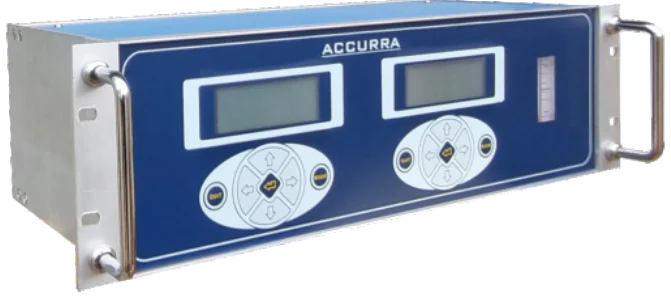
ACCURRA-S
Online analyser for trace, percent and purity O2, CO, CO2, CH4 and dew point; can measure two gases from one sample.
View ACCURRA-S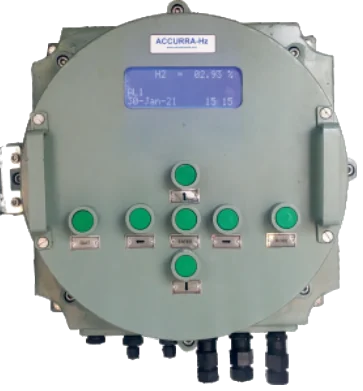
ACCURRA-Hz
Process gas analyser in an enclosure certified for Gas Group IIC, Zone 1 and 2, T6.
View ACCURRA-Hz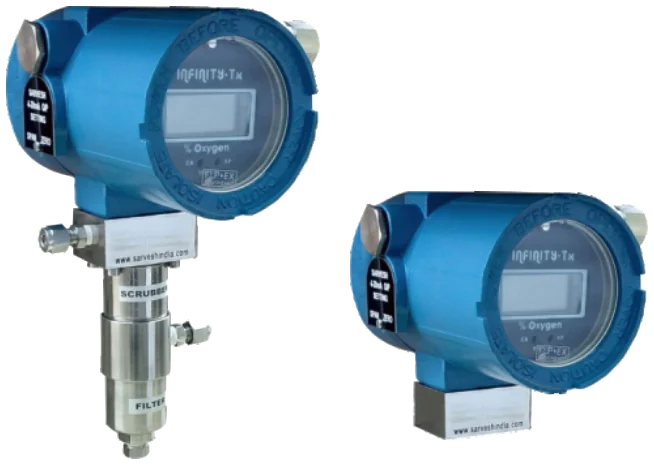
INFINITY-Tx
Loop-powered two-wire transmitter for percent O2 and trace CO in hazardous areas.
View INFINITY-TxSV-200 / SV-400 vaporisers
Sample vaporisers for cryogenic and wet samples with no loss of sample.
View SV-200 / SV-400 vaporisersFrequently asked questions
What is the difference between 3090 and 3190?
Both are purity models with ambient pressure and temperature compensation. 3090 uses an electrochemical sensor over 0 to 100 percent; 3190 uses a paramagnetic sensor over 95 to 100 percent, with a response below 5 seconds.
What range for 99.99 % nitrogen?
Use trace model 3015. 99.99 percent nitrogen allows up to 100 ppm of impurity, so 0 to 100 or 0 to 1000 ppm is typical.
Why does pressure matter for oxygen purity?
The sensor responds to the amount of oxygen it sees, which depends on pressure. Compensation corrects the reading to the true percentage.
Can I measure oxygen in hazardous areas?
Yes, with ACCURRA-Hz or the INFINITY-Tx transmitter.
Related pages
- ACCURRA-S
- ACCURRA-S carbon monoxide analysers
- ACCURRA-S carbon dioxide analysers
- ACCURRA-S methane analyser
- ACCURRA-S M015 moisture analyser
- ACCURRA-Hz
- Hazardous-area oxygen analyser
- INFINITY-Tx
- Hazardous-area hydrogen analyser
- Hazardous-area moisture analyser
- ACCURRA-Zr
- ACCURRA model numbers
- Browse all gas analysers