
Cold rolling mill furnaces are checked for oxygen, hydrogen and trace moisture. ACCURRA-S 3015 reads 0 to 1000 ppm oxygen and M015 reads -80 to +20 C dew point, together in one dual enclosure if needed. ACCURRA-TCD 1030 reads hydrogen in nitrogen with no reference gas, and ACCURRA-Hz covers classified areas.
The measurement and why it matters
A furnace atmosphere is checked with three readings: oxygen, hydrogen and moisture. Sarvesh lists O2, H2 and trace moisture in furnaces, and O2 and H2 in steel making, among its applications, and supplies an analyser for each from its own factory in Pune.
For oxygen, ACCURRA-S 3015 reads 0 to 1000 ppm with a minimum range of 0 to 100 ppm, an accuracy of 1 percent of reading plus or minus 2 ppm and a response below 30 seconds. For moisture, ACCURRA-S M015 reads dew point from minus 80 to plus 20 C with a ceramic sensor, to plus or minus 2 C. The two can share one enclosure: the datasheet lists O2 ppm with dew point in nitrogen, hydrogen, argon and helium as a dual measurement, with a separate current output, set of relays and Modbus ID for each sensor.
For hydrogen, ACCURRA-TCD model 1030 measures hydrogen in nitrogen on 0 to 100, 0 to 3 or 97 to 100 percent ranges, with a platinum thermal conductivity sensor that needs no reference gas, and a response below 10 seconds at 0.6 LPM. It can carry a trace oxygen sensor as well, for O2 ppm with H2 percent in nitrogen. Where the analyser has to stand in a classified area, ACCURRA-Hz model 1030 measures 0 to 100 percent hydrogen in nitrogen in an enclosure certified for Gas Group IIC, Zone 1 and 2, T6.
Models and ranges
| Model | Measures | Range | Sensor and notes |
|---|---|---|---|
| 3015 | Trace oxygen | 0 to 1000 ppm | ACCURRA-S, electrochemical; T90 below 30 s |
| M015 | Dew point | -80 to +20 C dp | ACCURRA-S, ceramic; accuracy +/- 2 C dp |
| 3015 + M015 | Oxygen and dew point | Dual channel | Independent outputs, relays and Modbus ID |
| 1030 | Hydrogen in nitrogen | 0 to 100 %, 0 to 3 % or 97 to 100 % | ACCURRA-TCD; T90 below 10 s at 0.6 LPM |
| 1030 + 3015 | Hydrogen and trace oxygen | Dual channel | ACCURRA-TCD with a trace oxygen sensor |
| ACCURRA-Hz 1030 | Hydrogen, hazardous area | 0 to 100 % in N2 | Gas Group IIC, Zone 1 and 2, T6 |
Process notes
Readings at start-up
The datasheets describe a process whose reading is high at start-up and settles lower as it comes under control. For that case the 4-20 mA output has two ranges, for example 0 to 10 and 0 to 25 percent, and switches between them automatically. A range ID relay tells your PLC or DCS which range is active.
On trace oxygen and dew point models a sensor bypass valve isolates the sensor during purging, or when the sample is far beyond its normal concentration, and is opened again once the sample is right. This keeps the response quick and the reading accurate when the furnace returns to normal.
Calibration and records
Each analyser stores calibration, alarm and fault records with time stamps. The last calibration in the history serves as an audit record and shows calibration drift and residual sensor life, so consumable sensors can be replaced on plan.
Auto-calibration is optional, started from the keypad, a cyclic timer or a Modbus command. It is not available on 3015 or M015, and field calibration is not possible on the dew point model M015. Outputs can be frozen at their last value during calibration so the furnace control does not react to calibration gas.
Related applications
This page overlaps with:
- Continuous annealing and galvanising line atmospheres (HNX)
- Heat-treatment furnace atmosphere
- Bright annealing of copper tube, stainless steel and wire
Sampling and installation
- ACCURRA-S and ACCURRA-TCD expect a sample that is non-corrosive, non-toxic, non-flammable, dry and free of oil, at 2 to 10 psig and 5 to 45 C, with dust below 3 micron.
- Recommended flow is 1 LPM for ACCURRA-S and 0.6 LPM for ACCURRA-TCD, regulated externally; the analysers have a built-in flow indicator and a glass microfibre fine filter.
- The sample dew point should be at least 5 C below the lowest ambient temperature.
- A hydrogen-bearing atmosphere is flammable and falls outside the standard sample specification, so we design a conditioning system around your furnace. Send the composition first.
ACCURRA-S sample specification: non-corrosive, non-toxic, non-flammable, non-condensing and dry, free from entrained oil; sample pressure 2 to 10 psig, regulated externally; flow about 1 LPM; dust below 3 micron. Where your sample differs, we design conditioning around it.
Send us your process data
The same pre-order design inputs our engineers design from, online. Fill in what you know, leave the rest. Your draft saves as you go, and you can print or send it when ready.
What the data sheet asks for
Send what you have and we will ask for the rest.
- The gases to measure, the range, and the accuracy you need
- Background gases and their typical composition
- Sample temperature, pressure and dew point at the tapping point
- Dust level, and whether the gas carries tar, oil or condensable vapour
- Process connection and, for ducts, the duct diameter
- Where the sample vents to, and at what pressure
- Area classification of the tapping point and of the analyser location, and the IP protection needed
- Distance between the tapping point and the analyser
- Outputs you need: 4-20 mA, dual range, relays, Modbus RTU
- Calibration approach, calibration gas available, and whether blowback is required
- Utilities at site: power supply, instrument air, nitrogen, steam and cooling water, and the ambient temperature range
- Furnace type and atmosphere composition, the readings you need, sample pressure and temperature, and area classification
Recommended Sarvesh products
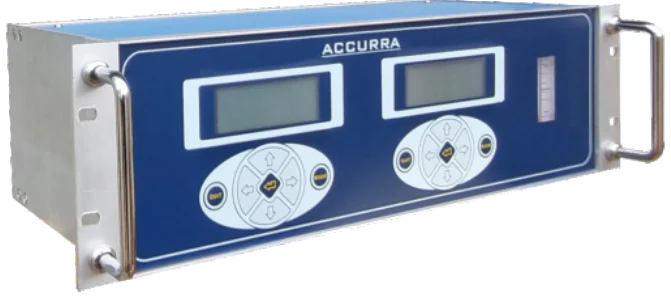
ACCURRA-S
Trace oxygen and dew point, alone or in one dual enclosure.
View ACCURRA-SACCURRA-TCD
Hydrogen in nitrogen, no reference gas.
View ACCURRA-TCD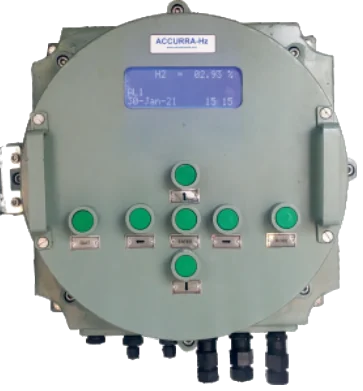
ACCURRA-Hz
Hydrogen and oxygen in classified areas.
View ACCURRA-HzHeadline filters
Headline filters to protect the sample line.
View Headline filtersFrequently asked questions
What do you measure in a cold rolling mill furnace?
Oxygen, hydrogen and trace moisture, the three furnace measurements on our applications list.
Can oxygen and dew point be read on one analyser?
Yes. ACCURRA-S 3015 with M015 is a listed dual measurement, with independent outputs, relays and Modbus ID.
How is hydrogen measured?
By thermal conductivity on ACCURRA-TCD 1030, with no reference gas, or on ACCURRA-Hz 1030 in a classified area.
Can I calibrate the dew point sensor on site?
No. Field calibration is not possible on M015; ask us how the sensor is checked and recalibrated.
More in Steel, heat treatment and furnaces
- Heat-treatment furnace atmosphere
- Steel plant process gases
- Float glass bath atmosphere
- Powder metallurgy and metal injection moulding sintering
- Aluminium controlled-atmosphere brazing furnaces
- Bright annealing of copper tube, stainless steel and wire
- Carburising and endothermic gas carbon potential
- Continuous annealing and galvanising line atmospheres (HNX)
- Foundry cupola and melting furnace gas
- All steel, heat treatment and furnaces applications
- Browse analysers by gas