
Steel plant gas analysis measures CO, CO2, H2 and O2 in coke oven, blast furnace, converter and dry quenching gas. The hot, dusty, tarry sample needs a heated or retractable probe and conditioning, and corrosive or toxic streams are reviewed before a system is proposed.
The measurement and why it matters
Four analysis points dominate a steel works. Coke oven gas and blast furnace gas are by-product fuels whose calorific value must be known. Converter off-gas is recovered or flared depending on its CO and oxygen content. Coke dry quenching circulates inert gas, and CO, H2 and O2 show whether the circuit is safe. Sintering and soaking pits need combustion control.
The catalogue limits for i-Cons and SGI-320 matter here. Flammable, toxic and corrosive samples are outside their standard limits, so we review the stream composition first and then propose a system: a probe in SS316, Inconel or ceramic as the temperature requires, a heated filter with blowback, and conditioning sized to the load.
Measurements: CO in ppm and percent by electrochemical and NDIR sensors, CO2 by NDIR, hydrogen by ACCURRA-TCD, and oxygen from trace to percent by ACCURRA-S or ACCURRA-Hz.
Models and ranges
| Model | Measures | Range | Sensor and notes |
|---|---|---|---|
| 2015 / 2030 | CO | ppm and percent | Electrochemical and NDIR |
| 6015 / 6030 | CO2 | ppm and percent | NDIR |
| ACCURRA-TCD | Hydrogen | Binary | Thermal conductivity |
| ACCURRA-S / ACCURRA-Hz | Oxygen | Trace to percent | Electrochemical or paramagnetic |
Process notes
Sintering plants and soaking pits
Sintering and soaking pits need combustion control, which means oxygen and CO in the waste gas. ACCURRA-Zr measures percent oxygen in-situ where the duct allows, and an extractive system with a heated probe covers CO.
Coke oven and blast furnace
Blast furnace gas is a lean fuel, mostly nitrogen with CO, CO2 and some hydrogen. Coke oven gas is richer, carrying hydrogen, methane and CO. Both fuel boilers, stoves and furnaces around the works. Their calorific value changes from hour to hour, and CO makes any leak a toxic hazard.
Continuous analysis supports mixing of fuels and safe operation. In these lines the analyser is the easy part. The hard part is the sample, which carries dust, tar and naphthalene. Heated probes with blowback and a conditioning panel with condensate handling keep the system available between planned shutdowns.
During commissioning, set the blowback interval from the dust loading, then tune it from experience. Keep spare filter elements, since the probe filter is the item that gets consumed. Calibrate the NDIR channels with certified span gas of a similar composition to your fuel gas, and check zero with nitrogen.
Basic oxygen furnace
In oxygen steel making, a lance blows oxygen into molten iron and carbon burns off as CO. The off-gas leaves the converter at very high temperature, rich in CO and dust. Plants can cool and clean it, then recover it as fuel instead of flaring.
Recovery is allowed only when the gas is rich enough in CO and low enough in oxygen. Analysers on the cleaned gas line decide between recovery and flare, and a trip on oxygen protects the holder. Gas composition changes quickly during a blow, so short sample lines and a fast sampling system are important.
A converter shop runs on a tight cycle, so maintenance windows are short. Choose probes that can be changed quickly, such as the retractable SRP-400, and keep a spare conditioner on the shelf. Discuss with us how your recovery logic reads the analyser outputs so that alarm and trip points are set consistently.
Coke dry quenching
Coke dry quenching cools hot coke with circulating inert gas in a closed circuit and passes the gas through a waste heat boiler, so steam is recovered from heat that wet quenching wastes. The circulating gas is mostly nitrogen, with CO, CO2 and hydrogen forming as air leaks in and hot coke reacts with it.
The analysers watch for that combustible build-up. CO and hydrogen rising, or oxygen appearing, calls for action such as venting or adding nitrogen. The gas carries coke dust, so probes with blowback and conditioning are needed to keep the analysers in service.
Specify the sample gas temperature, pressure and dust load. The circulating gas is under slight pressure and may be hot, so choose probe materials for the temperature, from SS316 to 550 C, Inconel to 1100 C, or ceramic to 1400 C, and use a blowback line sized for cleaning. We will propose a conditioning panel that fits your control room layout.
Sampling and installation
- Flammable, toxic and corrosive samples are outside the standard i-Cons and SGI-320 limits. Send the stream composition and we will review it before proposing a system.
- Use heated probes with blowback for dust and tar, and retractable probes where removal under pressure is needed.
- Probe materials: SS316 to 550 C, Inconel to 1100 C, ceramic to 1400 C.
ACCURRA-S sample specification: non-corrosive, non-toxic, non-flammable, non-condensing and dry, free from entrained oil; sample pressure 2 to 10 psig, regulated externally; flow about 1 LPM; dust below 3 micron. Where your sample differs, we design conditioning around it.
Send us your process data
The same pre-order design inputs our engineers design from, online. Fill in what you know, leave the rest. Your draft saves as you go, and you can print or send it when ready.
What the data sheet asks for
Send what you have and we will ask for the rest.
- The gases to measure, the range, and the accuracy you need
- Background gases and their typical composition
- Sample temperature, pressure and dew point at the tapping point
- Dust level, and whether the gas carries tar, oil or condensable vapour
- Process connection and, for ducts, the duct diameter
- Where the sample vents to, and at what pressure
- Area classification of the tapping point and of the analyser location, and the IP protection needed
- Distance between the tapping point and the analyser
- Outputs you need: 4-20 mA, dual range, relays, Modbus RTU
- Calibration approach, calibration gas available, and whether blowback is required
- Utilities at site: power supply, instrument air, nitrogen, steam and cooling water, and the ambient temperature range
- Stream composition including H2S, tar and dust, and gas temperature
Recommended Sarvesh products
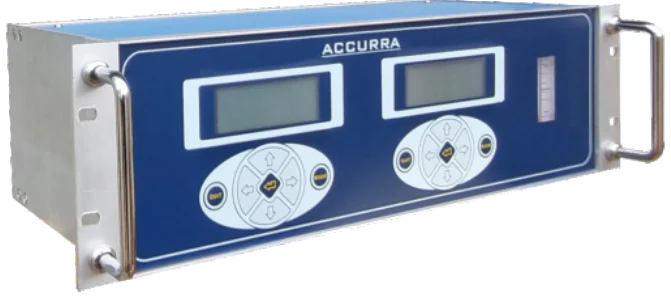
ACCURRA-S
CO, CO2 and O2 channels.
View ACCURRA-SACCURRA-TCD
Hydrogen.
View ACCURRA-TCD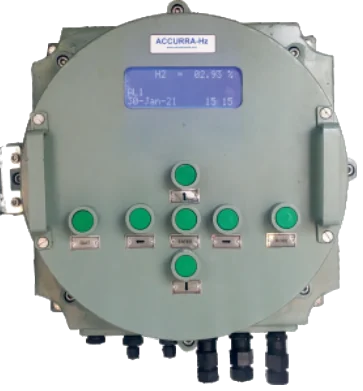
ACCURRA-Hz
Hazardous-area oxygen and hydrogen.
View ACCURRA-Hz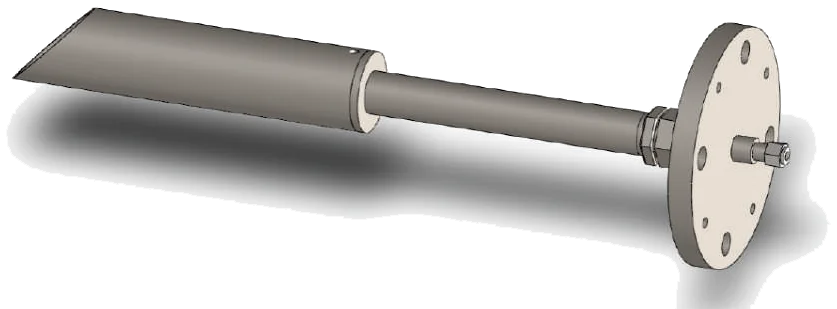
SP and SRP sample probes
Heated and retractable probes.
View SP and SRP sample probesFrequently asked questions
How do you handle dust and tar?
With the right probe and sampling: SP-300 has a heated filter, SRP-400 is retractable, and conditioning triggers automatic blowback if sample flow drops.
Can you supply for coke oven gas with H2S?
H2S is outside the standard conditioning limits, so we design the system after reviewing the composition.
Can you measure H2 in steel plant gases?
Yes. ACCURRA-TCD measures hydrogen in binary mixtures, and ACCURRA-Hz can measure percent or purity H2 in hazardous areas.
Which gases at a BOF?
CO and CO2, and oxygen and hydrogen for recovery safety, with fast, short sample lines.
More in Steel, heat treatment and furnaces
- Heat-treatment furnace atmosphere
- Float glass bath atmosphere
- Cold rolling mill furnaces
- Powder metallurgy and metal injection moulding sintering
- Aluminium controlled-atmosphere brazing furnaces
- Bright annealing of copper tube, stainless steel and wire
- Carburising and endothermic gas carbon potential
- Continuous annealing and galvanising line atmospheres (HNX)
- Foundry cupola and melting furnace gas
- All steel, heat treatment and furnaces applications
- Browse analysers by gas