
A float glass bath atmosphere is nitrogen with hydrogen, a binary mixture well suited to ACCURRA-TCD. It reads hydrogen by platinum thermal conductivity with no reference gas, linearity within 1 % of range and errors and drift within 2 %.
The measurement and why it matters
In float glass manufacture, molten glass floats on a bath of molten tin. The tin must not oxidise, so the bath atmosphere is nitrogen with some hydrogen, which acts as a reducing agent. Too little hydrogen risks tin oxide and defects on the glass surface, and too much wastes gas.
A binary mixture of hydrogen and nitrogen is the ideal sample for a thermal conductivity analyser, because hydrogen conducts heat roughly seven times better than nitrogen and the signal is large and steady. ACCURRA-TCD uses a platinum sensor, needs no reference gas, and offers errors and drift below 1 percent of full scale per week, with T90 below 10 seconds at 0.6 LPM.
The same analyser applies to other reducing furnace atmospheres where hydrogen is the variable component in a known background, such as bright annealing. We describe this as a technical fit. Ask us what we can offer for your plant, and for references on similar duties.
Models and ranges
| Model | Measures | Range | Sensor and notes |
|---|---|---|---|
| ACCURRA-TCD | Hydrogen in nitrogen | Binary | Thermal conductivity, platinum sensor |
| Linearity and repeatability | Within 1 % of range | ||
| Errors and drift | Below 1 % of FS per week |
Process notes
How the bath atmosphere is controlled
The bath is a long, enclosed chamber. Nitrogen with hydrogen is fed at several points and held at a slight positive pressure so air cannot enter. Operators trim the hydrogen share against tin oxide formation and against gas cost, which makes a continuous hydrogen reading the control variable.
Because the mixture is essentially nitrogen and hydrogen, the sample is a clean binary one, which is the best case for thermal conductivity. Water vapour from reactions in the bath is the main disturbance, so the sample is cooled and dried before the sensor.
Alarms and furnace safety
A hydrogen alarm protects against too little reducing gas and, at the other end, against too much hydrogen escaping into the building. Relay alarms with configurable set points, and a fault relay that reports calibration or instrument failure, are part of the ACCURRA platform. For hazardous-area installation see ACCURRA-Hz.
Sampling and installation
- Send the bath temperature, sample point and any other gases present so the sample line can be specified.
- The reading assumes two components. Water vapour or other gases varying in the sample need a method review.
- Cool the sample and filter it before the sensor; flammable gas means the installation must suit the area classification.
Send us your process data
The same pre-order design inputs our engineers design from, online. Fill in what you know, leave the rest. Your draft saves as you go, and you can print or send it when ready.
What the data sheet asks for
Send what you have and we will ask for the rest.
- The gases to measure, the range, and the accuracy you need
- Background gases and their typical composition
- Sample temperature, pressure and dew point at the tapping point
- Dust level, and whether the gas carries tar, oil or condensable vapour
- Process connection and, for ducts, the duct diameter
- Where the sample vents to, and at what pressure
- Area classification of the tapping point and of the analyser location, and the IP protection needed
- Distance between the tapping point and the analyser
- Outputs you need: 4-20 mA, dual range, relays, Modbus RTU
- Calibration approach, calibration gas available, and whether blowback is required
- Utilities at site: power supply, instrument air, nitrogen, steam and cooling water, and the ambient temperature range
- Bath temperature, sample point and hydrogen range
Recommended Sarvesh products
ACCURRA-TCD
Binary hydrogen analyser.
View ACCURRA-TCD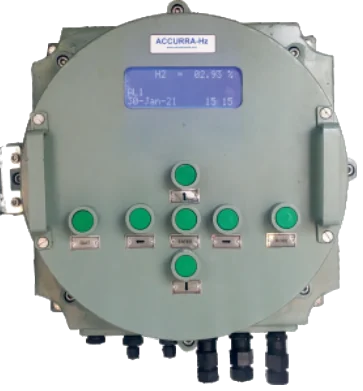
ACCURRA-Hz
Hazardous-area option.
View ACCURRA-Hz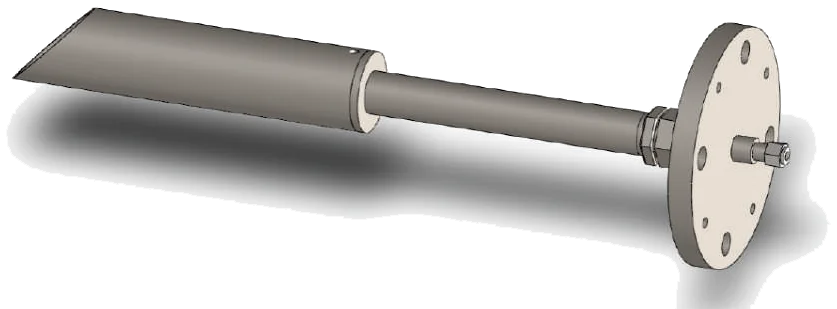
SP and SRP sample probes
Probes for hot sample points.
View SP and SRP sample probesFrequently asked questions
Does it need a reference gas?
No.
What if water vapour is present?
Water vapour changes the thermal conductivity, so tell us the moisture level; we will advise on conditioning.
Can it be used in other reducing atmospheres?
Yes, where hydrogen varies in a known single background gas.
Can you provide references?
Ask us. We describe this application as a technical fit, and will tell you what we have delivered.
More in Steel, heat treatment and furnaces
- Heat-treatment furnace atmosphere
- Steel plant process gases
- Cold rolling mill furnaces
- Powder metallurgy and metal injection moulding sintering
- Aluminium controlled-atmosphere brazing furnaces
- Bright annealing of copper tube, stainless steel and wire
- Carburising and endothermic gas carbon potential
- Continuous annealing and galvanising line atmospheres (HNX)
- Foundry cupola and melting furnace gas
- All steel, heat treatment and furnaces applications
- Browse analysers by gas