
ACCURRA-S M015 measures dew point from minus 80 to plus 20 C with a ceramic sensor, to plus or minus 2 C, and can display ppm. Response is about 2 minutes from dry to wet at 5 LPM, so use short, dry stainless sample lines.
The measurement and why it matters
Dew point is the temperature at which moisture in a gas begins to condense. A dew point of minus 60 C corresponds to roughly 10 ppm of water vapour at atmospheric pressure, and each 10 degrees lower is roughly three times drier. Dry gases are specified by dew point because it is easy to relate to the risk of condensation or corrosion.
M015 uses a ceramic moisture sensor with a stated accuracy of plus or minus 2 C dew point and repeatability of plus or minus 1 C dew point. The catalogue gives a response time of about 2 minutes from dry to wet at 5 LPM, which is typical of moisture measurement, because water clings to surfaces. A sensor bypass valve isolates the sensor when the analyser is not in use or when the sample is far wetter than normal.
One instrument can watch the two usual signs of air getting into a system. The dual-channel version, 3015 plus M015, measures oxygen in ppm and dew point from one sample.
Models and ranges
| Model | Measures | Range | Sensor and notes |
|---|---|---|---|
| M015 | Dew point / moisture | -80 to +20 C dew point | Ceramic sensor |
| M015 | Accuracy and repeatability | +/- 2 C dp; repeatability +/- 1 C dp | Per catalogue |
| M015 | Response | About 2 min dry to wet at 5 LPM | Per catalogue |
| 3015 + M015 | O2 ppm plus dew point | Dual channel | One enclosure, independent outputs |
Process notes
Dew point and trace moisture
Dew point is the temperature at which moisture in a gas begins to condense. A dew point of minus 60 C, for example, corresponds to roughly 10 ppm of water vapour at atmospheric pressure, and each 10 degrees lower is roughly three times drier. Process gases are dried to a specified dew point before use.
A trace dew point analyser on the line tells you when a dryer has reached the end of its bed, when a flange is leaking, or when a cylinder change has brought moisture into the system. Because ACCURRA-S can pair dew point with trace oxygen on one sample, one instrument watches the two most common signs of air ingress.
Sampling and installation
- A sensor bypass valve is supplied on M015. Auto-calibration and an internal sample pump are not available on this model.
- Use stainless tube and short, dry sample lines. Plastic tubing holds and releases moisture and slows the reading.
- Purge the line for as long as the specification suggests after start-up or a cylinder change.
- Field calibration is not possible on M015; ask us how the sensor is checked and recalibrated.
ACCURRA-S sample specification: non-corrosive, non-toxic, non-flammable, non-condensing and dry, free from entrained oil; sample pressure 2 to 10 psig, regulated externally; flow about 1 LPM; dust below 3 micron. Where your sample differs, we design conditioning around it.
Send us your process data
The same pre-order design inputs our engineers design from, online. Fill in what you know, leave the rest. Your draft saves as you go, and you can print or send it when ready.
What the data sheet asks for
Send what you have and we will ask for the rest.
- The gases to measure, the range, and the accuracy you need
- Background gases and their typical composition
- Sample temperature, pressure and dew point at the tapping point
- Dust level, and whether the gas carries tar, oil or condensable vapour
- Process connection and, for ducts, the duct diameter
- Where the sample vents to, and at what pressure
- Area classification of the tapping point and of the analyser location, and the IP protection needed
- Distance between the tapping point and the analyser
- Outputs you need: 4-20 mA, dual range, relays, Modbus RTU
- Calibration approach, calibration gas available, and whether blowback is required
- Utilities at site: power supply, instrument air, nitrogen, steam and cooling water, and the ambient temperature range
- The dew point or ppm moisture you need to prove, and the carrier gas
Recommended Sarvesh products
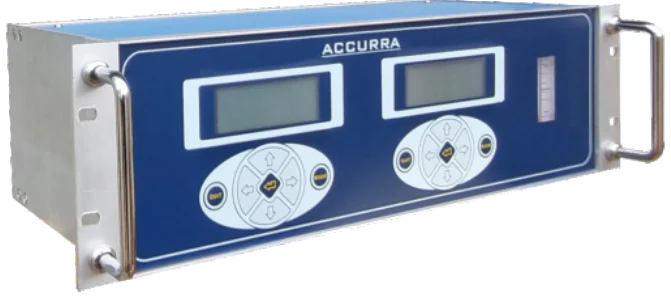
ACCURRA-S
M015 and the dual-channel 3015 plus M015.
View ACCURRA-S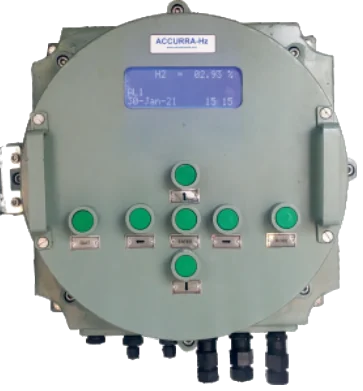
ACCURRA-Hz
Hazardous-area moisture measurement on request.
View ACCURRA-HzFrequently asked questions
Which gases can the dew point analyser be used in?
Nitrogen, argon, helium, oxygen and carbon dioxide are listed for trace dew point measurement.
Can I read in ppm?
Yes. The analyser can display dew point or ppm moisture.
How long should I wait for a stable reading?
Moisture sensors take longer than oxygen cells. The catalogue gives about 2 minutes dry to wet at 5 LPM. Settling after a long exposure to wet gas takes longer.
Can I calibrate dew point on site?
No. Field calibration is not possible on M015; ask us how the sensor is checked and recalibrated.
More in Air separation and industrial gases
- Oxygen purity in air separation plants
- Medical oxygen plant purity monitoring
- Nitrogen purity and trace oxygen
- Gas purity certification and cylinder filling
- Liquid oxygen, nitrogen and argon tanker and bulk-storage quality check
- Argon recovery and purification
- Helium purity and recovery
- Dry ice and liquid CO2 plant purity
- Food-grade CO2 recovery from distilleries, breweries and fermentation
- Medical nitrous oxide purity
- Compressed-air and instrument-air dew point (ISO 8573)
- Medical-air and breathing-air quality
- Laser-cutting nitrogen and oxygen assist-gas purity
- All air separation and industrial gases applications
- Browse analysers by gas