
For medical oxygen, use the percentage models 3030 or 3130 (0 to 100 %) on PSA oxygen at about 93 %, and the purity models 3090 or 3190 (95 to 100 %) on cryogenic oxygen at about 99 %. ACCURRA-S provides alarm relays, a 4-20 mA output and Modbus for plant monitoring.
The measurement and why it matters
The usual references are the pharmacopoeia monographs for oxygen: about 99 percent oxygen for cryogenic product, and 93 percent plus or minus 3 percent, that is 90 to 96 percent, for oxygen made by PSA or VPSA. Those two ranges need different analysers. Product at 99 percent sits inside the 95 to 100 percent span of the purity models 3090 and 3190. PSA oxygen at 93 percent sits below that span and uses the percentage models, 3030 or 3130, which cover 0 to 100 percent.
For hospital plants the analyser has three jobs: show the purity continuously, trip an alarm when it falls out of range so the supply can switch to backup, and keep a record. ACCURRA-S has two failsafe alarm relays with configurable set points, an isolated 4-20 mA output, and calibration and alarm history stored in the analyser.
Pressure compensation matters for the 90 percent and above range, where the catalogue notes an uncompensated analyser can err by up to 10 percent over a day and night pressure swing. We recommend discussing the compensation requirement for your range when you select the model.
Models and ranges
| Model | Measures | Range | Sensor and notes |
|---|---|---|---|
| 3130 | Oxygen percentage | 0 to 100 % | Paramagnetic; suits PSA oxygen at 90 to 96 % |
| 3030 | Oxygen percentage | 0 to 100 % | Electrochemical |
| 3090 | Oxygen purity | 0 to 100 %, compensated | Electrochemical, ambient pressure and temperature compensated; PSA and cryogenic oxygen |
| 3190 | Oxygen purity | 95 to 100 % | Paramagnetic, compensated; cryogenic oxygen |
Process notes
Hospital PSA and VPSA oxygen plants
A hospital plant produces oxygen on site and feeds it into the pipeline. If purity drops, the plant must warn operators and change over to manifold or liquid backup. An online analyser with a relay alarm is the automatic version of that decision.
Models 3130 and 3190 take sample from a pressurised line without an internal pump.
Gas manufacturers: filling and lot release
Gas manufacturers verify product purity before release. An online analyser on the filling manifold gives a purity check for every fill, with calibration history to show the instrument was in tolerance.
Sampling and installation
- Every ACCURRA-S has an internal fine filter and rotameter.
- Models 3130 and 3190 take sample from a pressurised line without an internal pump; the sample pressure should be regulated externally.
- Provide a vent for the analyser exhaust, and keep the exhaust free of back-pressure.
ACCURRA-S sample specification: non-corrosive, non-toxic, non-flammable, non-condensing and dry, free from entrained oil; sample pressure 2 to 10 psig, regulated externally; flow about 1 LPM; dust below 3 micron. Where your sample differs, we design conditioning around it.
Send us your process data
The same pre-order design inputs our engineers design from, online. Fill in what you know, leave the rest. Your draft saves as you go, and you can print or send it when ready.
What the data sheet asks for
Send what you have and we will ask for the rest.
- The gases to measure, the range, and the accuracy you need
- Background gases and their typical composition
- Sample temperature, pressure and dew point at the tapping point
- Dust level, and whether the gas carries tar, oil or condensable vapour
- Process connection and, for ducts, the duct diameter
- Where the sample vents to, and at what pressure
- Area classification of the tapping point and of the analyser location, and the IP protection needed
- Distance between the tapping point and the analyser
- Outputs you need: 4-20 mA, dual range, relays, Modbus RTU
- Calibration approach, calibration gas available, and whether blowback is required
- Utilities at site: power supply, instrument air, nitrogen, steam and cooling water, and the ambient temperature range
- The oxygen purity range your plant produces, and the standard you follow
Recommended Sarvesh products
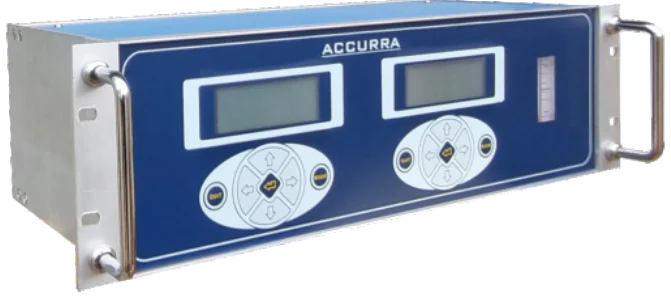
ACCURRA-S 3090
Purity models 3090 and 3190 for 95 to 100 % oxygen.
View ACCURRA-S 3090ACCURRA-S
Percentage models 3030 and 3130 for 0 to 100 %.
View ACCURRA-SFrequently asked questions
Which model for 93 % PSA oxygen?
Models 3030 or 3130, which cover 0 to 100 percent. The purity models start at 95 percent. Confirm the model and the compensation requirement for your range with us.
Does the analyser alarm for a plant changeover?
Yes. Two failsafe alarm relays with user-configurable set points can drive the changeover logic.
Does this make my plant compliant?
The analyser supports your quality system. Compliance with pharmacopoeia and regulatory requirements is the responsibility of the plant.
Can we log the readings?
Yes, through the isolated 4-20 mA output or Modbus RTU over RS 485.
More in Air separation and industrial gases
- Oxygen purity in air separation plants
- Nitrogen purity and trace oxygen
- Dew point and trace moisture in process gases
- Gas purity certification and cylinder filling
- Liquid oxygen, nitrogen and argon tanker and bulk-storage quality check
- Argon recovery and purification
- Helium purity and recovery
- Dry ice and liquid CO2 plant purity
- Food-grade CO2 recovery from distilleries, breweries and fermentation
- Medical nitrous oxide purity
- Compressed-air and instrument-air dew point (ISO 8573)
- Medical-air and breathing-air quality
- Laser-cutting nitrogen and oxygen assist-gas purity
- All air separation and industrial gases applications
- Browse analysers by gas