
Online gas purity certification combines ACCURRA-S for O2, CO2, CO, CH4 and moisture impurities with ACCURRA-TCD for binary purity of hydrogen, helium, argon and nitrogen. Calibration history with deviation values gives an audit record for each filled batch.
The measurement and why it matters
Purity grades are written as digits. 99.999 percent means 10 ppm total impurity. Certifying a gas to that grade means measuring each specified impurity, usually oxygen, moisture, carbon monoxide, carbon dioxide and hydrocarbons, against a limit. Grab samples sent to a lab give a result hours or days late; an online analyser moves that check to the plant floor and records the whole fill.
ACCURRA-S measures oxygen, carbon dioxide, carbon monoxide and methane with sensors chosen to the range, and moisture as dew point. The calibration history stores deviation values, which is a record that the instrument itself was in tolerance when the batch was certified. Optional cyclic and remote auto-calibration keeps it that way between audits.
For binary gases, helium, argon, nitrogen, hydrogen, nitrous oxide, neon and krypton, ACCURRA-TCD measures the main component by thermal conductivity with no reference gas.
Models and ranges
| Model | Measures | Range | Sensor and notes |
|---|---|---|---|
| 3015 / 3030 / 3130 | Oxygen | ppm to 100 % | Electrochemical or paramagnetic |
| 6015 / 6030 | Carbon dioxide | 0 to 5000 ppm; 0 to 20 or 100 % | NDIR |
| 2015 / 2030 | Carbon monoxide | 0 to 1000 ppm; 0 to 100 % | Electrochemical; NDIR |
| 4030 | Methane | 0 to 100 % (min 0 to 5 %) | NDIR |
| M015 | Dew point | -80 to +20 C | Ceramic sensor |
| ACCURRA-TCD | H2, He, Ar, N2, N2O, Ne, Kr | Binary purity | Thermal conductivity |
Process notes
Cylinder and tank filling
Cylinder filling stations take bulk gas, compress or pump it into cylinders and send them out under a purity grade. Industrial grades allow a few hundred ppm of impurity; high-purity and specialty grades allow only a few ppm or less. The filling manifold is the last place to confirm the grade before the cylinder leaves.
An online analyser on the manifold catches contamination from a bad purge, a leaking fitting or a wrong source gas. Because ACCURRA-S can hold calibration history with deviation values, you can show an auditor that the instrument itself was in tolerance when the batch was certified.
Gas purity certification
Purity grades are written as digits: 99.999 % means 10 ppm total impurity. Certifying a gas to such a grade means measuring each specified impurity, usually oxygen, moisture, carbon monoxide, carbon dioxide and hydrocarbons, against a stated limit. Grab samples sent to a lab give a result hours or days late.
Online analysis moves that check to the plant floor. ACCURRA-S measures trace oxygen with an electrochemical cell, carbon dioxide and methane by NDIR, and moisture as dew point, and it can report two gases from one sample. The output goes to your batch record through 4-20 mA or Modbus RTU over RS 485.
Sampling and installation
- Internal fine filter and rotameter are standard. An optional internal sample pump and auto-calibration valves depend on the model.
- Purge manifold and sample line between gases so that the previous gas does not bias the next reading.
- Specify a dedicated analyser per gas family, or a short, well-purged switching arrangement designed with us.
ACCURRA-S sample specification: non-corrosive, non-toxic, non-flammable, non-condensing and dry, free from entrained oil; sample pressure 2 to 10 psig, regulated externally; flow about 1 LPM; dust below 3 micron. Where your sample differs, we design conditioning around it.
Send us your process data
The same pre-order design inputs our engineers design from, online. Fill in what you know, leave the rest. Your draft saves as you go, and you can print or send it when ready.
What the data sheet asks for
Send what you have and we will ask for the rest.
- The gases to measure, the range, and the accuracy you need
- Background gases and their typical composition
- Sample temperature, pressure and dew point at the tapping point
- Dust level, and whether the gas carries tar, oil or condensable vapour
- Process connection and, for ducts, the duct diameter
- Where the sample vents to, and at what pressure
- Area classification of the tapping point and of the analyser location, and the IP protection needed
- Distance between the tapping point and the analyser
- Outputs you need: 4-20 mA, dual range, relays, Modbus RTU
- Calibration approach, calibration gas available, and whether blowback is required
- Utilities at site: power supply, instrument air, nitrogen, steam and cooling water, and the ambient temperature range
- The gases you fill and the impurity limits for each grade
Recommended Sarvesh products
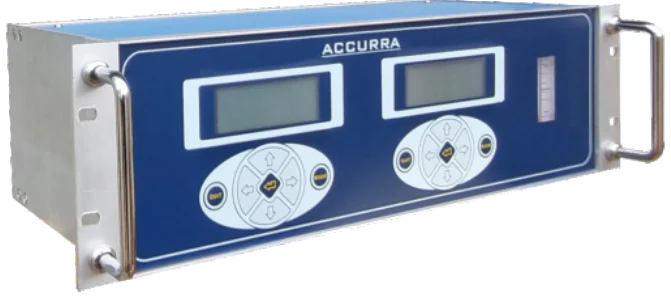
ACCURRA-S
Impurity analysis in trace, percent and purity ranges.
View ACCURRA-SACCURRA-TCD
Binary purity of H2, He, Ar and N2.
View ACCURRA-TCDACCURRA-S 3090
Oxygen purity 95 to 100 %.
View ACCURRA-S 3090Frequently asked questions
Which impurities can ACCURRA-S check?
Oxygen, carbon dioxide, carbon monoxide, methane and moisture or dew point, in ranges from ppm to percent.
Can I check helium or argon purity?
Yes, with ACCURRA-TCD, which measures the main component of a binary mixture by thermal conductivity.
Do your analysers keep an audit trail?
They store alarm, fault and calibration history with deviation values, protected by dual-level passwords.
Can I certify several gases on one analyser?
The sensor is matched to the gas, and the dual-channel version reads two gases from one sample. For several different gases, a dedicated analyser per gas is usual.
More in Air separation and industrial gases
- Oxygen purity in air separation plants
- Medical oxygen plant purity monitoring
- Nitrogen purity and trace oxygen
- Dew point and trace moisture in process gases
- Liquid oxygen, nitrogen and argon tanker and bulk-storage quality check
- Argon recovery and purification
- Helium purity and recovery
- Dry ice and liquid CO2 plant purity
- Food-grade CO2 recovery from distilleries, breweries and fermentation
- Medical nitrous oxide purity
- Compressed-air and instrument-air dew point (ISO 8573)
- Medical-air and breathing-air quality
- Laser-cutting nitrogen and oxygen assist-gas purity
- All air separation and industrial gases applications
- Browse analysers by gas