
Oxygen in an autoclave is measured with ACCURRA-S 3015 for 0 to 1000 ppm, or 3030 (0 to 25 %) and 3130 (0 to 100 %) for percent levels. In classified areas use ACCURRA-Hz, certified for Gas Group IIC, Zone 1 and 2, T6, or the INFINITY-Tx two-wire transmitter.
The measurement and why it matters
An oxygen reading on an autoclave serves the purposes our profile lists for pharmaceutical and chemical plants: inerting, blanketing and safety monitoring of processes. Choose the model from the oxygen level you need to read.
ACCURRA-S 3015 reads trace oxygen from 0 to 1000 ppm. ACCURRA-S 3030 reads 0 to 25 percent with an electrochemical sensor, and 3130 reads 0 to 100 percent with a paramagnetic sensor and a response below 5 seconds. Two independent failsafe alarm relays, set as Lo-LoLo, Lo-Hi or Hi-HiHi, and an isolated 4-20 mA output connect the reading to your interlocks and control system.
Where the autoclave stands in a classified area, ACCURRA-Hz measures trace, percent and purity oxygen in an enclosure certified for Gas Group IIC, Zone 1 and 2, T6, and can be calibrated without opening the covers. INFINITY-Tx is the loop-powered two-wire transmitter for percent oxygen: it has an inbuilt filter and scrubber, suits very low flow and pressure samples, and installs directly in the field.
Models and ranges
| Model | Measures | Range | Sensor and notes |
|---|---|---|---|
| 3015 | Trace oxygen | 0 to 1000 ppm | ACCURRA-S, electrochemical; T90 below 30 s |
| 3030 | Percent oxygen | 0 to 25 % | ACCURRA-S, electrochemical; T90 below 20 s |
| 3130 | Percent oxygen | 0 to 100 % | ACCURRA-S, paramagnetic; T90 below 5 s |
| ACCURRA-Hz | Oxygen, hazardous area | Trace, percent or purity | Gas Group IIC, Zone 1 and 2, T6 |
| INFINITY-Tx | Percent oxygen, hazardous area | Percent | Loop-powered two-wire transmitter |
Process notes
Alarms, faults and outputs
The fault relay operates during calibration and on instrument failure, so your system knows when the reading should not be trusted. Outputs can be set to freeze at their last value or to follow the reading during calibration check and calibration.
The 4-20 mA output range is configurable over the whole measurement range and can run as two ranges with a range ID relay, which suits a reading that starts high and settles lower.
Records and remote operation
Calibration, alarm and fault records are stored with time stamps, and calibration, set-up and diagnostics are password protected. The last calibration in the history serves as an audit record.
Modbus RTU over RS 485 connects the analyser to a PLC, DCS or PC. On ACCURRA-Hz the optional ACCURRA-CONNECT software lets you operate the analyser remotely as if you were standing in front of it, which helps where movement in the hazardous area is restricted.
Related applications
This page overlaps with:
- Closed-loop dryers and spray dryers
- Nitrogen blanketing and inerting
- Reactors, hydrogenation and polymerisation
Sampling and installation
- ACCURRA-S expects a sample at 2 to 10 psig and about 1 LPM, regulated externally, at 5 to 45 C, dry, oil-free and with dust below 3 micron.
- For a low-pressure sample ACCURRA-S can control an external sample pump, or carry an optional internal pump on models other than 3015, 3130 and 3190; the pump stops during calibration check and calibration.
- On ACCURRA-Hz an upstream flowmeter and an upstream filter are strongly advised, and the sample pump is external.
- If your sample does not meet the specification, we design a conditioning system around your application.
ACCURRA-S sample specification: non-corrosive, non-toxic, non-flammable, non-condensing and dry, free from entrained oil; sample pressure 2 to 10 psig, regulated externally; flow about 1 LPM; dust below 3 micron. Where your sample differs, we design conditioning around it.
Send us your process data
The same pre-order design inputs our engineers design from, online. Fill in what you know, leave the rest. Your draft saves as you go, and you can print or send it when ready.
What the data sheet asks for
Send what you have and we will ask for the rest.
- The gases to measure, the range, and the accuracy you need
- Background gases and their typical composition
- Sample temperature, pressure and dew point at the tapping point
- Dust level, and whether the gas carries tar, oil or condensable vapour
- Process connection and, for ducts, the duct diameter
- Where the sample vents to, and at what pressure
- Area classification of the tapping point and of the analyser location, and the IP protection needed
- Distance between the tapping point and the analyser
- Outputs you need: 4-20 mA, dual range, relays, Modbus RTU
- Calibration approach, calibration gas available, and whether blowback is required
- Utilities at site: power supply, instrument air, nitrogen, steam and cooling water, and the ambient temperature range
- Autoclave gas and pressure cycle, the oxygen range you need, sample point and area classification
Recommended Sarvesh products
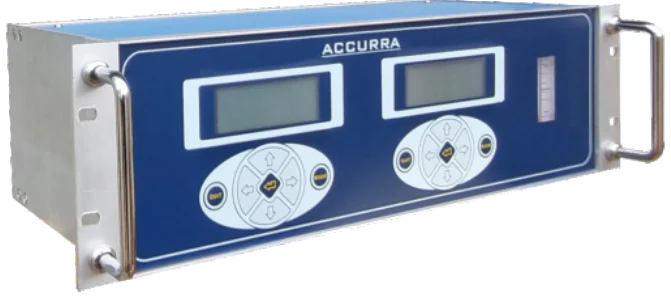
ACCURRA-S
Trace and percent oxygen in safe areas.
View ACCURRA-S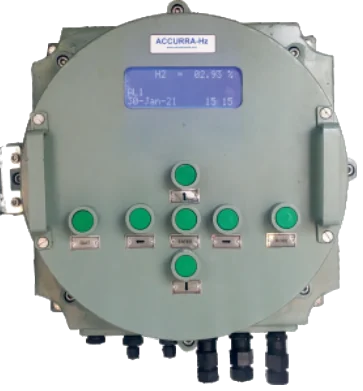
ACCURRA-Hz
Oxygen in classified areas.
View ACCURRA-Hz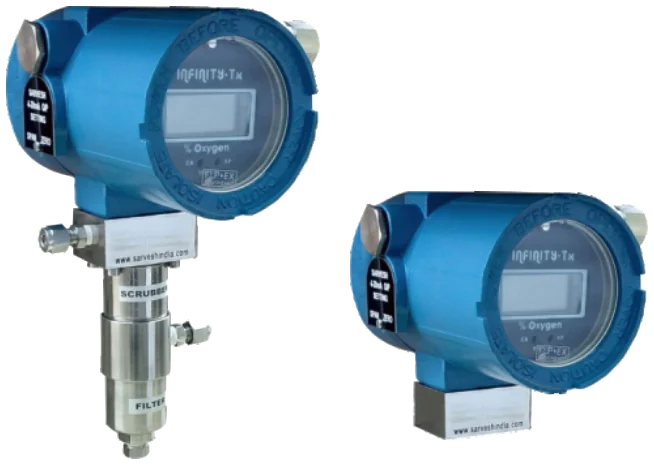
INFINITY-Tx
Two-wire percent oxygen transmitter for the field.
View INFINITY-TxHeadline filters
Headline filters to protect the analyser.
View Headline filtersFrequently asked questions
Which analyser measures oxygen in an autoclave?
ACCURRA-S 3015 for ppm, 3030 or 3130 for percent, and ACCURRA-Hz or INFINITY-Tx in a classified area.
Can the analyser interlock the autoclave?
Yes, through two failsafe alarm relays with configurable set points and a fault relay.
What if the sample pressure is low?
ACCURRA-S can control an external sample pump, and INFINITY-Tx suits very low flow and pressure samples.
Can I operate a hazardous-area analyser remotely?
Yes, ACCURRA-Hz with the optional ACCURRA-CONNECT software over Modbus.
More in Pharma, chemicals and petrochemicals
- Nitrogen blanketing and inerting
- Reactors, hydrogenation and polymerisation
- Closed-loop dryers and spray dryers
- Fermenter and bioreactor off-gas
- Pyrolysis, gasification and syngas
- Flare-gas recovery oxygen ingress
- Dust-collector, mill and silo inerting
- Solvent-recovery and distillation columns under inert gas
- All pharma, chemicals and petrochemicals applications
- Browse analysers by gas