
A dryer oxygen monitor confirms inerting before heating and throughout the cycle. ACCURRA-S reads 0 to 25 % or ppm oxygen and ACCURRA-Hz covers classified areas. Warm, humid, solvent-laden gas needs cooling and filtration before the analyser.
The measurement and why it matters
Closed-loop dryers, tube bundle dryers and spray dryers remove solvents from pharmaceutical and chemical products. Solvent vapour, fine powder and hot surfaces sit together, so the atmosphere is purged with nitrogen before heating and kept inert during drying. A measured oxygen figure is the start permissive, and a continuing check.
ACCURRA-S 3030 and 3130 read percent oxygen from 0 to 25 percent, and 3015 reads trace oxygen to 1000 ppm. Where the area is classified, ACCURRA-Hz covers the requirement. Alarm relays tie into the dryer interlock, and stored calibration and alarm history supports GMP audits.
Solvent-laden gas is wet. Send the solvent type, concentration, temperature and dew point so the sample can be conditioned correctly.
Models and ranges
| Model | Measures | Range | Sensor and notes |
|---|---|---|---|
| 3030 / 3130 | Oxygen percent | 0 to 25 % | ACCURRA-S |
| 3015 | Oxygen trace | 0 to 1000 ppm | ACCURRA-S |
| ACCURRA-Hz | Oxygen, hazardous area | As required | Certified enclosure |
Process notes
Spray dryers
A spray dryer atomises a liquid feed into a hot gas stream so it dries into fine powder. When the feed carries solvent, the dryer runs as a closed loop: nitrogen circulates, a condenser recovers solvent, and the gas returns to the heater. Oxygen is kept low so the solvent vapour and powder cannot ignite.
The gas in the loop is warm, humid and carries fine particles, so the sample system matters. A probe filter with blowback keeps powder out, and a cooler and fine filter dry the gas before it reaches the cell. The oxygen reading then supports an interlock and a record for each batch.
Dryer inerting
Closed-loop dryers, tube bundle dryers and nutsche filter dryers remove solvents from pharmaceutical intermediates. Wet cake and solvent vapour sit with hot surfaces, so the atmosphere is purged with nitrogen before heating and kept inert during drying.
Oxygen measurement gives the permissive to start heating and a continuing check while the cycle runs. Calibration and alarm history stored in the analyser help demonstrate control during audits. The sample is often saturated with solvent, so a coalescing filter protects the cell.
When you specify an analyser for a dryer, list the solvents, the dryer temperature, the pressure or vacuum in the dryer and the zone classification. Vacuum dryers need the sample pump to pull against low pressure, and ACCURRA-S offers an internal sample pump for low-pressure samples. Alarms and outputs are configurable to match your batch procedure.
Sampling and installation
- Solvent-laden gas is wet. Send solvent type, concentration, temperature and dew point.
- Place the probe after the cyclone or bag filter where the gas is cleaner.
- Cool and dry the sample before the analyser, and protect it with a coalescing filter.
- Vacuum dryers need the sample drawn against low pressure; ask about the optional internal sample pump.
ACCURRA-S sample specification: non-corrosive, non-toxic, non-flammable, non-condensing and dry, free from entrained oil; sample pressure 2 to 10 psig, regulated externally; flow about 1 LPM; dust below 3 micron. Where your sample differs, we design conditioning around it.
Send us your process data
The same pre-order design inputs our engineers design from, online. Fill in what you know, leave the rest. Your draft saves as you go, and you can print or send it when ready.
What the data sheet asks for
Send what you have and we will ask for the rest.
- The gases to measure, the range, and the accuracy you need
- Background gases and their typical composition
- Sample temperature, pressure and dew point at the tapping point
- Dust level, and whether the gas carries tar, oil or condensable vapour
- Process connection and, for ducts, the duct diameter
- Where the sample vents to, and at what pressure
- Area classification of the tapping point and of the analyser location, and the IP protection needed
- Distance between the tapping point and the analyser
- Outputs you need: 4-20 mA, dual range, relays, Modbus RTU
- Calibration approach, calibration gas available, and whether blowback is required
- Utilities at site: power supply, instrument air, nitrogen, steam and cooling water, and the ambient temperature range
- Solvent type and concentration, dryer pressure or vacuum, and area classification
Recommended Sarvesh products
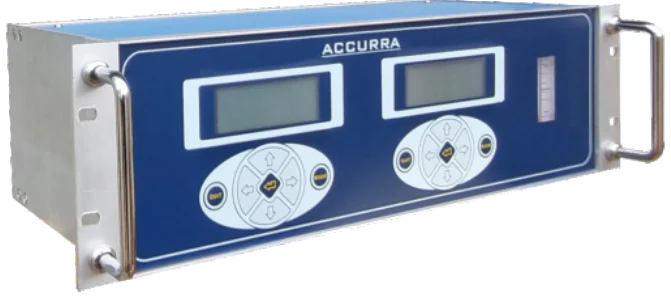
ACCURRA-S
Percent and trace oxygen.
View ACCURRA-S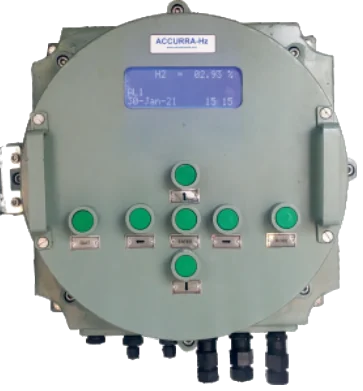
ACCURRA-Hz
Hazardous-area oxygen.
View ACCURRA-HzHeadline filters
Coalescing filters for solvent mist.
View Headline filters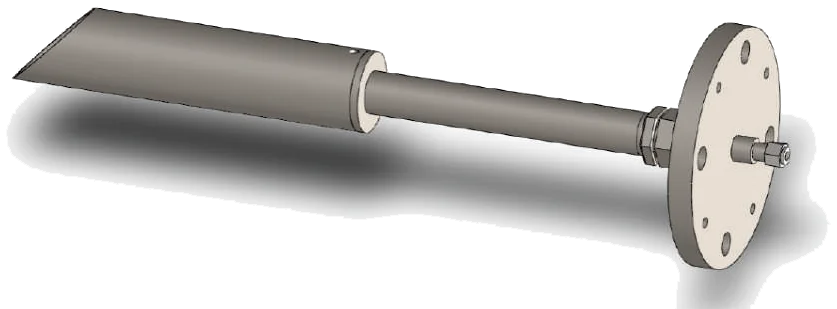
SP and SRP sample probes
Probes with blowback for powder.
View SP and SRP sample probesFrequently asked questions
Can the analyser interlock the heater?
Yes, using relay outputs with configurable set points.
Does it work on vacuum dryers?
The sample must be drawn against low pressure; ACCURRA-S offers an optional internal sample pump. Tell us your vacuum level.
How do you deal with powder in the gas?
Probe blowback and filters upstream of the analyser.
Is documentation available?
Calibration and alarm history is stored in the analyser, and Modbus lets your system log readings.
More in Pharma, chemicals and petrochemicals
- Nitrogen blanketing and inerting
- Reactors, hydrogenation and polymerisation
- Fermenter and bioreactor off-gas
- Pyrolysis, gasification and syngas
- Autoclaves
- Flare-gas recovery oxygen ingress
- Dust-collector, mill and silo inerting
- Solvent-recovery and distillation columns under inert gas
- All pharma, chemicals and petrochemicals applications
- Browse analysers by gas