
Fermenter off-gas is analysed with a dual-channel ACCURRA-S: model 3030 for oxygen and 6030 for CO2 in one enclosure with independent outputs. Modbus lets your control system calculate oxygen uptake rate, CO2 evolution rate and respiratory quotient.
The measurement and why it matters
Without exhaust gas analysis a bioreactor is a black box. Oxygen uptake rate and carbon dioxide evolution rate guide process control, show metabolic shifts in real time, and help make batches repeatable. Their ratio, the respiratory quotient, indicates metabolic state and can be used to control nutrient feeds and gassing.
A dual-channel ACCURRA-S houses two sensors, each with its own electronics, microcontroller, current output, relays and Modbus ID. A fault in one channel does not affect the other. The Modbus RTU output feeds your control system for real-time calculation of OUR, CER and RQ.
Bioreactor off-gas is warm and saturated, so a cooler and a condensate trap protect the sensors.
Models and ranges
| Model | Measures | Range | Sensor and notes |
|---|---|---|---|
| 3030 | Oxygen | 0 to 25 % | Electrochemical or paramagnetic |
| 6030 | Carbon dioxide | 0 to 20 % | NDIR |
| 3030 + 6030 | O2 and CO2 together | Dual channel | Independent outputs, relays and Modbus ID |
Process notes
Fermentors and bio-reactors
In aerobic fermentation, the culture takes up oxygen and releases carbon dioxide. Measuring both in the exhaust, together with air flow, gives the oxygen uptake rate and carbon dioxide evolution rate, and their ratio, the respiratory quotient. These guide feeding strategy and signal contamination or a stalled culture.
The exhaust is saturated with water and can carry foam or antifoam aerosol, so it has to be cooled, dried and filtered before analysis. A Peltier cooler with an integrated peristaltic pump, as in the SGI-300, handles the condensate without cross-contaminating the sample.
Choose the ranges around your culture. Oxygen in exhaust usually reads in the high teens of percent and CO2 from near zero to a few percent, so a 0 to 25 % oxygen range and a 0 to 5 or 0 to 20 % CO2 range are common. Calibrate with air and a certified CO2 span gas, and keep sample flow constant so that readings compare from run to run.
Sampling and installation
- Bioreactor off-gas is warm and saturated. A cooler and a condensate trap protect the sensors.
- Filter with a PTFE membrane to protect against foam and antifoam aerosol.
- Keep sample flow constant so that readings compare from run to run.
ACCURRA-S sample specification: non-corrosive, non-toxic, non-flammable, non-condensing and dry, free from entrained oil; sample pressure 2 to 10 psig, regulated externally; flow about 1 LPM; dust below 3 micron. Where your sample differs, we design conditioning around it.
Send us your process data
The same pre-order design inputs our engineers design from, online. Fill in what you know, leave the rest. Your draft saves as you go, and you can print or send it when ready.
What the data sheet asks for
Send what you have and we will ask for the rest.
- The gases to measure, the range, and the accuracy you need
- Background gases and their typical composition
- Sample temperature, pressure and dew point at the tapping point
- Dust level, and whether the gas carries tar, oil or condensable vapour
- Process connection and, for ducts, the duct diameter
- Where the sample vents to, and at what pressure
- Area classification of the tapping point and of the analyser location, and the IP protection needed
- Distance between the tapping point and the analyser
- Outputs you need: 4-20 mA, dual range, relays, Modbus RTU
- Calibration approach, calibration gas available, and whether blowback is required
- Utilities at site: power supply, instrument air, nitrogen, steam and cooling water, and the ambient temperature range
- Number of vessels, off-gas flow and whether sterile sample paths are required
Recommended Sarvesh products
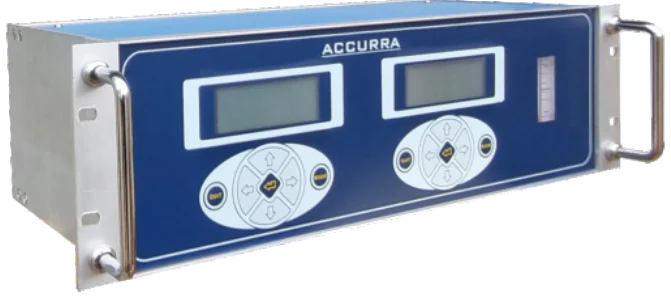
ACCURRA-S
Dual-channel O2 and CO2.
View ACCURRA-S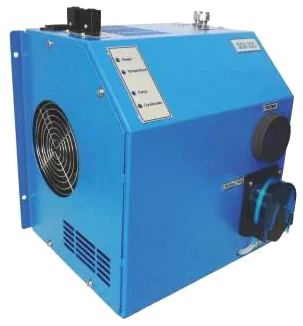
SGI-300 / SGI-320
Peltier cooler for humid off-gas.
View SGI-300 / SGI-320Headline filters
PTFE membrane filters.
View Headline filtersFrequently asked questions
Can one analyser read O2 and CO2?
Yes, the dual-channel ACCURRA-S, for example 3030 plus 6030, one enclosure with independent outputs.
Does a fault in one channel affect the other?
No. Each sensor has its own electronics and microcontroller.
How is humid exhaust handled?
With a Peltier cooler and condensate drain upstream of the analyser.
Can I calculate RQ?
Modbus gives your control system both readings so you can calculate OUR, CER and RQ.
More in Pharma, chemicals and petrochemicals
- Nitrogen blanketing and inerting
- Reactors, hydrogenation and polymerisation
- Closed-loop dryers and spray dryers
- Pyrolysis, gasification and syngas
- Autoclaves
- Flare-gas recovery oxygen ingress
- Dust-collector, mill and silo inerting
- Solvent-recovery and distillation columns under inert gas
- All pharma, chemicals and petrochemicals applications
- Browse analysers by gas