
Welding and laser gas blends are checked with ACCURRA-S for CO2 (NDIR, model 6030) and oxygen, and ACCURRA-TCD for binary argon, helium or nitrogen blends. A blend of three components needs a method review before an analyser is chosen.
The measurement and why it matters
Shielding gas keeps air away from the molten weld pool. Argon and argon-CO2 mixes are common for steel and stainless, and oxygen above specification or moisture in the gas leads to porosity, discolouration and weaker joints. Laser cutting uses nitrogen or oxygen assist gas, and resonator mixes of helium, nitrogen and carbon dioxide that must hold tight composition.
Gas suppliers blend these mixes at the plant, and fabricators check them at the manifold. ACCURRA-S 6030 reads CO2 in blends in percent, and oxygen in blends is read in percent by ACCURRA-S. ACCURRA-TCD reads argon, helium and nitrogen binary blends.
Three-component blends need a method review, because a thermal conductivity analyser reads two components.
Models and ranges
| Model | Measures | Range | Sensor and notes |
|---|---|---|---|
| 6030 | CO2 in blends | Percent | NDIR |
| 3015 / 3030 / 3130 | Oxygen in blends | Percent | ACCURRA-S |
| ACCURRA-TCD | Ar, He, N2 binary blends | Binary | Thermal conductivity |
Process notes
Where the measurement is made
Gas suppliers measure at the blending skid and at the filling manifold, so each cylinder or bundle is checked before dispatch. Fabricators measure at the mixer or manifold that feeds welding cells and laser machines, which catches a faulty cylinder or a drifting blender before it affects production.
Welding and laser gases
Shielding gas keeps air away from the molten weld pool. Argon and argon-CO2 mixes are most common for steel and stainless, and oxygen above specification or moisture in the gas leads to porosity, discolouration and weaker joints. Laser cutting uses nitrogen or oxygen assist gas and resonator mixes of helium, nitrogen and carbon dioxide that must hold tight composition.
Gas suppliers blend these mixes at the plant and fabricators check them at the manifold. In both places a small analyser that reads CO2 percent by NDIR and oxygen impurity with the right sensor takes the guesswork out, and a relay alarm stops a bad cylinder or a drifting blender from reaching production.
Sampling and installation
- Three-component blends need a method review, because a TCD reads two components.
- Sample from the mixer outlet before the distribution header, with a regulator and flow indicator to hold flow steady.
ACCURRA-S sample specification: non-corrosive, non-toxic, non-flammable, non-condensing and dry, free from entrained oil; sample pressure 2 to 10 psig, regulated externally; flow about 1 LPM; dust below 3 micron. Where your sample differs, we design conditioning around it.
Send us your process data
The same pre-order design inputs our engineers design from, online. Fill in what you know, leave the rest. Your draft saves as you go, and you can print or send it when ready.
What the data sheet asks for
Send what you have and we will ask for the rest.
- The gases to measure, the range, and the accuracy you need
- Background gases and their typical composition
- Sample temperature, pressure and dew point at the tapping point
- Dust level, and whether the gas carries tar, oil or condensable vapour
- Process connection and, for ducts, the duct diameter
- Where the sample vents to, and at what pressure
- Area classification of the tapping point and of the analyser location, and the IP protection needed
- Distance between the tapping point and the analyser
- Outputs you need: 4-20 mA, dual range, relays, Modbus RTU
- Calibration approach, calibration gas available, and whether blowback is required
- Utilities at site: power supply, instrument air, nitrogen, steam and cooling water, and the ambient temperature range
- The blend composition and tolerance, and where you will sample
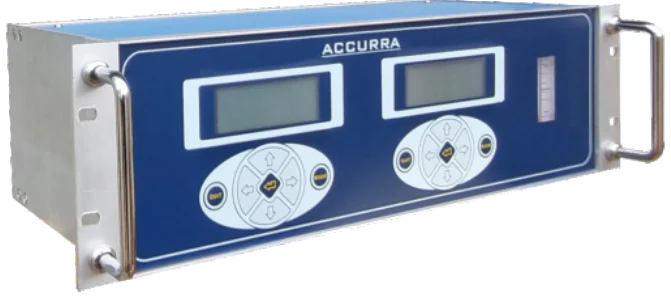
Recommended Sarvesh products
Frequently asked questions
Can you measure Ar/CO2 mixtures?
Yes, CO2 by NDIR in percent ranges, and oxygen with the right sensor, on one dual-channel ACCURRA-S.
Why use a thermal conductivity analyser for a blend?
For binary blends of argon, helium and nitrogen it needs no reference gas.
Is dew point worth measuring in shield gas?
Yes. Moisture in the gas is a common cause of porosity. M015 reads dew point.
Can I check laser gas mixes?
For two-component mixes yes; for three components we review the method first.
More in Electronics, cable and research
- Semiconductor and electronics gas purity
- Optical fibre and cable manufacturing
- Aerospace, nuclear and research laboratories
- Metal additive manufacturing build-chamber oxygen
- Glove boxes and isolators (O2 and moisture)
- Lithium-ion battery dry rooms and electrode drying
- Research furnaces and CVD/ALD labs
- Reactor cover-gas and glove-box atmospheres (O2 and moisture in argon)
- All electronics, cable and research applications
- Browse analysers by gas