
Area classification says how likely an explosive atmosphere is (Zone 0, 1 or 2 for gas), what gas it could be (group IIA, IIB or IIC) and how hot equipment may get (T1 to T6, 450 to 85 C). Equipment is marked for the zone, gas group and temperature class it suits, and must meet or exceed what the area requires. The plant owner classifies the area; the supplier supplies matching equipment.
- Define Zones 0, 1 and 2
- Distinguish gas groups IIA, IIB and IIC
- List the temperature classes
- Read a combined equipment marking
Zones: how likely
| Zone | Explosive gas atmosphere is |
|---|---|
| Zone 0 | Present continuously, for long periods or frequently |
| Zone 1 | Likely to occur occasionally in normal operation |
| Zone 2 | Not likely in normal operation, and if it occurs, only for a short time |
Dust has its own zones: 20, 21 and 22. North American practice uses Divisions; Division 1 broadly corresponds to Zones 0 and 1, and Division 2 to Zone 2.
Gas groups: how easily it ignites
| Group | Representative gas | Note |
|---|---|---|
| IIA | Propane | Least demanding |
| IIB | Ethylene | Intermediate |
| IIC | Hydrogen, acetylene | Most demanding, smallest safe gaps and ignition energies |
Equipment certified for IIC is suitable for IIB and IIA. The reverse is not true. Hydrogen calls for IIC: Flammability, explosive limits and gas safety basics.
Temperature classes: how hot
| Class | Maximum surface temperature |
|---|---|
| T1 | 450 C |
| T2 | 300 C |
| T3 | 200 C |
| T4 | 135 C |
| T5 | 100 C |
| T6 | 85 C |
The equipment's maximum surface temperature must stay below the autoignition temperature of the gas. A T6 marking is the most restrictive: the equipment surface stays at or below 85 C, which suits nearly all gases.
Putting it together
An equipment marking combines these: for example flameproof protection, Gas Group IIC and T6, suitable for Zone 1 and 2. That is the combination ACCURRA-Hz is certified for. See Hazardous area gas analysers explained and Protection concepts: flameproof, intrinsic safety, purging.
Who classifies, and what to tell the supplier
- The plant owner or its safety consultant classifies the area, usually following standards of the IEC 60079 series, and records it on drawings.
- Tell the supplier the zone, gas group, temperature class and ambient range for the analyser location and for the tapping.
- Approval requirements differ by country and site; check what your site authority requires for equipment certification.
Specifying a zone but not the gas group. A Zone 1 area with hydrogen needs a different enclosure from a Zone 1 area with propane.
- Zone describes likelihood: 0, 1 or 2 for gas.
- Group describes ignitability: IIA, IIB, IIC, with IIC the most demanding.
- Temperature class sets the surface temperature limit: T1 450 C to T6 85 C.
- Always give the supplier zone, group, T-class and ambient range.
Check your understanding
Answer in your head or on paper first, then open the answer. Recalling an answer teaches more than rereading.
What distinguishes Zone 1 from Zone 2?
In Zone 1 an explosive atmosphere is likely to occur occasionally in normal operation; in Zone 2 it is not likely and, if it occurs, short-lived.
Which gas group is the most demanding?
IIC, which includes hydrogen and acetylene.
What is the maximum surface temperature of T6 equipment?
85 C.
Key terms
Frequently asked questions
What does Zone 2 mean?
An area where an explosive gas atmosphere is not likely in normal operation and, if it occurs, lasts only briefly.
Is IIC better than IIB?
IIC equipment is suitable for a wider range of gases, since it meets a more demanding test.
What does T6 mean?
The equipment's surface will not exceed 85 C.
Who decides the zone?
The plant owner or its consultant, documented on the area classification drawings.
Related products
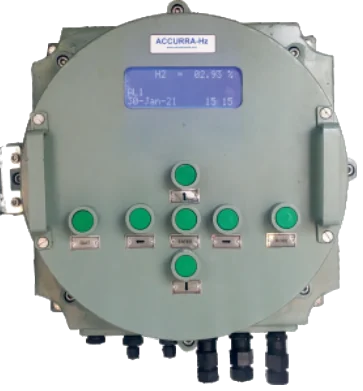
ACCURRA-Hz
Process gas analyser in an enclosure certified for Gas Group IIC, Zone 1 and 2, T6.
View ACCURRA-Hz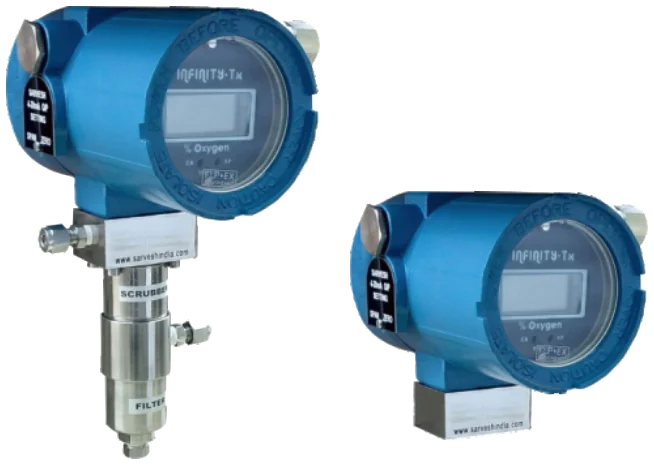
INFINITY-Tx
Loop-powered two-wire transmitter for percent O2 and trace CO in hazardous areas.
View INFINITY-Tx