
Inerting keeps a vessel's oxygen below the limiting oxygen concentration by filling it with nitrogen or another inert gas. Purging replaces the vessel's atmosphere before start-up or opening. Common methods are sweep-through, pressure cycling, vacuum cycling and dilution; with good mixing about 3 vessel volumes take air from 21 to 1 % oxygen. An oxygen analyser on the vent or headspace proves the result.
- Compare the main purging methods
- Estimate the inert gas needed for a dilution purge
- Place an oxygen analyser to prove inerting
- Plan margins and alarms
Inerting versus purging versus blanketing
- Purging: replace the atmosphere in a vessel or pipe before start-up, after maintenance or before opening.
- Inerting: keep oxygen below a safe level during operation.
- Blanketing: maintain a slight positive pressure of inert gas above a liquid so that air cannot enter.
Methods
| Method | How | Good for |
|---|---|---|
| Sweep-through (flow) | Inert gas flows in at one point and the old atmosphere leaves at another | Pipes and vessels with good flow paths |
| Pressure cycling | Pressurise with inert gas, vent, repeat | Vessels that can take pressure; fewer volumes of gas than dilution |
| Vacuum cycling | Evacuate, break the vacuum with inert gas, repeat | Vessels rated for vacuum |
| Siphon or liquid displacement | Fill with liquid, then displace with inert gas as it is drained | Tanks where liquid is available |
| Dilution | Continuous inert gas flow through a mixed vessel | Mixed vessels; the simplest to calculate |
A dilution purge in numbers
In a well-mixed vessel, oxygen falls exponentially as inert gas is added. The number of vessel volumes is the natural log of the starting over the target oxygen: about 3.0 volumes from 20.9 to 1 %, and about 5.3 to reach 0.1 %. A 10 m3 vessel needs about 30 m3 of nitrogen to reach 1 %.
Try the calculatorInerting purge time and volume calculatorTrusting the arithmetic without measuring. Dead legs, poor mixing and leaks make real vessels take more gas than the ideal curve.
Where to measure
- On the vent during a sweep or dilution purge, since the vent shows the last place to clear.
- In the headspace for blanketed tanks, away from the inert gas inlet: What is limiting oxygen concentration (LOC).
- At the farthest point of a pipe network from the inlet.
- With a suitable analyser: ACCURRA-S for percent oxygen in safe areas; ACCURRA-Hz or INFINITY-Tx in hazardous areas, since flammable vapour may be present.
Margins and alarms
Set the target oxygen from the limiting oxygen concentration of the worst-case flammable material, minus a margin set by your safety assessment. Codes such as NFPA 69 give minimum margins for monitored systems; apply the one that governs your site. Alarm on oxygen rising and link the alarm to a response, such as increased inert gas flow or a trip: Connecting a gas analyser to PLC, DCS and SCADA.
Where this is used
Pharmaceutical dryers and reactors, solvent tanks, powder handling and storage, and pipe commissioning use inerting: Inert gas blanketing in pharma and chemical plants.
- Inerting keeps oxygen below the LOC; purging replaces an atmosphere; blanketing keeps air out.
- Common methods: sweep-through, pressure and vacuum cycling, siphon, dilution.
- Dilution needs about 3 vessel volumes to reach 1 % oxygen, with good mixing.
- Prove it with an oxygen analyser at the vent or headspace.
Check your understanding
Answer in your head or on paper first, then open the answer. Recalling an answer teaches more than rereading.
How many vessel volumes does a perfectly mixed dilution purge need to go from 20.9 to 1 % oxygen?
About 3.0, since ln(20.9) is 3.04.
Where should a purge be verified?
At the vent or the point farthest from the inert gas inlet, where the old atmosphere clears last.
Why use a hazardous-area analyser on a solvent tank headspace?
Flammable vapour may be present, so equipment must be certified for the zone.
Key terms
Frequently asked questions
How do you purge a tank with nitrogen?
By sweep-through or dilution to a target oxygen, then confirm with an analyser.
How much nitrogen do I need to purge a vessel?
About three vessel volumes for 1 % oxygen if well mixed, more in practice.
Which standard sets inerting margins?
Standards such as NFPA 69 give guidance; follow the one that applies to your site.
What oxygen alarm should I set?
Below the LOC by the margin your safety assessment requires.
Related products
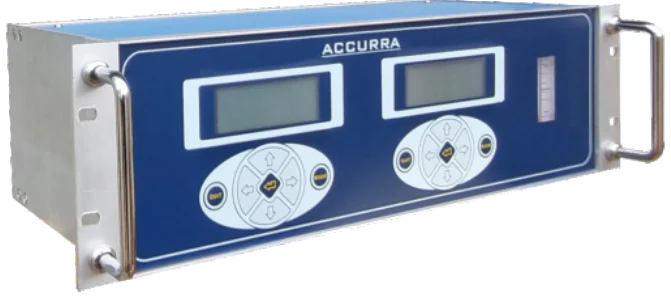
ACCURRA-S
Online analyser for trace, percent and purity O2, CO, CO2, CH4 and dew point; can measure two gases from one sample.
View ACCURRA-S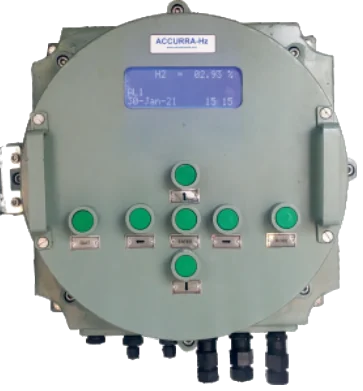
ACCURRA-Hz
Process gas analyser in an enclosure certified for Gas Group IIC, Zone 1 and 2, T6.
View ACCURRA-Hz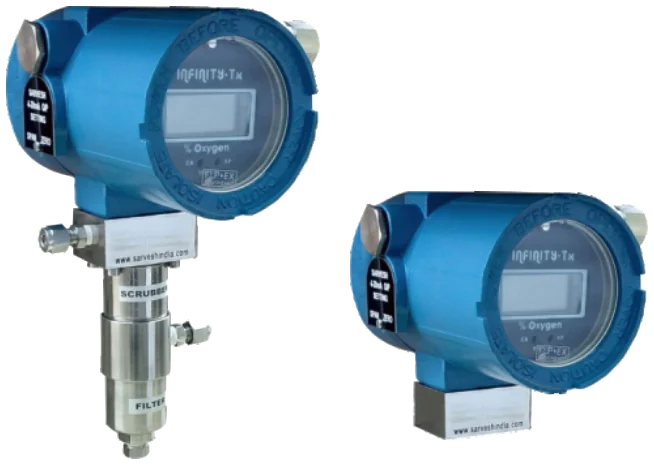
INFINITY-Tx
Loop-powered two-wire transmitter for percent O2 and trace CO in hazardous areas.
View INFINITY-Tx