
Maintain analysers by routine: a daily look at flow, pressure and condensate; a weekly check of filters and drain; a monthly calibration check; and an annual full calibration, sensor check and leak test. Keep spare filter elements, tubing fittings, a sensor or cell and a few seals. Log every action so that trends and repeat faults are visible.
- Build a maintenance routine by frequency
- Select spares to hold
- Keep a useful log
A starting schedule
| Interval | Tasks |
|---|---|
| Daily or each shift | Look at the display, flow, pressure and any alarms; check the condensate drain and cooler status |
| Weekly | Inspect filters and the rotameter; check calibration gas pressure; look for leaks or moisture in the sample line |
| Monthly | Calibration check with zero and span, recording the as-found deviation; clean or replace filter elements as needed |
| Quarterly | Check heated lines and probe condition, blowback operation and cooler performance |
| Annually | Full calibration, leak test of the sample system, sensor and cell review, check of alarms and outputs, review of the maintenance log |
These are starting points. Lengthen or shorten each from your own records: How often should you calibrate a gas analyser.
Spares to hold
- Filter elements for each filter in the sample line.
- Tubing, ferrules and fittings of the same material as installed.
- A spare sensor or cell for critical analysers, particularly electrochemical cells with a limited life: Sensor life, poisoning and replacement in gas analysers.
- Pump diaphragms or a spare pump where one is used, and seals.
- Calibration gas, regulators and the connectors to use them.
- Fuses and any items the manual lists as consumables.
Stock to match the criticality: a safety interlock analyser deserves a spare sensor on the shelf.
The log
- Date, who, what was done.
- As-found and as-left calibration values and the gas lot.
- Flow and pressure at the inlet.
- Parts replaced and their lot or date.
- Any faults and the actions taken.
A log shows when a part fails early, when drift is growing and when an interval can be extended.
Training and support
A trained technician is the best maintenance tool. Operators should know what each alarm means and when to call. For a plant starting out, ask about service and training from the supplier.
- Run a daily, weekly, monthly and annual routine.
- Hold spare filters, fittings, sensors and calibration gas.
- Log as-found values, flow, pressure and parts.
- Adjust intervals from data.
Check your understanding
Answer in your head or on paper first, then open the answer. Recalling an answer teaches more than rereading.
Which two checks belong in a daily routine?
Flow and pressure, and the condensate drain and cooler.
Why keep a spare sensor?
A critical analyser should not be down while waiting for a sensor to arrive.
What does a log let you do?
See trends, repeat faults and decide when to lengthen or shorten intervals.
Key terms
Frequently asked questions
How often should an analyser be serviced?
A routine of daily, weekly, monthly and annual tasks, adjusted from your records.
Which spares are essential?
Filter elements, fittings, calibration gas and, for critical analysers, a spare sensor.
Can Sarvesh service my analyser?
Contact us with the model and site; support is part of how we work.
Who should maintain analysers?
Trained instrument technicians following the manual.
Related products
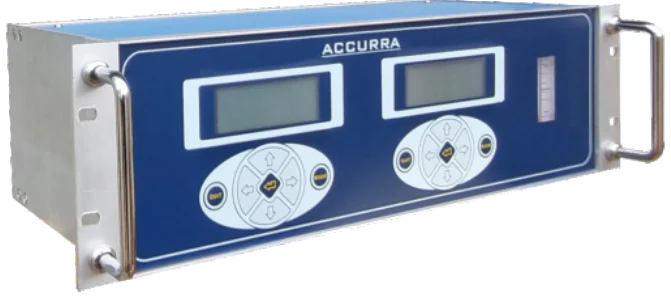
ACCURRA-S
Online analyser for trace, percent and purity O2, CO, CO2, CH4 and dew point; can measure two gases from one sample.
View ACCURRA-SHeadline filters
Particulate, coalescing and PTFE membrane filters from Headline Filters, UK, for analyser protection.
View Headline filters