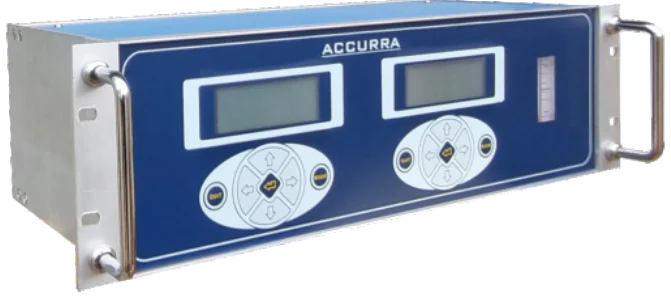
Regulated plants must show that an analyser was fit for purpose and stayed so: traceable calibration records, alarm and fault history, controlled access to settings, change control, and documented qualification (installation, operation and performance). ACCURRA-S stores calibration with deviation values and alarm history and password-protects calibration and set-up. We make no claim of compliance with any specific regulation.
- List the records a quality system expects
- Explain access control and change control for analysers
- Describe IQ, OQ and PQ in plain terms
- Know what a supplier can and cannot promise
What auditors look for
- Traceable calibration. Each calibration records date, who, gas lot and certificate, as-found and as-left values.
- Alarm and fault history showing what happened and when.
- Access control. Settings that affect results are protected; ACCURRA-S password-protects calibration, set-up and diagnostics modes.
- Change control. Changes to ranges, alarm points or software are approved and recorded.
- Procedures. Written methods for calibration and maintenance, and training records.
Qualification in plain terms
| Stage | Question answered | Typical evidence |
|---|---|---|
| Installation qualification (IQ) | Is it installed as specified? | Drawings, parts list, certificates, installation checks |
| Operational qualification (OQ) | Does it operate as specified across its range? | Calibration and function tests, alarm tests, output checks |
| Performance qualification (PQ) | Does it perform in the real process? | Run records on process gas, comparison with a reference |
Your quality system defines the exact content. The supplier's role is to provide the documents and data that support each stage.
What the analyser records
ACCURRA-S stores calibration checks and calibrations with deviation values, and alarm history, and protects the modes that change calibration and settings with passwords. These support a record of instrument health over time: How often should you calibrate a gas analyser. External records, such as the gas lot and certificate, belong in your calibration log.
What we do not claim
Sarvesh makes no claim that an analyser satisfies a particular regulation or electronic-records standard. If your project requires specific compliance features, tell us the requirement and we will state point by point what the analyser provides.
This is the same approach we take with safety integrity: What SIL means for gas analysers, and what it does not.
Practical tips
- Capture requirements early, in the specification: How to specify a gas analyser: A practical checklist.
- Keep calibration certificates with the log.
- Use the Modbus link to archive values and alarms in your own system if you need longer history.
- Plan periodic review of the calibration data.
- Regulated plants need traceable calibration, alarm history, access control and change control.
- IQ, OQ and PQ show installed, operating and performing as specified.
- ACCURRA-S stores calibration deviations and alarm history and password-protects settings.
- We make no claim of compliance with a specific regulation.
Check your understanding
Answer in your head or on paper first, then open the answer. Recalling an answer teaches more than rereading.
What do IQ, OQ and PQ stand for?
Installation, operational and performance qualification.
Why protect calibration settings with passwords?
So that unauthorised changes cannot alter results without a record.
What belongs in a calibration record?
Date, who, gas lot and certificate, as-found and as-left values.
Key terms
Frequently asked questions
Does ACCURRA-S support audit trails?
It stores calibration with deviation values and alarm history, and password-protects set-up. Tell us your exact requirements.
Is ACCURRA-S compliant with a specific regulation?
We make no such claim; ask for a point-by-point answer for your requirement.
Who writes the qualification documents?
Your quality team, with documents and data from the supplier.
Can records be archived electronically?
Via the analyser's digital outputs into your own system.