
An analyser installation needs more than a power connection: a clean, stable electrical supply, instrument air or nitrogen for blowback and purges, a calibration gas supply with regulators, a safe vent, a drain for condensate, and in some cases heating, cooling or ventilation for the enclosure. List them at design time and note their quality, pressure and consumption.
- List the utilities an analyser system may need
- State the quality or pressure issue for each
- Use a checklist at design review
The checklist
| Utility | What to confirm |
|---|---|
| Electrical supply | Voltage, frequency, load, earth, clean supply or UPS for critical measurements |
| Instrument air or nitrogen | Pressure, dryness and oil-free quality for blowback, purges and pumps |
| Calibration gas | Cylinders of zero and span gas, regulators in suitable materials, a safe storage place, a way to connect |
| Vent | Safe discharge point, back pressure limit, flammable or toxic gas handling |
| Drain | Where condensate goes, how it is neutralised or collected |
| Heating and cooling | For shelters and enclosures: ambient limits, trace heating for lines and cabinets |
| Communications | 4-20 mA, relay and Modbus cable routes to the control system |
| Access and lifting | Service space, cable trays, lifting for heavy items |
Instrument air quality
Blowback and purges use compressed air, which must be dry and free of oil so it does not contaminate the sample path. A dew point well below the lowest site temperature prevents condensation in the lines. See Compressed air quality and dew point (ISO 8573-1).
Calibration gas
Calibration gas is a utility of its own: certified cylinders, matched regulators, and plumbing that does not alter the gas. Trace-oxygen calibration needs stainless steel and care: Calibration gases: choosing, handling and certificates.
Vent and drain
- Vent to a safe place for the gas; flammable or toxic gas must not be discharged in a working area.
- Keep vent back pressure low and constant: Sample pressure, flow and fast bypass loops.
- Drain condensate to a collection or treatment route; it may be acidic or contain dissolved gases.
Utilities on the data sheet
Many of these questions are on the application data sheet, so that the system is sized with them in mind: The application data sheet: what to send Sarvesh. If you are unsure of a value, send what you have.
- List power, air, calibration gas, vent, drain, heating and communications.
- Instrument air must be dry and oil-free.
- Plan calibration gas storage, regulators and connections.
- Vent and drain to safe, suitable places.
Check your understanding
Answer in your head or on paper first, then open the answer. Recalling an answer teaches more than rereading.
Name three utilities besides electrical power.
Instrument air or nitrogen, calibration gas, and a vent or drain.
Why must blowback air be dry and oil-free?
Wet or oily air contaminates the sample path and filters.
Why avoid high back pressure on the vent?
It changes the sample pressure at the sensor and can shift the reading.
Key terms
Frequently asked questions
What power does an analyser need?
Check the model datasheet for voltage and consumption; use a clean supply.
Do I need instrument air for every analyser?
Only for functions such as blowback or air purges, and for some probes.
Where do I store calibration cylinders?
In a ventilated, secured place, with cylinders restrained, away from heat and incompatible gases.
Can I vent to the room?
Only if the sample is harmless in the quantity vented; follow your site safety rules.
Related products
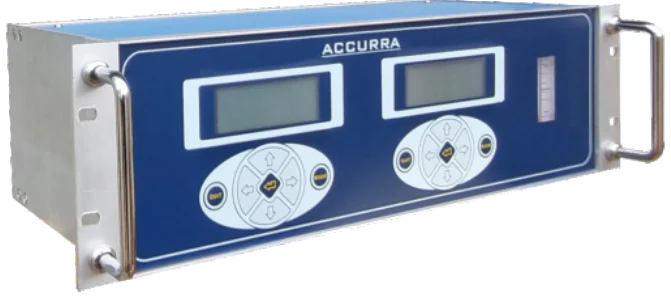
ACCURRA-S
Online analyser for trace, percent and purity O2, CO, CO2, CH4 and dew point; can measure two gases from one sample.
View ACCURRA-S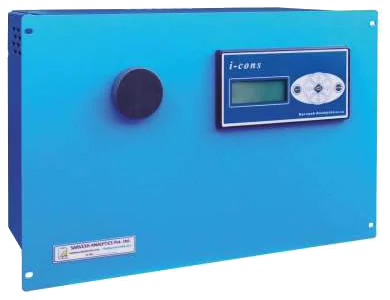
i-Cons
Smart Peltier sample conditioner with diagnostics, auto blowback and Modbus, in a compact 19 inch cabinet.
View i-Cons