
Mount an analyser as close to the sample point as practical, in a clean, temperature-stable, accessible place, out of vibration, direct sun and weather. Common choices are a control-room panel, an analyser shelter and a field enclosure at the vessel. Closer means faster response and shorter lines; farther means easier maintenance and better protection. The area classification of the location decides which enclosure is allowed.
- Compare panel, shelter and field mounting
- List the environmental limits that matter
- Balance sample line length against maintenance access
Three common choices
| Location | Advantage | Drawback |
|---|---|---|
| Control-room panel or rack | Clean, climate-controlled, easy to maintain, in view of operators | Long sample line and more lag; sample may need transport |
| Analyser shelter or house | Protected, close to several tappings, shared utilities | Cost of the shelter; needs heating, ventilation, sometimes gas detection |
| Field mounting at the process | Shortest line, fastest response | Weather, vibration and temperature; hazardous area may apply |
A rack analyser such as ACCURRA-S is built for panel or rack mounting. Field locations need a suitable enclosure, and classified areas need a certified one: Hazardous area gas analysers explained.
Environment
- Temperature. Stay within the analyser's ambient limits and avoid direct sun. Condensation can form in cold spots; heated enclosures help.
- Vibration. Avoid mounting on pumps, fans or pipework that shakes. Vibration loosens fittings and troubles sensors.
- Dust, water and corrosion. Choose the enclosure rating (IP) for the site.
- Access. Leave room to open the door, change filters, reach calibration gas connections and read the display.
Distance and lag
Every metre of sample line adds volume and lag. If the analyser must be far from the tapping, reduce pressure near the tapping, use a narrow stainless line and consider a fast loop: Sample pressure, flow and fast bypass loops. See the lag calculator: Gas sample line lag time calculator.
Area classification
The area where you mount the analyser, and the point where the sample is taken, may be classified differently. A safe-area analyser can sit in a safe room and take a sample from a classified tapping through a suitable arrangement, or a certified analyser can sit in the classified area. The decision belongs in the specification, with the drawings: Hazardous area classification: zones, gas groups, T-Classes.
Plan for the rest
- Cable routes and distance to the control system: Wiring, grounding and electrical noise for gas analysers.
- Utilities: power, instrument air, calibration gas, vent and drain: Site utilities checklist for gas analysers.
- Space and lifting for service.
- Mount close to the tapping for speed, in a protected, accessible place for maintenance.
- Panel, shelter and field mounting each trade speed against convenience.
- Check ambient temperature, vibration, ingress rating and access.
- Area classification decides the allowed enclosure.
Check your understanding
Answer in your head or on paper first, then open the answer. Recalling an answer teaches more than rereading.
What is the main cost of mounting an analyser far from the sample point?
Longer sample lines, which add lag and more opportunity for leaks and condensation.
Why avoid mounting on vibrating pipework?
Vibration loosens fittings, causing leaks, and can disturb sensors.
Who decides if a certified enclosure is needed?
The area classification of the location, set in the project's hazardous-area documents.
Key terms
Frequently asked questions
Can an ACCURRA-S be field mounted?
It is built for panel or rack mounting. For field use, ask about an enclosure suited to the site.
How far can the analyser be from the sample point?
As far as the acceptable lag allows; use a fast loop for long runs.
Do analysers need heating in winter?
Ambient limits apply; in cold sites a heated shelter or enclosure avoids condensation.
What IP rating do I need?
Choose by the dust and water exposure at the site; indoors IP20 to IP54 is common, outdoors IP65 or higher.
Related products
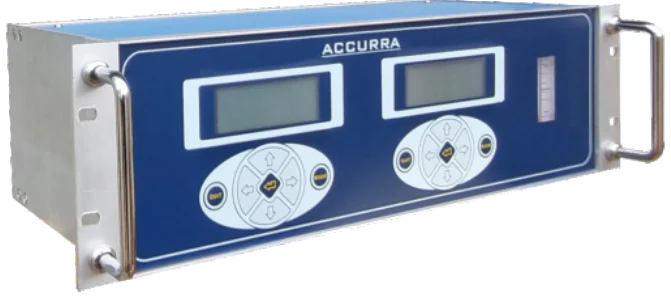
ACCURRA-S
Online analyser for trace, percent and purity O2, CO, CO2, CH4 and dew point; can measure two gases from one sample.
View ACCURRA-S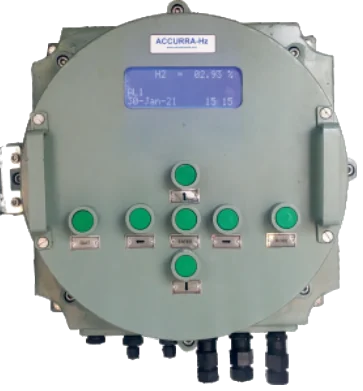
ACCURRA-Hz
Process gas analyser in an enclosure certified for Gas Group IIC, Zone 1 and 2, T6.
View ACCURRA-Hz