
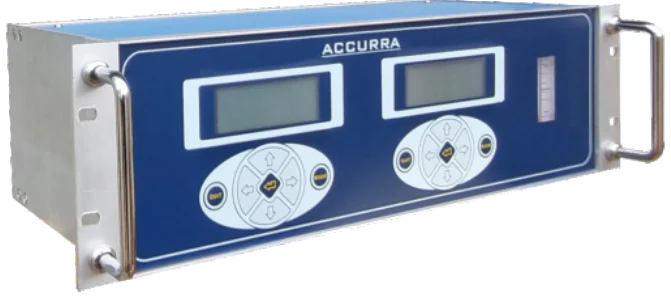
Use ACCURRA-S 3015 / 3030. Metal powder printing needs low oxygen in the build chamber; a continuous reading flags leaks. Small sample flow and chamber volume; add a pump for ambient or low-pressure sampling.
The measurement and why it matters
Metal powder printing needs low oxygen in the build chamber; a continuous reading flags leaks. This is a good fit, with one configuration or sample-handling point to confirm before we quote.
In furnaces, chambers and dry rooms the atmosphere is part of the recipe. A few ppm of oxygen, a dew point or a hydrogen share decides surface finish, yield or safety, and a leak or a drifting gas supply shows up in the analyser before it shows up in the product.
These atmospheres are usually clean at the analyser but can be hot, sooty or particulate-laden at the furnace take-off. Sample from the right point, keep lines short and use dry stainless tubing. Tell us the furnace or chamber volume and flow so we can confirm the sample path.
Typical buyers in India: 3D printer OEMs, metal AM service bureaus, aerospace and defence labs. Where this matches your plant, send us the gas, range, pressure and temperature at the tapping point and we will confirm the analyser and sample path.
Models and ranges
| Model | Measures | Range | Sensor and notes |
|---|---|---|---|
| 3015 | Trace oxygen | 0 to 1000 ppm (min range 0 to 100 ppm) | Electrochemical; no internal pump, no auto-calibration |
| 3030 | Oxygen percentage | 0 to 25 % and 0 to 100 % | Electrochemical |
Process notes
What the analyser reads here
Gases of interest: O2 ppm / %. Analyser fit: ACCURRA-S 3015 / 3030.
The table above lists each model with its range; where a row says to confirm the range, we check it against the datasheet for your application before quoting.
What to settle before ordering
Small sample flow and chamber volume; add a pump for ambient or low-pressure sampling.
We would rather confirm these points at the start than discover them at commissioning, so please include them with your process details.
Sampling and installation
- Every ACCURRA-S has an internal fine filter and rotameter. Regulate sample pressure and flow externally; the catalogue recommends about 1 LPM and a sample pressure of 2 to 10 psig.
- Models 3015, M015, 3130 and 3190 are supplied without an internal sample pump. Tell us the sample pressure and we will confirm the sample path or add a pump.
- Models 3015 and M015 have no auto-calibration, so plan a calibration routine with the right reference gas.
- Keep sample lines short, clean and dry, and vent the sample somewhere safe.
ACCURRA-S sample specification: non-corrosive, non-toxic, non-flammable, non-condensing and dry, free from entrained oil; sample pressure 2 to 10 psig, regulated externally; flow about 1 LPM; dust below 3 micron. Where your sample differs, we design conditioning around it.
Send us your process data
The same pre-order design inputs our engineers design from, online. Fill in what you know, leave the rest. Your draft saves as you go, and you can print or send it when ready.
What the data sheet asks for
Send what you have and we will ask for the rest.
- The gases to measure, the range, and the accuracy you need
- Background gases and their typical composition
- Sample temperature, pressure and dew point at the tapping point
- Dust level, and whether the gas carries tar, oil or condensable vapour
- Process connection and, for ducts, the duct diameter
- Where the sample vents to, and at what pressure
- Area classification of the tapping point and of the analyser location, and the IP protection needed
- Distance between the tapping point and the analyser
- Outputs you need: 4-20 mA, dual range, relays, Modbus RTU
- Calibration approach, calibration gas available, and whether blowback is required
- Utilities at site: power supply, instrument air, nitrogen, steam and cooling water, and the ambient temperature range
- Gases and ranges: O2 ppm / %
- The point to confirm: Small sample flow and chamber volume; add a pump for ambient or low-pressure sampling.
Recommended Sarvesh products
Frequently asked questions
Which analyser suits metal additive manufacturing build-chamber oxygen?
ACCURRA-S 3015 / 3030 Metal powder printing needs low oxygen in the build chamber; a continuous reading flags leaks.
What should I check before ordering for metal additive manufacturing build-chamber oxygen?
Small sample flow and chamber volume; add a pump for ambient or low-pressure sampling.
Who typically needs this?
Typical buyers in India: 3D printer OEMs, metal AM service bureaus, aerospace and defence labs.
Can Sarvesh support a variation of this application?
Yes. If your process differs from the usual case, send the details. Application engineering is where we start every project, and bespoke applications are welcome.
More in Electronics, cable and research
- Semiconductor and electronics gas purity
- Optical fibre and cable manufacturing
- Welding and laser gas mixtures
- Aerospace, nuclear and research laboratories
- Glove boxes and isolators (O2 and moisture)
- Lithium-ion battery dry rooms and electrode drying
- Research furnaces and CVD/ALD labs
- Reactor cover-gas and glove-box atmospheres (O2 and moisture in argon)
- All electronics, cable and research applications
- Browse analysers by gas