
ACCURRA-S 3015 and M015 measure ppm oxygen (minimum range 0 to 100 ppm) and dew point (minus 80 to plus 20 C) in nitrogen and argon supply, on one sample if needed. Ultra-high-purity lines that need ppb detection should be discussed first.
The measurement and why it matters
Nitrogen and argon in electronics assembly, OSAT lines and semiconductor support facilities are purified at the source and checked at point of use. An analyser downstream of the purifier confirms it is still working, because a purifier fails silently.
These analysers measure at ppm level: 3015 reads oxygen from 0 to 1000 ppm with a minimum range of 0 to 100 ppm, and M015 reads dew point from minus 80 to plus 20 C. Ultra-high-purity lines needing ppb detection should be discussed with us first.
A dual-channel 3015 plus M015 reads oxygen and dew point from the same sample, the two most useful signs of air ingress.
Models and ranges
| Model | Measures | Range | Sensor and notes |
|---|---|---|---|
| 3015 | Trace oxygen | 0 to 1000 ppm (min 0 to 100 ppm) | Electrochemical |
| M015 | Dew point | -80 to +20 C | Ceramic sensor |
| 3015 + M015 | O2 ppm plus dew point | Dual channel | One sample |
Process notes
Semiconductor and R&D labs
Semiconductor processes and many research experiments run in inert gas. Residual oxygen and moisture change film growth, oxidise samples and ruin sensitive measurements. The gas supply is purified at point of use, and an analyser downstream of the purifier confirms that the purifier is still working.
Our analysers serve institutions including IIT Bombay, the Manipal Institute of Technology, the Indian Space Research Organisation and the Department of Atomic Energy. For research the instrument is often one of a kind, so we work from your gas, range and sample conditions and propose a measurement set-up around them.
Specify the carrier gas, the oxygen or moisture level to confirm, the available sample flow and pressure, and whether the analyser must fit a rack or a bench. We will advise on the range, the sensor and the tubing, and we can supply the analyser with a purpose-built sample panel.
Sampling and installation
- Use clean stainless tube and short lines; discuss fitting standards with us if your line needs ppb-grade cleanliness.
- A sensor bypass valve is supplied on 3015 and M015.
- Auto-calibration and internal sample pump are not available on these models.
ACCURRA-S sample specification: non-corrosive, non-toxic, non-flammable, non-condensing and dry, free from entrained oil; sample pressure 2 to 10 psig, regulated externally; flow about 1 LPM; dust below 3 micron. Where your sample differs, we design conditioning around it.
Send us your process data
The same pre-order design inputs our engineers design from, online. Fill in what you know, leave the rest. Your draft saves as you go, and you can print or send it when ready.
What the data sheet asks for
Send what you have and we will ask for the rest.
- The gases to measure, the range, and the accuracy you need
- Background gases and their typical composition
- Sample temperature, pressure and dew point at the tapping point
- Dust level, and whether the gas carries tar, oil or condensable vapour
- Process connection and, for ducts, the duct diameter
- Where the sample vents to, and at what pressure
- Area classification of the tapping point and of the analyser location, and the IP protection needed
- Distance between the tapping point and the analyser
- Outputs you need: 4-20 mA, dual range, relays, Modbus RTU
- Calibration approach, calibration gas available, and whether blowback is required
- Utilities at site: power supply, instrument air, nitrogen, steam and cooling water, and the ambient temperature range
- Carrier gas, impurity level to confirm, and available sample flow and pressure
Recommended Sarvesh products
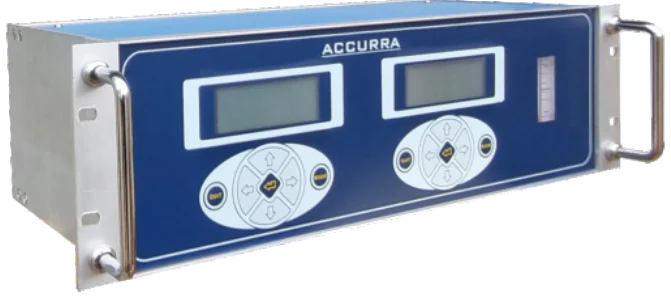
ACCURRA-S
3015 and M015 on nitrogen and argon.
View ACCURRA-SHeadline filters
Filters upstream.
View Headline filtersFrequently asked questions
Can you measure ppb oxygen?
Catalogue ranges start at 0 to 100 ppm. For lower levels, please enquire.
Do you supply OSAT and electronics customers?
We supply ppm-level analysers for electronics supply lines. Send your line details and we will propose a configuration.
Can oxygen and dew point be read together?
Yes, the dual-channel 3015 plus M015.
Can you supply a bench or rack unit?
ACCURRA-S is a 19 inch rack or panel-mounted unit.
More in Electronics, cable and research
- Optical fibre and cable manufacturing
- Welding and laser gas mixtures
- Aerospace, nuclear and research laboratories
- Metal additive manufacturing build-chamber oxygen
- Glove boxes and isolators (O2 and moisture)
- Lithium-ion battery dry rooms and electrode drying
- Research furnaces and CVD/ALD labs
- Reactor cover-gas and glove-box atmospheres (O2 and moisture in argon)
- All electronics, cable and research applications
- Browse analysers by gas