
Optical fibre plants measure oxygen in process gas, and cable certification laboratories measure percent CO and CO2 released in fire tests. ACCURRA-S covers both, with NDIR CO and CO2 sensors available in a single dual-gas enclosure.
The measurement and why it matters
Optical fibre starts as a glass preform made by depositing silica and dopants, then drawn into fibre in a furnace under inert gas. Oxygen content in these atmospheres influences glass quality, coating and furnace life, so manufacturers measure and control it. Our brochure lists oxygen in fibre optic manufacturing among our applications.
Cable fire performance standards test how a cable behaves in a flame, including what gases it releases. Laboratories burn a sample in a test chamber and measure combustion products in the exhaust duct, among them carbon monoxide and carbon dioxide. The brochure lists percent CO and CO2 in cable certification as an application. ACCURRA-S measures both by NDIR, with a dual-gas option that puts them in one enclosure with independent outputs.
Send the test or process set-up for sample handling advice.
Models and ranges
| Model | Measures | Range | Sensor and notes |
|---|---|---|---|
| 3015, 3030, 3130 | Oxygen | ppm to percent | ACCURRA-S |
| 2030 + 6030 | CO and CO2 | Percent | NDIR, dual-gas option |
Process notes
Fibre optic manufacturing
Optical fibre starts as a glass preform made by depositing silica and dopants, then drawn into fibre in a furnace that runs under inert gas. Oxygen content in these atmospheres influences glass quality, coating and furnace life, so manufacturers measure and control it.
Our brochure lists oxygen measurement in fibre optic manufacture as a supported application. ACCURRA-S provides ppm or percent ranges with configurable alarms and outputs, and we choose the sensor after reviewing your atmosphere, flow and pressure.
Share the gas, the furnace atmosphere, the sampling point and the control signal you need. ACCURRA-S gives configurable 4-20 mA output with range ID relay, and alarm set points as Lo-LoLo, Lo-Hi or Hi-HiHi. Auto-calibration is optional if the analyser is hard to reach.
Cable certification
Cable fire performance standards test how a cable behaves in a flame, including what gases it gives off. Laboratories burn a sample in a test chamber and measure the combustion products in the exhaust duct, among them carbon monoxide and carbon dioxide.
ACCURRA-S measures CO and CO2 by NDIR, a method well suited to combustion gases. The brochure lists percent CO and CO2 in cable certification among our applications. The output feeds the lab data logger, so each test has a full gas record next to temperature and smoke.
Say which test standard you work to, the duct gas temperature and the sampling arrangement. A fine filter and condensate trap protect the NDIR bench, and a heated line avoids losing combustion products. Calibrate with certified CO and CO2 span gases across the range of your tests, and record calibration before each campaign.
Sampling and installation
- Send the test or process set-up for sample handling advice.
- A fine filter and condensate trap protect the NDIR bench; use a heated line if the duct gas is hot and wet.
- Calibrate with certified CO and CO2 span gases across the range of your tests.
ACCURRA-S sample specification: non-corrosive, non-toxic, non-flammable, non-condensing and dry, free from entrained oil; sample pressure 2 to 10 psig, regulated externally; flow about 1 LPM; dust below 3 micron. Where your sample differs, we design conditioning around it.
Send us your process data
The same pre-order design inputs our engineers design from, online. Fill in what you know, leave the rest. Your draft saves as you go, and you can print or send it when ready.
What the data sheet asks for
Send what you have and we will ask for the rest.
- The gases to measure, the range, and the accuracy you need
- Background gases and their typical composition
- Sample temperature, pressure and dew point at the tapping point
- Dust level, and whether the gas carries tar, oil or condensable vapour
- Process connection and, for ducts, the duct diameter
- Where the sample vents to, and at what pressure
- Area classification of the tapping point and of the analyser location, and the IP protection needed
- Distance between the tapping point and the analyser
- Outputs you need: 4-20 mA, dual range, relays, Modbus RTU
- Calibration approach, calibration gas available, and whether blowback is required
- Utilities at site: power supply, instrument air, nitrogen, steam and cooling water, and the ambient temperature range
- Test standard or furnace atmosphere, gas temperature and range
Recommended Sarvesh products
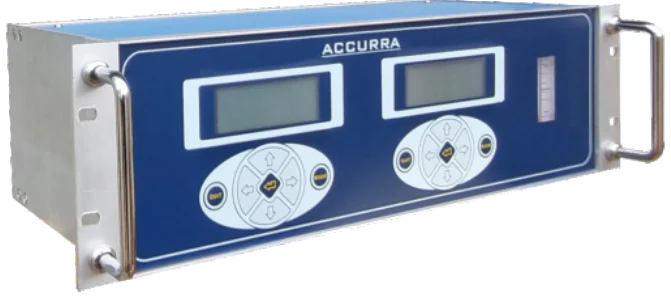
ACCURRA-S
Oxygen, and dual-channel CO and CO2.
View ACCURRA-SHeadline filters
Filters and condensate protection.
View Headline filtersFrequently asked questions
Which test standard do you support?
Tell us the standard and method; we will confirm that our ranges and response time fit.
Can CO and CO2 be read together?
Yes, the dual-channel ACCURRA-S with independent outputs.
What ranges?
CO 0 to 100 percent and CO2 0 to 20 or 0 to 100 percent, by NDIR.
Which oxygen range for fibre drawing?
From ppm to percent, depending on the furnace atmosphere. Send your range.
More in Electronics, cable and research
- Semiconductor and electronics gas purity
- Welding and laser gas mixtures
- Aerospace, nuclear and research laboratories
- Metal additive manufacturing build-chamber oxygen
- Glove boxes and isolators (O2 and moisture)
- Lithium-ion battery dry rooms and electrode drying
- Research furnaces and CVD/ALD labs
- Reactor cover-gas and glove-box atmospheres (O2 and moisture in argon)
- All electronics, cable and research applications
- Browse analysers by gas