
Blanketing fills the space above a liquid or powder with nitrogen so that oxygen stays below the limit at which a flame can spread. It protects against fire and explosion, and against oxidation of the product. An oxygen analyser on the headspace proves the blanket and triggers extra nitrogen or an interlock if oxygen rises. Hazardous-area analysers are used where flammable vapour is present.
- Explain blanketing and where it is used
- Relate set points to the limiting oxygen concentration
- Choose analysers for safe and classified areas
- Describe closed-loop dryer inerting
Where blanketing is used
- Solvent storage and day tanks.
- Reactors and distillation columns handling flammable liquids: Solvent-recovery and distillation columns under inert gas.
- Centrifuges, filters and dryers.
- Powder handling, milling and silo storage where dust can explode: Dust-collector, mill and silo inerting.
- Spray dryers with organic solvents in a closed loop: Closed-loop dryers and spray dryers.
How the limit is chosen
The oxygen limit comes from the limiting oxygen concentration of the worst-case material, with a margin: What is limiting oxygen concentration (LOC). Many organic vapours have an LOC around 10 % oxygen in nitrogen, hydrogen near 5 %, and some dusts lower or higher. Take the LOC from tested data for your material, apply the margin from your safety assessment and the standard that governs the site.
What the analyser does
- Reads oxygen in the headspace, continuously.
- Raises a warning and then a trip as oxygen rises: add nitrogen, stop the transfer, isolate equipment.
- Provides a record that the blanket was maintained during a batch: Records, audit trails and qualification for regulated plants.
Sample from the headspace, away from the nitrogen inlet, and keep the line short: Choosing the sample point for a gas analyser.
Choosing the analyser
| Location | Typical choice |
|---|---|
| Safe area, percent oxygen | ACCURRA-S 3030 or 3130; 3015 for ppm |
| Hazardous area, rack-mount | ACCURRA-Hz (Gas Group IIC, Zone 1 and 2, T6) |
| Hazardous area, two-wire field transmitter | INFINITY-Tx; works on very low flow and pressure |
Warm, humid, solvent-laden gas needs cooling and filtering before an analyser, particularly in dryers: Condensate, moisture and sample cooling for gas analysis.
Safety note
We make no SIL claim for our analysers. Where oxygen monitoring is part of a safety function, tell us the requirement at the start: What SIL means for gas analysers, and what it does not.
- Blanketing keeps oxygen below the LOC with a margin.
- Take the set point from tested LOC data and your safety assessment.
- Sample from the headspace; use certified analysers in classified areas.
- Warm, humid dryer gas needs conditioning.
Check your understanding
Answer in your head or on paper first, then open the answer. Recalling an answer teaches more than rereading.
What does blanketing do?
Fills the space above a liquid or powder with inert gas to keep oxygen below the limit for combustion.
Where do you sample for a tank blanket?
From the headspace, away from the nitrogen inlet.
Which analyser suits a classified area with a two-wire loop?
INFINITY-Tx, a loop-powered transmitter for hazardous areas.
Key terms
Frequently asked questions
What oxygen level is safe for blanketing?
Below the LOC of your material by the margin your safety assessment requires.
What gas is used for blanketing?
Usually nitrogen; argon or CO2 in some cases.
Does blanketing need continuous oxygen monitoring?
It is common and often required; follow your safety assessment and standards.
Can ACCURRA-S be used in a solvent area?
Not in a classified area; use ACCURRA-Hz or INFINITY-Tx.
Related products
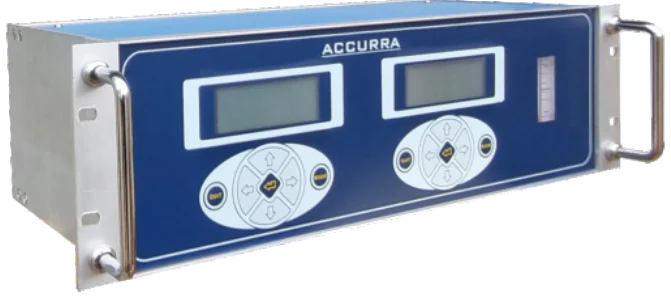
ACCURRA-S
Online analyser for trace, percent and purity O2, CO, CO2, CH4 and dew point; can measure two gases from one sample.
View ACCURRA-S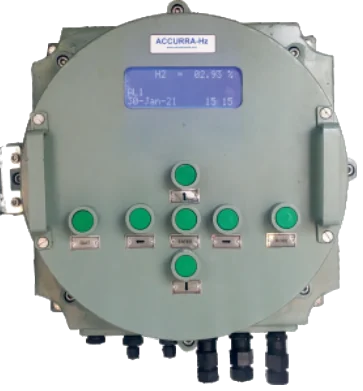
ACCURRA-Hz
Process gas analyser in an enclosure certified for Gas Group IIC, Zone 1 and 2, T6.
View ACCURRA-Hz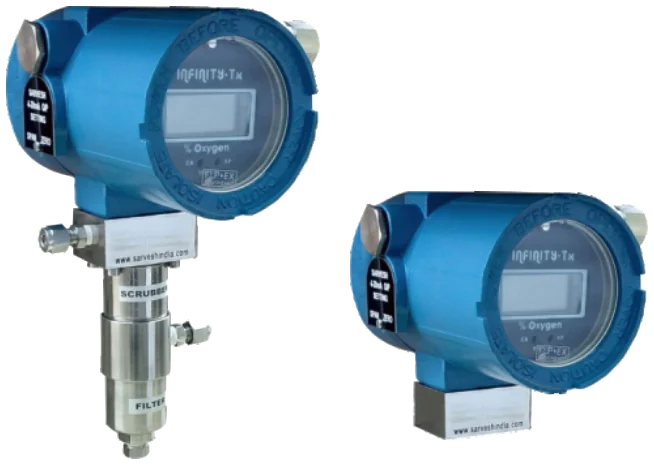
INFINITY-Tx
Loop-powered two-wire transmitter for percent O2 and trace CO in hazardous areas.
View INFINITY-Tx