
Standard ACCURRA-S analysers expect a non-corrosive, non-toxic, non-flammable, non-condensing and dry sample, free of oil, at 2 to 10 psig and about 1 LPM, with dust below 3 micron. i-Cons and SGI-320 exclude corrosive and toxic samples; SGI-320 excludes HCl, HF and H2S. Samples outside these limits need conditioning, a different product or a different method, decided before ordering.
- State the standard sample envelope
- Recognise samples that fall outside it
- Know the three responses: condition, choose another product, or choose another method
The envelope
| Item | Standard ACCURRA-S sample |
|---|---|
| Composition | Non-corrosive, non-toxic, non-flammable |
| State | Dry, non-condensing, free of entrained oil |
| Pressure | 2 to 10 psig, regulated externally |
| Flow | About 1 LPM |
| Particulates | Dust below 3 micron |
The i-Cons and SGI-320 sample systems exclude corrosive and toxic samples, and SGI-320 specifically excludes HCl, HF and H2S, with SO2, NO and CO below 1000 ppm. See smart-systems-for-gas-analyser.
Samples that fall outside
- Corrosive or toxic gases: H2S, Cl2, HCl, HF, NH3 and similar.
- Flammable samples in the safe-area enclosure: use a hazardous-area analyser and review the sample path.
- Wet or condensing samples straight from a process, such as raw biogas.
- Oily or tarry samples from compressors, gasifiers or coke ovens.
- Heavily dusty samples beyond filter capacity.
- Multi-component syngas ratios, which are a gas chromatograph job.
Moisture below the lowest ceramic sensor range, ambient-air quality monitoring, personal gas detection, dissolved oxygen in liquids and ppb-level fab gases are outside what these analysers do.
Three responses
- Condition the sample with coolers, filters, scrubbers, heated lines and probes until it meets the envelope.
- Choose a different product, such as a hazardous-area analyser or an in-situ analyser, that is built for the conditions.
- Choose a different method, such as a chromatograph, when the measurement is not one of ours.
The application data sheet captures the information needed to choose among these: The application data sheet: what to send Sarvesh.
Why we say no early
A system installed outside its envelope may run for weeks and then fail expensively. We would rather tell you at the quotation stage that your stream carries H2S than see a cell poisoned. If you are unsure whether your sample is inside the envelope, send the composition, pressure and temperature.
- Know the standard sample envelope: dry, clean, non-corrosive, non-toxic, non-flammable, 2 to 10 psig, about 1 LPM.
- H2S, HCl, HF, NH3, wet and oily streams are outside it.
- Respond by conditioning, choosing another product, or choosing another method.
- Check on paper before ordering.
Check your understanding
Answer in your head or on paper first, then open the answer. Recalling an answer teaches more than rereading.
What sample pressure does ACCURRA-S accept?
2 to 10 psig, regulated externally.
Which gases does SGI-320 exclude?
HCl, HF and H2S.
Name two ways to handle a wet sample.
Cool it to a fixed dew point with a Peltier cooler and drain the condensate, or choose a hot-wet extractive arrangement.
Key terms
Frequently asked questions
Can ACCURRA-S measure corrosive gases?
Not in the standard configuration. Send the stream composition and we will advise.
Can you analyse H2S?
No; H2S is outside the ACCURRA-S gas list and the i-Cons and SGI-320 limits.
Can I put an analyser on raw biogas?
Only after conditioning; moisture and H2S must be dealt with first.
How do I find out if my sample is suitable?
Send the gas composition, pressure, temperature, dust and moisture with an application data sheet.
Related products
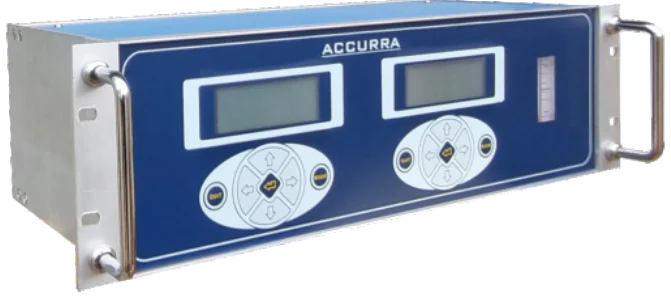
ACCURRA-S
Online analyser for trace, percent and purity O2, CO, CO2, CH4 and dew point; can measure two gases from one sample.
View ACCURRA-S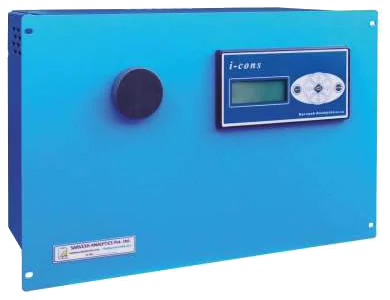
i-Cons
Smart Peltier sample conditioner with diagnostics, auto blowback and Modbus, in a compact 19 inch cabinet.
View i-Cons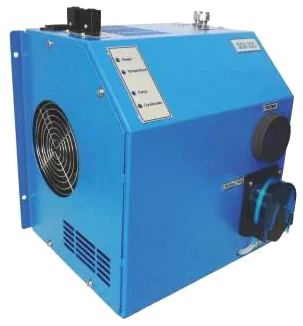
SGI-300 / SGI-320
Peltier sample cooler with integrated pump, filter and condensate detector; SGI-320 for emission monitoring.
View SGI-300 / SGI-320