A good specification states the question the number must answer, then the measurement (gas, range, accuracy, response), the sample (composition, pressure, temperature, dust, moisture), the site (area classification, ambient limits, utilities), the outputs and standards, and the support needed. The sample and site facts prevent most surprises. Send what you know and the supplier will ask for the rest.
- List the sections of a gas analyser specification
- State the sample facts a supplier needs
- Avoid common specification gaps
- Use the application data sheet
Start with the purpose
Say what the measurement is for: control, protection or certification, and what happens when the reading is wrong. A trim control tolerates more than a purity certificate; a safety trip needs a different design again: What is online gas analysis? A plain introduction.
The checklist
| Section | State |
|---|---|
| Measurement | Gas, range (and the normal operating value), accuracy needed, response time needed, any second gas |
| Sample | Composition including background and trace gases, pressure, temperature, dew point, dust, tar, oil, corrosives, flow available, where it vents |
| Tapping | Location, orientation, connection size, distance to analyser, access: Choosing the sample point for a gas analyser |
| Site | Area classification (zone, gas group, T-class) of analyser and tapping, ambient temperature range, enclosure rating, mounting |
| Utilities | Power, instrument air, calibration gas, vent and drain: Site utilities checklist for gas analysers |
| Outputs | 4-20 mA, relays, Modbus, alarm points, fault behaviour: Analyser outputs: 4-20 mA, relays and Modbus explained |
| Calibration | Method, gas available, auto-calibration needs, frequency: How gas analyser calibration works: zero and span |
| Standards and records | Certification, documentation, quality system requirements, any SIL requirement |
| Support | Commissioning, training, spares, service |
A worked specification
Here is the checklist filled in for a common case: oxygen in the product of a PSA nitrogen generator, used to divert off-spec gas.
| Item | What the engineer wrote |
|---|---|
| Purpose | Protection of product quality. Divert to vent above 1 % O2. Wrong reading costs a contaminated batch. |
| Measurement | O2 in N2. Normal 0.1 to 0.5 %, alarm 1 %, start-up up to 21 %. Accuracy needed +/- 0.05 % O2 near 1 %. Response under 30 s. |
| Sample | Dry N2 after the receiver, 6 bar(g), 25 to 40 C, oil-free, no dust. Vent to atmosphere at a safe point. |
| Tapping | Top of the 2 inch product header, 3 m from the analyser, with an isolation valve and a regulator at the tapping. |
| Site | Safe area, indoors, 15 to 40 C. 230 V AC available. No instrument air needed. |
| Outputs | 4-20 mA to the PLC, one alarm relay to the divert valve, fault relay, Modbus to SCADA if possible. |
| Calibration | Zero on N2 from the plant, span on certified 0.8 % O2 in N2. Monthly check. |
| Support | Commissioning on site, spare sensor, training for two technicians. |
From that, a supplier can propose an analyser and a range without a single question. In this case a percent oxygen model with a range near 0 to 5 % and its minimum range, a regulator to bring 6 bar(g) down to the 2 to 10 psig the analyser expects, and a dual-range output so the start-up air does not saturate the signal: Analyser outputs: 4-20 mA, relays and Modbus explained.
The start-up value is the line people forget. A range set only for the normal value pins the output at 20 mA every time the plant starts, and the alarm logic sees a fault.
Facts that prevent surprises
- All the gases in the sample, including trace and upset conditions: Cross-Sensitivity and interference in gas analysers.
- The sample's temperature and dew point at the tapping: a sample that condenses needs a different system.
- The range where the process actually runs, not only the alarm limit: Accuracy, precision, repeatability and drift in gas analysers.
- The area classification of both the tapping and the analyser location.
- Any safety function. If SIL is required, say so first: What SIL means for gas analysers, and what it does not.
What changes the price, and why
- The sample. A clean, dry, ambient-pressure gas needs a regulator and a filter. Hot, wet or dusty gas needs a probe, a heated line and a cooler, which can cost more than the analyser: How to design a gas sample handling system.
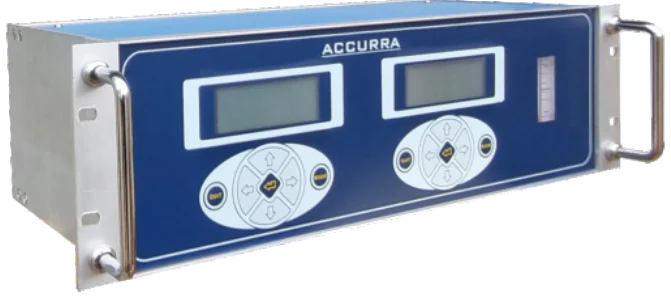
- The area. A Zone 1 location needs a certified enclosure such as ACCURRA-Hz, not a rack instrument such as ACCURRA-S, which is for safe areas only.
- The range at the bottom. Trace measurement in ppm needs stainless steel lines, leak-tight fittings and a different sensor from percent measurement: Trace oxygen measurement and air ingress: ppm done right.
- Auto-calibration. Internal valves, gas cylinders and their regulators add cost and need space and a vent.
- Documentation. Regulated plants need qualification documents and audit trails: Records, audit trails and qualification for regulated plants.
Stating these early lets suppliers quote like for like: How to compare gas analyser quotes like for like.
Do not over-specify
- Quote performance needs, not a model number, unless you have to.
- Avoid asking for the highest accuracy everywhere. See What accuracy do you really need from a gas analyser.
- Leave room for the supplier to propose conditioning for a difficult sample.
Use the application data sheet
Our online application data sheet asks for exactly these facts, in order, and lets you send what you have: application-data-sheet. Read The application data sheet: what to send Sarvesh first if you are new to it.
Standards to name in a specification
- Area classification: the zone, gas group and temperature class from the plant's IEC 60079-10-1 study, and the certification scheme the site accepts.
- Performance terms: IEC 61207-1, so that accuracy, repeatability and response mean the same thing in every offer.
- Enclosure rating: the IP code to IEC 60529 for the mounting location.
- Sector rules: for example ISO 8573-1 air quality classes for compressed air, or EN 14181 and EN 15267 where an emission measurement must meet a regulator's scheme. Say if they apply; do not leave the supplier to guess.
- Functional safety: if the analyser is part of a safety instrumented function, say so and give the SIL target under IEC 61511: What SIL means for gas analysers, and what it does not.
- Start with the purpose, then measurement, sample, site, outputs, calibration, standards and support.
- The sample and the site cause most surprises: describe them fully.
- State SIL or other safety requirements at the start.
- Do not over-specify accuracy or model numbers.
Check your understanding
Answer in your head or on paper first, then open the answer. Recalling an answer teaches more than rereading.
Which two sections of a specification cause the most surprises?
The sample (all gases, pressure, temperature, dew point, dust) and the site (area classification, ambient limits).
Why state the normal operating value as well as the alarm limit?
So the range and accuracy suit where the process actually runs.
When should SIL be mentioned?
At the start, since it changes what can be supplied.
Key terms
Frequently asked questions
What should a gas analyser specification include?
Purpose, measurement, sample, tapping, site, utilities, outputs, calibration, standards and support.
Do I need to know the exact accuracy?
State what the process needs; see the accuracy lesson.
Can I send a partial specification?
Yes. Send what you have and we will ask for the rest.
What if the sample composition is unknown?
Say so, send typical analyses, and we will propose how to confirm it.