
ACCURRA-S measures CO and CO2 by NDIR through an ammonia plant's front end: percent CO after the shift converters (2030), percent CO2 before and after CO2 removal (6030), and ppm CO2 at the methanator outlet (6015, 0 to 5000 ppm). ppm CO in hydrogen-rich gas is reviewed first, because an electrochemical cell can respond to hydrogen.
The measurement and why it matters
Each stage has a reading that shows whether it is working. After the high and low temperature shift converters, the CO left in the gas shows the shift catalyst's activity. Before and after CO2 removal, the CO2 content shows the absorber's load and its slip. After the methanator, the CO and CO2 left must be a few ppm, because what reaches the synthesis converter shortens the life of its catalyst.
NDIR suits these points. It measures CO and CO2 by their own infrared absorption, so hydrogen, nitrogen and methane in the background do not give a reading of their own. ACCURRA-S 2030 reads CO from 0 to 100 % with a minimum range of 0 to 5 %, 6030 reads CO2 from 0 to 20 or 0 to 100 %, and 6015 reads CO2 from 0 to 5000 ppm with a minimum range of 0 to 100 ppm.
ppm CO at the methanator outlet is the harder case. ACCURRA-S 2015 reads CO from 0 to 1000 ppm with an electrochemical cell, and electrochemical CO cells can respond to hydrogen. In synthesis gas, which is mostly hydrogen, that response can be larger than the CO itself. We review this point with your composition before we propose a model, and say so if the catalogue analyser does not suit it.
Two channels fit in one ACCURRA-S enclosure, each with its own output and Modbus ID, so CO and CO2 at one sample point can share an analyser and a sample system.
Models and ranges
| Model | Measures | Range | Sensor and notes |
|---|---|---|---|
| 2030 | CO after the shift converters | 0 to 100 % (min range 0 to 5 %) | NDIR |
| 6030 | CO2 before and after CO2 removal | 0 to 20 % or 0 to 100 % (min range 0 to 5 %) | NDIR |
| 6015 | CO2 at the methanator outlet | 0 to 5000 ppm (min range 0 to 100 ppm) | NDIR |
| 2015 | ppm CO, by review in hydrogen-rich gas | 0 to 1000 ppm (min range 0 to 100 ppm) | Electrochemical cell |
Process notes
After the shift converters
CO at the low temperature shift outlet is the plant's measure of shift performance. A rising reading points to an ageing catalyst or a temperature problem, and it raises the load on the methanator downstream.
Around CO2 removal
CO2 at the absorber inlet shows the load on the CO2 removal unit, and CO2 at the outlet shows the slip that the methanator must convert. The CO2 removed often goes on to the urea plant, where its purity matters too: see the urea CO2 feed page.
At the methanator outlet
The methanator outlet is the last check before the synthesis gas compressor. ppm CO2 by NDIR (6015) is a direct reading. For ppm CO, send the composition and we confirm the method before quoting.
Sampling and installation
- Every ACCURRA-S has an internal fine filter and rotameter. Regulate sample pressure and flow externally; the catalogue recommends about 1 LPM and a sample pressure of 2 to 10 psig.
- Synthesis gas is flammable and wet. Reduce pressure at the tapping point, knock out condensate with a Headline coalescing filter and drain, and vent the outlet to a safe place.
- Hydrogen-rich samples are outside the limits of our i-Cons conditioner, so the sample system is an engineered panel designed for the stream.
- Analysers stand in a safe area with the sample piped to them; tell us the area classification at the tapping point.
ACCURRA-S sample specification: non-corrosive, non-toxic, non-flammable, non-condensing and dry, free from entrained oil; sample pressure 2 to 10 psig, regulated externally; flow about 1 LPM; dust below 3 micron. Where your sample differs, we design conditioning around it.
Send us your process data
The same pre-order design inputs our engineers design from, online. Fill in what you know, leave the rest. Your draft saves as you go, and you can print or send it when ready.
What matters most for this application
- Which stages you want to measure: shift outlet, CO2 removal inlet and outlet, methanator outlet
- The composition at each point, including hydrogen, water and any ammonia
- Pressure and temperature at each tapping point
- Whether ppm CO is needed at the methanator outlet
Recommended Sarvesh products
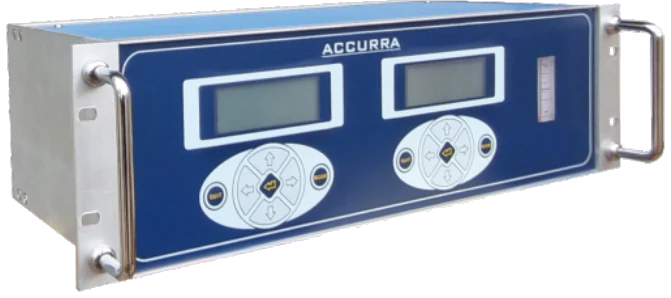
ACCURRA-S
NDIR CO and CO2 from percent to ppm, two channels in one enclosure.
View ACCURRA-S
Engineered analyser panels
Engineered panels for flammable, wet synthesis gas samples.
View Engineered analyser panels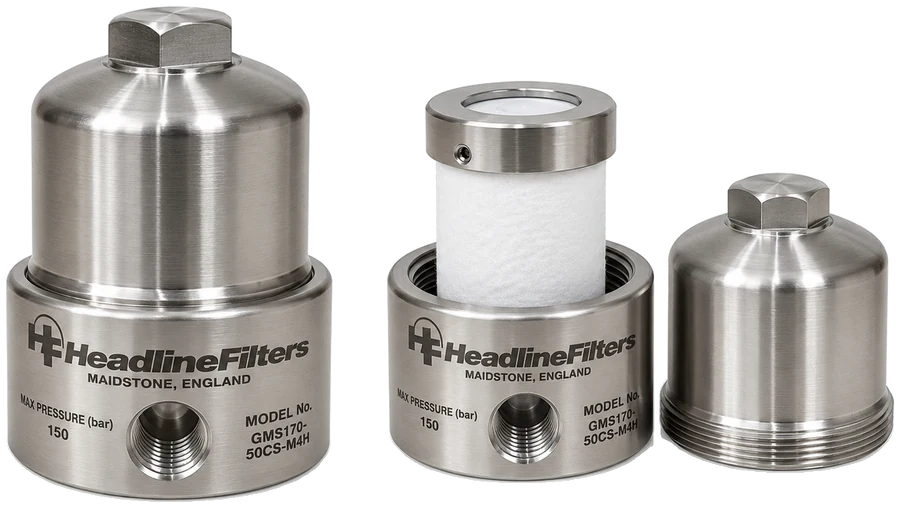

Coalescing filters and drains for wet samples.
View the Headline rangeAsk for a price
Leave your details and an applications engineer in Pune, India, replies with questions or a proposal.
Frequently asked questions
Can one analyser read CO and CO2 together?
Yes. Two ACCURRA-S channels fit in one enclosure, each with its own output and Modbus ID.
What is the lowest CO2 range?
ACCURRA-S 6015 reads 0 to 5000 ppm with a minimum range of 0 to 100 ppm.
Can you measure ppm CO in synthesis gas?
We review it with your composition first, because an electrochemical CO cell can respond to hydrogen.
Does hydrogen affect the NDIR readings?
Hydrogen does not absorb infrared, so it gives no reading of its own on an NDIR channel.
Do you supply the sample system?
Yes, as an engineered panel with pressure reduction, knock-out, filtration and a safe vent.