
Gas Analysers for fertiliser, ammonia and urea plants
An ammonia plant is a chain of gas reactions, and each step is controlled on a gas reading: the hydrogen to nitrogen ratio in the loop, the CO and CO2 left before the synthesis catalyst, the oxygen and purity of the CO2 sent to urea. Sarvesh supplies thermal conductivity, NDIR, paramagnetic and hazardous-area analysers for these points, with the sampling around them.
Sarvesh supplies ACCURRA-TCD hydrogen-in-nitrogen analysers for ammonia synthesis and purge gas, ACCURRA-S NDIR CO and CO2 analysers from percent to ppm for shift, CO2 removal and methanator outlets, paramagnetic oxygen and CO2 purity for the urea plant's CO2 feed, and ACCURRA-Hz for Zone 1.
Where we measure in ammonia, urea and fertiliser plants
One row per application. Each application page gives the models, ranges and sample handling.
| Application | What we measure | Products |
|---|---|---|
| Ammonia synthesis loop and purge gas hydrogen | Hydrogen in nitrogen, make-up and loop gas; Hydrogen recovery product purity; Nitrogen in hydrogen; Hydrogen, hazardous area | ACCURRA-TCD, ACCURRA-Hz, Engineered analyser panels, Headline Filters |
| Shift, CO2 removal and methanator: CO and CO2 | CO after the shift converters; CO2 before and after CO2 removal; CO2 at the methanator outlet; ppm CO, by review in hydrogen-rich gas | ACCURRA-S, Engineered analyser panels, Headline Filters |
| Urea plant CO2 feed: purity and passivation oxygen | Passivation oxygen in CO2; CO2 purity; Hydrogen in CO2, by review | ACCURRA-S, ACCURRA-TCD, Headline Filters |
What matters when you measure gas in ammonia, urea and fertiliser plants
- Hydrogen in nitrogen, and nitrogen in hydrogen, by thermal conductivity with no reference gas
- CO and CO2 from percent down to ppm by NDIR, for shift, CO2 removal and methanator outlets
- Paramagnetic oxygen and NDIR CO2 purity for the urea plant's CO2 feed
- ACCURRA-Hz for analysers that must stand in Zone 1, Gas Group IIC
Most streams in an ammonia plant are hydrogen-rich, pressurised and in classified areas. That rules out sample conditioners built for flue gas and puts the weight on the sample path: pressure reduction, liquid knock-out, coalescing filtration and a safe vent. We build that path into an engineered panel with the analysers.
The gases are rarely a clean pair. Synthesis gas carries methane and argon, and recycle streams carry ammonia. A thermal conductivity reading assumes two gases, so we ask for the full composition and its range first, and say where the reading needs a correction or a different method.
Where sampling goes wrong
A third gas moves a thermal conductivity reading
Thermal conductivity reads a two-gas mixture exactly. Methane and argon build up in an ammonia loop, and their conductivity differs from nitrogen's, so a hydrogen reading in synthesis gas carries an error that grows with the inerts. Send the inert range and we say how large it is.
Ammonia in the sample
Loop and purge samples can carry ammonia, which condenses with water and attacks many wetted parts and sensors. Agree at the start how it is removed or kept in the gas phase.
Hydrogen changes what some sensors read
An electrochemical CO cell can respond to hydrogen, so a ppm CO reading in hydrogen-rich synthesis gas needs review before a model is chosen. NDIR channels for CO2 and percent CO do not have this problem.
Pressure and the vent
Synthesis gas is at high pressure and flammable. Reduce pressure at the tapping point, keep the sample line short, and vent the analyser outlet to a safe place agreed with the plant.
Major applications in Fertiliser, ammonia and urea
These are the applications we are asked about most, not the full list. We add more regularly, and we engineer for bespoke applications too. If yours is not here, contact us.
Ammonia synthesis loop and purge gas hydrogen
Ammonia is made from hydrogen and nitrogen in a ratio close to three to one, and the converter runs best when the make-up gas holds that ratio.
Read moreShift, CO2 removal and methanator: CO and CO2
Between the reformer and the synthesis loop, an ammonia plant removes carbon oxides in stages: shift converters turn CO into CO2, a CO2 removal unit takes the CO2 out, and the methanator turns what is left into methane, because CO and CO2 poison the synthesis catalyst.
Read moreUrea plant CO2 feed: purity and passivation oxygen
Urea plants take CO2 from the ammonia plant and add a small, controlled amount of air or oxygen to it, which keeps a protective oxide layer on the stainless steel of the synthesis section.
Read moreProducts for this industry
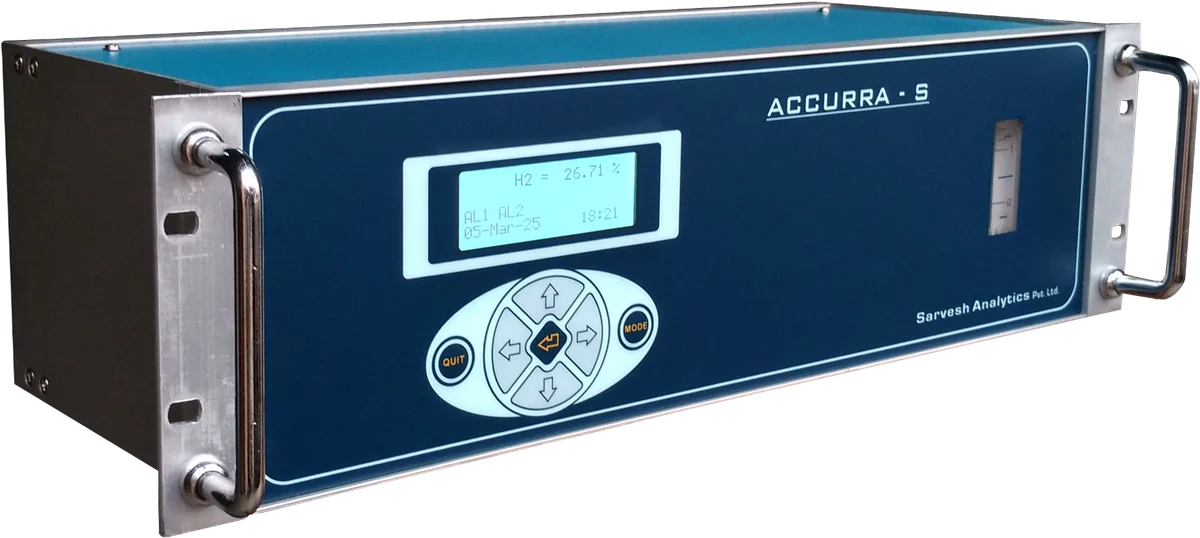
ACCURRA-TCD
Thermal conductivity analyser for binary mixtures of H2, He, Ar, N2 and others, with no reference gas.
View ACCURRA-TCD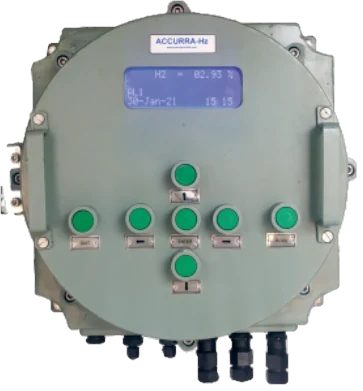
ACCURRA-Hz
Process gas analyser in an enclosure certified for Gas Group IIC, Zone 1 and 2, T6.
View ACCURRA-Hz
Engineered analyser panels
Probe, heated line, i-Cons and analyser built into one IP 54 panel, with as-built drawings.
View Engineered analyser panels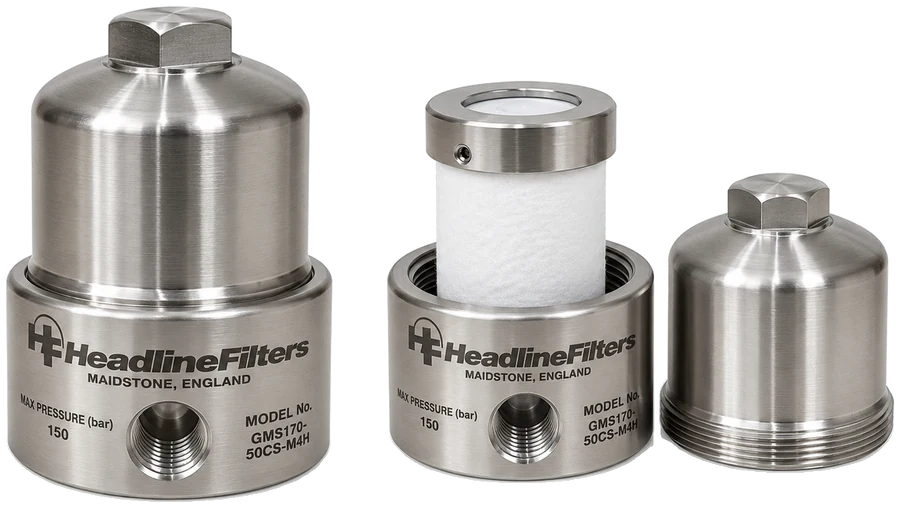

Particulate, coalescing and PTFE membrane filters from Headline Filters, for analyser protection.
View the Headline range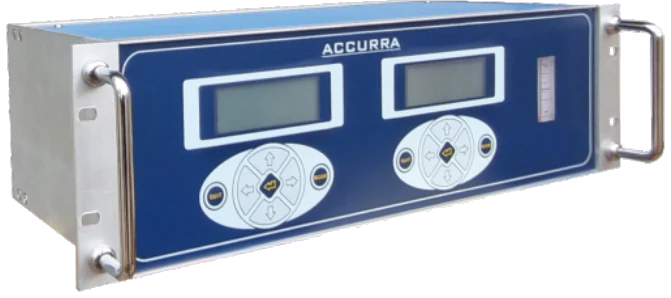
ACCURRA-S
Online analyser for trace, percent and purity O2, CO, CO2, CH4 and dew point; can measure two gases from one sample.
View ACCURRA-SFilters and sample handling
- Process gas filter housings for high-pressure streams
- Catch pots and drains for wet samples
- Coalescing and membrane filters ahead of the analyser
Sarvesh Analytics is the exclusive representative of Headline Filters, the UK-based filter maker, for the Indian subcontinent.
What to send for a quote
- The sample point: make-up, loop, purge or recovered hydrogen
- The full composition with typical and extreme values, including methane, argon and ammonia
- Pressure and temperature at the tapping point, and the area classification where the analyser will stand
- The signals you need: 4–20 mA, alarms or Modbus RTU
- Which stages you want to measure: shift outlet, CO2 removal inlet and outlet, methanator outlet
- The composition at each point, including hydrogen, water and any ammonia
- Pressure and temperature at each tapping point
- Whether ppm CO is needed at the methanator outlet
Frequently asked questions
Which analyser measures the hydrogen to nitrogen ratio in an ammonia loop?
ACCURRA-TCD measures hydrogen in nitrogen by thermal conductivity, 0 to 100 %, with no reference gas. Methane and argon in the loop shift the reading, so send their range and we confirm the error before quoting.
Can you measure ppm CO2 after the methanator?
ACCURRA-S 6015 reads CO2 from 0 to 5000 ppm by NDIR, with a minimum range of 0 to 100 ppm. ppm CO in hydrogen-rich gas needs review, because an electrochemical CO cell can respond to hydrogen.
Do you supply analysers for the urea plant's CO2 feed?
Yes. ACCURRA-S 6030 reads CO2 purity from 0 to 100 % by NDIR, and the paramagnetic 3130 reads the oxygen added for passivation, 0 to 100 % with a minimum range of 0 to 5 %.
Can the hydrogen analyser stand in a Zone 1 area?
ACCURRA-TCD is a safe-area instrument. ACCURRA-Hz houses hydrogen measurement by thermal conductivity and is certified for Gas Group IIC, Zone 1 and 2, T6.
Can you take over the maintenance of existing analysers in our plant?
Send the instrument list with make, model and serial numbers. We say which we can include in an annual maintenance contract and which we cannot.