
ACCURRA-S 6030 reads CO2 purity in the CO2 feed to urea synthesis from 0 to 100 % by NDIR, and the paramagnetic 3130 reads the passivation oxygen added to it, 0 to 100 % with a minimum range of 0 to 5 %, with no consumable sensor.
The measurement and why it matters
The oxygen added to the CO2 is a passivation agent. Urea synthesis runs hot, under pressure, with ammonium carbamate that attacks stainless steel unless an oxide film protects it, and the oxygen in the feed keeps that film in place. Plants hold the oxygen in a narrow band set by their licensor, and a continuous reading is how they hold it.
Paramagnetic measurement suits oxygen in CO2. It responds to oxygen's magnetic property, which carbon dioxide does not share, and it has no consumable sensor to be attacked by an acid gas background. ACCURRA-S 3130 reads 0 to 100 % oxygen with a minimum range of 0 to 5 %, resolution 0.01 %, and a response below 5 seconds. Electrochemical oxygen sensors in a near-pure CO2 background are reviewed before they are proposed.
CO2 purity is read by NDIR. ACCURRA-S 6030 reads CO2 from 0 to 100 %, and the two channels can share one enclosure with separate outputs and Modbus IDs.
The same CO2 often carries some hydrogen from the ammonia plant. Where the plant removes it before compression, the hydrogen left is a safety reading in its own right; send its range and we review how to measure it.
Models and ranges
| Model | Measures | Range | Sensor and notes |
|---|---|---|---|
| 3130 | Passivation oxygen in CO2 | 0 to 100 % (min range 0 to 5 %) | Paramagnetic, no consumable sensor, no internal pump |
| 6030 | CO2 purity | 0 to 100 % (min range 0 to 5 %) | NDIR |
| ACCURRA-TCD | Hydrogen in CO2, by review | 0 to 100 %, 0 to 3 % or 97 to 100 % | Thermal conductivity, no reference gas |
Process notes
Where to sample
Sample the CO2 after the air or oxygen has been mixed in and before the compressor, where the gas is close to atmospheric pressure and dry enough to handle. Model 3130 has no internal sample pump, so the sample must arrive under its own pressure, or we add a pump to the system.
Holding the band
The analyser's two failsafe alarm relays can mark the low and high limits of the band, and the 4–20 mA output trims the air or oxygen flow in the DCS. Calibration and alarm history are kept in the analyser.
Sampling and installation
- Every ACCURRA-S has an internal fine filter and rotameter. Regulate sample pressure and flow externally; the catalogue recommends about 1 LPM and a sample pressure of 2 to 10 psig.
- Model 3130 is supplied without an internal sample pump. Tell us the sample pressure and we will confirm the sample path or add a pump.
- Remove liquid water with a Headline coalescing filter and drain before the analyser.
- Vent the sample where CO2 cannot collect in a pit or a closed room.
ACCURRA-S sample specification: non-corrosive, non-toxic, non-flammable, non-condensing and dry, free from entrained oil; sample pressure 2 to 10 psig, regulated externally; flow about 1 LPM; dust below 3 micron. Where your sample differs, we design conditioning around it.
Send us your process data
The same pre-order design inputs our engineers design from, online. Fill in what you know, leave the rest. Your draft saves as you go, and you can print or send it when ready.
What matters most for this application
- The oxygen band you hold and the normal CO2 purity
- Any hydrogen, sulphur compounds or water in the CO2
- Sample pressure and temperature at the tapping point
Recommended Sarvesh products
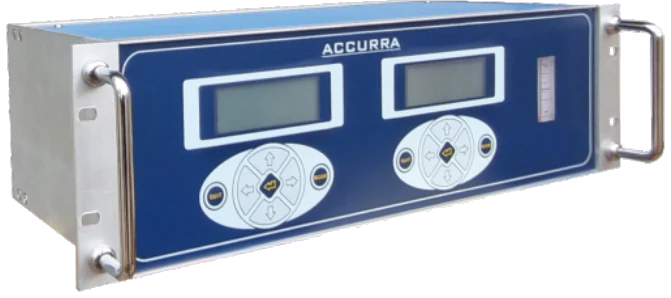
ACCURRA-S
Paramagnetic oxygen and NDIR CO2 purity, two channels in one enclosure.
View ACCURRA-S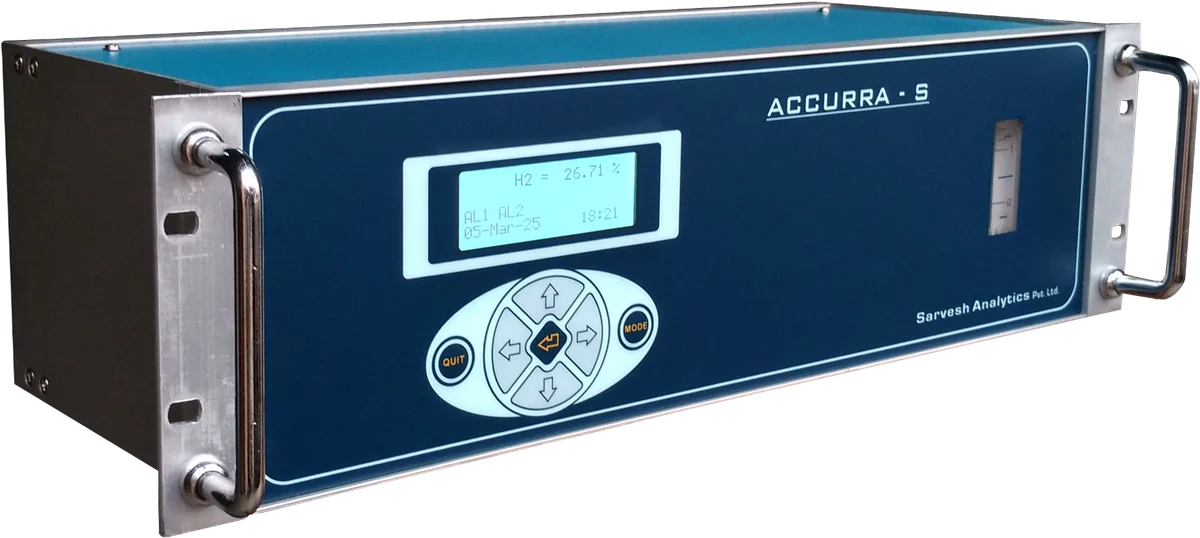
ACCURRA-TCD
Hydrogen in CO2, by review.
View ACCURRA-TCD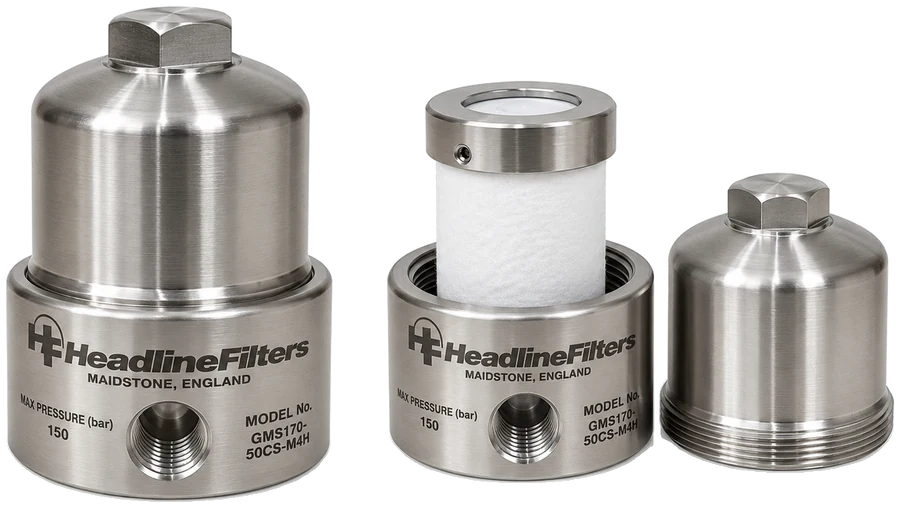

Coalescing filters and drains.
View the Headline rangeAsk for a price
Leave your details and an applications engineer in Pune, India, replies with questions or a proposal.
Frequently asked questions
Why paramagnetic rather than electrochemical oxygen in CO2?
A paramagnetic analyser has no consumable sensor for the CO2 background to wear out, and it responds in under 5 seconds.
What is the smallest oxygen range?
Model 3130 reads 0 to 100 % with a minimum range of 0 to 5 %, resolution 0.01 %.
Can CO2 purity and oxygen share one analyser?
Yes, as two channels in one ACCURRA-S enclosure.
Does the 3130 need a sample pump?
It has no internal pump; the sample arrives under its own pressure or we add a pump.