
ACCURRA-TCD measures hydrogen in nitrogen in ammonia synthesis gas, purge gas and hydrogen recovery streams by thermal conductivity, 0 to 100 % with no reference gas. Methane and argon shift the reading, so the inert range is reviewed first; ACCURRA-Hz covers analysers in Zone 1.
The measurement and why it matters
Hydrogen and nitrogen differ widely in thermal conductivity, so a mixture of the two gives a strong signal on a thermal conductivity cell over the whole range. That makes thermal conductivity the natural method for the ratio in synthesis gas: no consumable sensor, no reference gas flow, and a reading in seconds. ACCURRA-TCD reads hydrogen in nitrogen from 0 to 100 %, and its narrow 97 to 100 % range suits the hydrogen recovery product.
Synthesis gas is not a perfect pair. Methane from the methanator and argon from the process air are inert in the converter and build up in the loop until the purge gas takes them out. Both have a thermal conductivity different from nitrogen's, so they move the hydrogen reading. At low inert levels the error is small; on purge gas, where the inerts are highest, it needs to be worked out. We do that from your composition before we quote.
Purge gas usually goes to a hydrogen recovery unit, and the recovered hydrogen goes back into the loop. Its purity is a cleaner two-gas case, hydrogen with a little nitrogen, and the 97 to 100 % range resolves it well. Nitrogen in hydrogen can also be read directly over 0 to 100 %, 0 to 5 % or 97 to 100 %.
Most of these sample points are in a classified area. ACCURRA-TCD is a safe-area instrument in a 19 inch rack, with the sample piped to an analyser room or shelter. Where the analyser has to stand near the process, ACCURRA-Hz houses hydrogen measurement by thermal conductivity in an enclosure certified for Gas Group IIC, Zone 1 and 2, T6.
Models and ranges
| Model | Measures | Range | Sensor and notes |
|---|---|---|---|
| ACCURRA-TCD | Hydrogen in nitrogen, make-up and loop gas | 0 to 100 % | Platinum thermal conductivity, no reference gas |
| ACCURRA-TCD | Hydrogen recovery product purity | 97 to 100 % hydrogen in nitrogen | Narrow range for purity |
| ACCURRA-TCD | Nitrogen in hydrogen | 0 to 100 %, 0 to 5 % or 97 to 100 % | Binary mixture |
| ACCURRA-Hz TCD housing | Hydrogen, hazardous area | 0 to 100 % in nitrogen | Gas Group IIC, Zone 1 and 2, T6 |
Process notes
Make-up gas and the converter
The make-up gas leaving the synthesis gas compressor sets the ratio the loop runs at. A continuous hydrogen reading here lets the operators trim the process air on the secondary reformer and keep the ratio steady through load changes.
ACCURRA-TCD has a T90 below 10 seconds at 0.6 LPM, repeatability below 1 % of full scale and drift below 1 % of full scale per week, with dual 4–20 mA ranges, alarms and Modbus RTU for the DCS.
Purge gas and hydrogen recovery
Purge gas carries the highest share of methane and argon, and some ammonia. Before a hydrogen reading here is used for control, we work out the effect of the inerts on it from your composition, and say whether it is acceptable or another method is needed.
The recovered hydrogen is close to a clean pair, and its purity on the 97 to 100 % range shows when the recovery unit needs attention.
Ammonia in the sample
Loop and purge samples can carry ammonia. It must be removed or kept in the gas phase before the analyser, because it condenses with water and attacks wetted parts. Tell us the ammonia level and we design the sample path around it.
Sampling and installation
- Provide about 0.6 LPM of sample at a regulated 2 to 10 psig. The sample should reach ACCURRA-TCD at 5 to 45 °C, with its dew point at least 5 °C below the lowest ambient.
- Reduce pressure at the tapping point and keep the high-pressure section of the line short.
- Fit a Headline coalescing filter and a liquid drain ahead of the analyser to keep liquid and particulates off the cell.
- Vent the analyser outlet to a safe place agreed with the plant, in the same way as the rest of the synthesis gas system.
- The reading assumes a two-gas mixture. Send the range of methane, argon and ammonia so the error can be worked out.
Send us your process data
The same pre-order design inputs our engineers design from, online. Fill in what you know, leave the rest. Your draft saves as you go, and you can print or send it when ready.
What matters most for this application
- The sample point: make-up, loop, purge or recovered hydrogen
- The full composition with typical and extreme values, including methane, argon and ammonia
- Pressure and temperature at the tapping point, and the area classification where the analyser will stand
- The signals you need: 4–20 mA, alarms or Modbus RTU
Recommended Sarvesh products
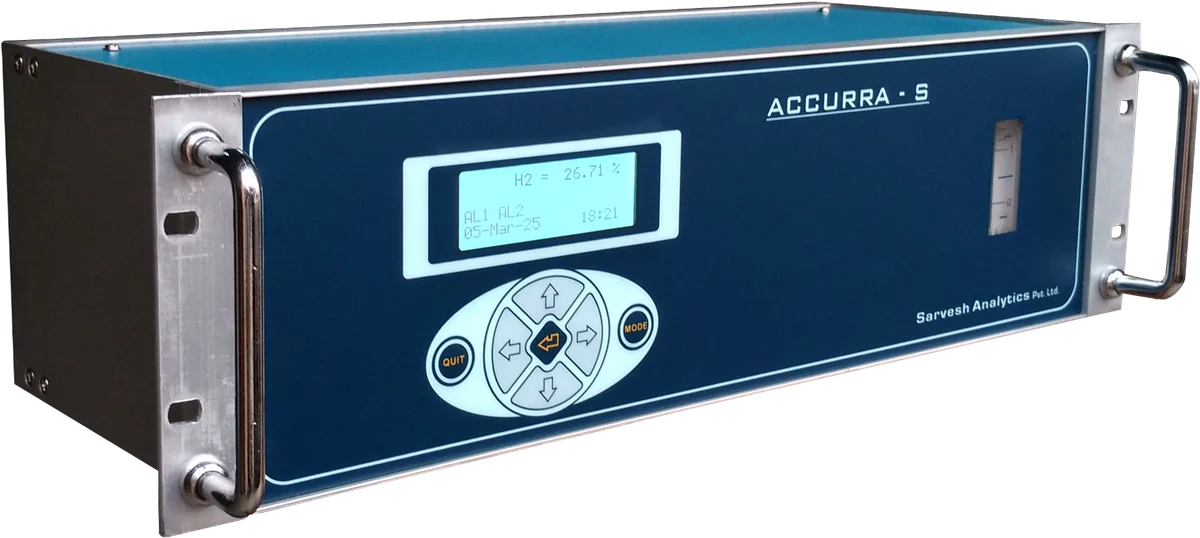
ACCURRA-TCD
Hydrogen in nitrogen and nitrogen in hydrogen, with no reference gas.
View ACCURRA-TCD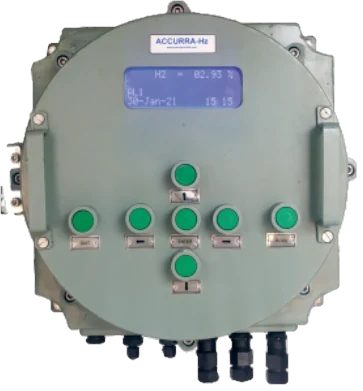
ACCURRA-Hz
Hydrogen measurement where the analyser stands in Zone 1 or 2.
View ACCURRA-Hz
Engineered analyser panels
Analyser panels with pressure reduction, knock-out and filtration.
View Engineered analyser panels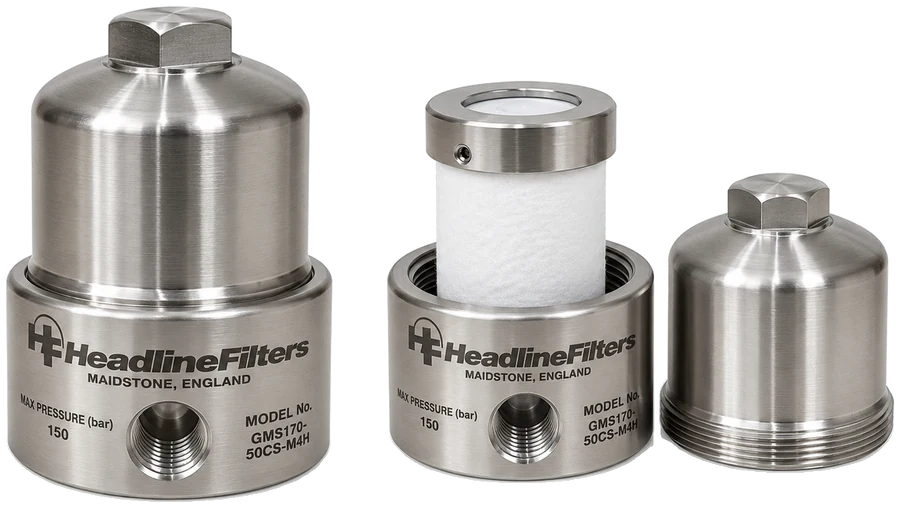

Coalescing filters and drains ahead of the cell.
View the Headline rangeAsk for a price
Leave your details and an applications engineer in Pune, India, replies with questions or a proposal.
Frequently asked questions
Why thermal conductivity for ammonia synthesis gas?
Hydrogen and nitrogen differ widely in thermal conductivity, so the signal is strong over the whole range, and ACCURRA-TCD needs no reference gas and has no consumable sensor.
How much do methane and argon affect the reading?
It depends on how much of each is present. Send the range of both and we work out the error before quoting.
How fast does the reading respond?
T90 is below 10 seconds at a sample flow of 0.6 LPM.
Can the analyser stand in a Zone 1 area?
ACCURRA-TCD is a safe-area instrument. ACCURRA-Hz houses hydrogen by thermal conductivity and is certified for Gas Group IIC, Zone 1 and 2, T6.
Can you measure the purity of recovered hydrogen?
Yes, on the 97 to 100 % range of hydrogen in nitrogen.