
Cross-sensitivity is a sensor's response to gases other than its target. Hydrogen raises electrochemical CO readings, water vapour affects infrared and thermal conductivity cells, NO disturbs paramagnetic oxygen, and unburnt fuel lowers zirconia readings. Filters, scrubbers, a dried sample, a different principle or a compensation channel remove or correct the interference.
- Define cross-sensitivity and interference
- List the common interferences for each technology
- Choose a remedy for each: scrub, dry, compensate or change principle
What it is
A sensor responds to a physical or chemical property. If another gas shares that property, even weakly, it adds to the signal. The effect is usually stated on a datasheet as a percent: for example, 100 ppm of an interferent reads as 2 ppm of the target gas.
Common interferences by technology
| Technology | Typical interferences | What happens |
|---|---|---|
| Electrochemical CO | Hydrogen; other reducing gases | CO reads high when hydrogen is present |
| Electrochemical O2 | Acid gases and high CO2 can shorten life in some cells | Cell life or response affected |
| Paramagnetic O2 | Other paramagnetic gases such as NO and NO2 | Oxygen reads slightly high |
| Zirconia O2 | Combustibles such as CO and H2 | Burn at the hot cell, so oxygen reads low |
| NDIR | Water vapour and overlapping absorbers | Reading shifts; condensation in the cell |
| Thermal conductivity | A third gas, and water vapour | Reading shifts as if composition changed |
| Ceramic moisture | Some contaminants that coat the sensor | Slow response, drift |
These are general patterns. The datasheet for your model lists the figures that apply.
Remedies
- Remove it. An inbuilt scrubber or filter takes out the interferent before the sensor, as in the INFINITY-Tx transmitter. A cooler removes water.
- Compensate. Measure the interferent with a second channel and subtract its effect.
- Dry the sample. For NDIR and thermal conductivity cells, a cooled sample at a known dew point removes the water variable.
- Change principle. If CO must be measured in hydrogen, choose a method that does not respond to hydrogen.
- Stay within the stated sample. Many problems start when the process composition drifts outside what the analyser was specified for.
Tell the supplier every gas that can appear in the sample, including trace and upset conditions, not only the gas you want to measure.
Why this belongs in the specification
The application data sheet asks for background gases and their typical composition for this reason. A specification that names only the target gas invites an analyser that works on the bench and fails on the plant: How to specify a gas analyser: A practical checklist.
- Cross-sensitivity is a sensor's response to non-target gases.
- Each technology has typical interferences; hydrogen on electrochemical CO, combustibles on zirconia, water on NDIR.
- Remedies: scrub, dry, compensate or change principle.
- Always list every gas that may appear in the sample.
Check your understanding
Answer in your head or on paper first, then open the answer. Recalling an answer teaches more than rereading.
What effect does hydrogen have on an electrochemical CO sensor?
It reads as CO, so the CO reading is too high.
A zirconia analyser reads 0.3 % oxygen while CO is high. What may be happening?
Combustibles are burning at the hot cell and consuming oxygen, so the true oxygen may be higher than shown.
Name two ways to deal with water vapour in an NDIR sample.
Cool and dry the sample to a known dew point, or compensate for water with a channel that measures it.
Key terms
Frequently asked questions
What is cross-sensitivity?
A sensor's response to gases other than its target.
How do I find a sensor's interferences?
In the datasheet or the manufacturer's cross-sensitivity table; ask the supplier about every gas in your sample.
Can software correct cross-sensitivity?
Only if the interfering gas is measured too. Otherwise the instrument cannot tell the two effects apart.
Is interference the same as drift?
No. Drift changes with time at a constant gas. Interference changes with the presence of another gas.
Related products
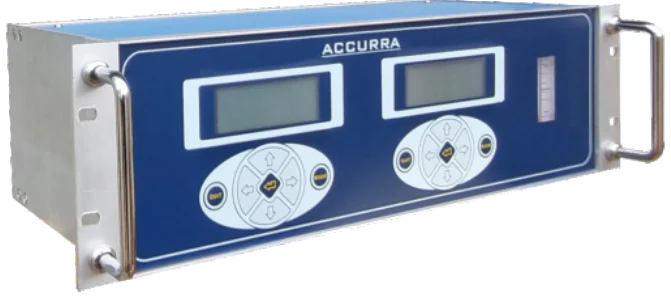
ACCURRA-S
Online analyser for trace, percent and purity O2, CO, CO2, CH4 and dew point; can measure two gases from one sample.
View ACCURRA-S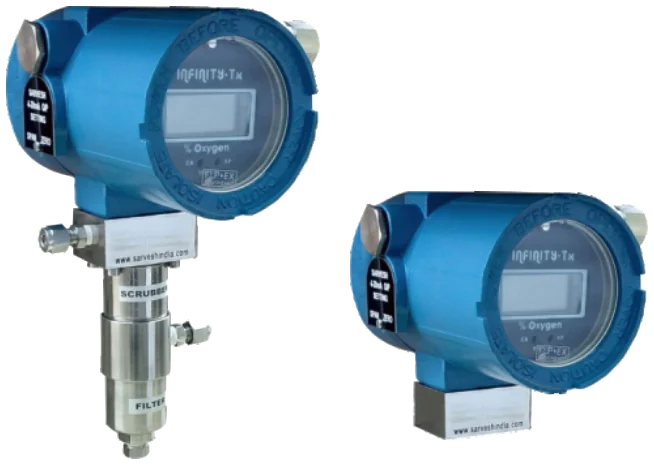
INFINITY-Tx
Loop-powered two-wire transmitter for percent O2 and trace CO in hazardous areas.
View INFINITY-Tx