
Each gas analysis technology works only on gases with the right physical property: electrochemical and paramagnetic sensors for oxygen, zirconia for hot oxygen, NDIR for gases that absorb infrared (CO, CO2, methane), thermal conductivity for binary mixtures such as hydrogen in nitrogen, ceramic or chilled-mirror sensors for moisture. Chromatographs separate complex mixtures but are slower.
- Name the physical property each technology uses
- Say which gases each technology can and cannot measure
- Choose a candidate technology for a given gas and range
- Know which technologies are outside the Sarvesh range
The map
| Technology | Property used | Measures | Main limits |
|---|---|---|---|
| Electrochemical cell | Current from a reaction at an electrode | O2 (ppm to %), CO, some toxic gases | Consumed over time; cross-sensitivity; slow after air exposure at trace level |
| Paramagnetic | Oxygen is drawn into a magnetic field | O2, percent and purity | Responds to other paramagnetic gases such as NO; needs a clean sample |
| Zirconia (ceramic) | Voltage across a heated oxygen-ion conductor | O2 in hot flue gas, in situ | Unburnt fuel reads low; not for cold clean gas |
| NDIR | Absorption of infrared light | CO, CO2, CH4 and other absorbing gases | Cannot see O2, H2, N2; water vapour interferes |
| Thermal conductivity (TCD) | How fast the gas carries heat away from a heated element | Binary mixtures: H2, He, Ar, N2, N2O in a known background | A third gas of different conductivity shifts the reading |
| Ceramic or capacitive moisture sensor | Electrical change as water adsorbs | Dew point or trace moisture | Slow in dry gas; sticky; needs clean dry stainless lines |
| Chilled mirror | A mirror cooled until dew forms, detected optically | Dew point (a reference method) | Bulky, needs a skilled operator |
| TDLAS (tunable diode laser) | Laser absorption on one narrow gas line | Selected gases, including O2, H2O, CH4 | Costly; selective to one gas; not in the Sarvesh range |
| Gas chromatograph | Separation in a column, then a detector | Many components in one sample | Slow cycle, complex, needs carrier gas; not in the Sarvesh range |
The Sarvesh range uses electrochemical, paramagnetic, zirconia, NDIR, thermal conductivity and ceramic moisture sensing. The other methods are listed here so that you can recognise when a different tool is right for the job.
Choosing by gas
| Target gas | Usual first choice | Why |
|---|---|---|
| Oxygen, trace | Electrochemical | Sensitive to ppm, compact |
| Oxygen, percent | Electrochemical or paramagnetic | Range and life decide; see the oxygen lessons |
| Oxygen, purity above 95 % | Paramagnetic or electrochemical with compensation | Pressure effect matters |
| Oxygen, hot flue gas | Zirconia | In situ, no sample line |
| CO, CO2, methane | NDIR | Strong infrared absorbers |
| Hydrogen, helium, argon in a binary mix | Thermal conductivity | Large conductivity contrast |
| Moisture, dry gas | Ceramic sensor | Wide dew point range |
| Complex hydrocarbon mixtures | Gas chromatograph | Separates components |
Three questions to narrow the choice
- What property does the target gas have that the others do not? Oxygen is paramagnetic; CO2 absorbs infrared; hydrogen conducts heat; none of these is shared by nitrogen.
- What else is in the sample? Interfering gases, water, dust and tars decide which sensor survives: Cross-Sensitivity and interference in gas analysers.
- Where is the measurement made? In the duct, or on a conditioned sample outside it: Extractive vs In-Situ gas analysis.
What to read next
Each principle has its own lesson: Electrochemical vs paramagnetic oxygen sensors, How a zirconia oxygen analyser works, What is an NDIR gas analyser, How thermal conductivity gas analysers (TCD) work, Moisture measurement methods compared for dry gas.
- Match the target gas's physical property to a sensor that can sense it.
- Oxygen: electrochemical, paramagnetic or zirconia. CO, CO2, CH4: NDIR. Binary H2, He, Ar: thermal conductivity. Moisture: ceramic or chilled mirror.
- What else is in the sample often decides the choice more than the target gas.
- Some methods, such as TDLAS and chromatography, fall outside the Sarvesh range.
Check your understanding
Answer in your head or on paper first, then open the answer. Recalling an answer teaches more than rereading.
Why can NDIR not measure nitrogen?
Nitrogen molecules do not absorb infrared light, so there is no absorption signal.
Which technology suits hydrogen in nitrogen, and why?
Thermal conductivity. Hydrogen conducts heat about seven times better than nitrogen, so a binary mixture changes the signal strongly.
A sample contains CO2 and methane and you need both. Which technology?
NDIR, with a detector band for each gas.
Key terms
- NDIR
- Electrochemical cell
- Paramagnetic sensor
- Zirconia sensor
- TCD (thermal conductivity detector)
- Gas chromatograph
- TDLAS
Frequently asked questions
Which gas sensor is the most accurate?
It depends on the gas. Each technology is best for the gases it was built for; the right match matters more than the technology's reputation.
Can one sensor measure all gases?
No. Each uses a physical property that only some gases have.
What is the difference between a sensor and an analyser?
The sensor is the element that responds to the gas. The analyser is the whole instrument with electronics, display and outputs.
Does Sarvesh make chromatographs or laser analysers?
No. The range covers electrochemical, paramagnetic, zirconia, NDIR, thermal conductivity and ceramic moisture sensing.
Related products
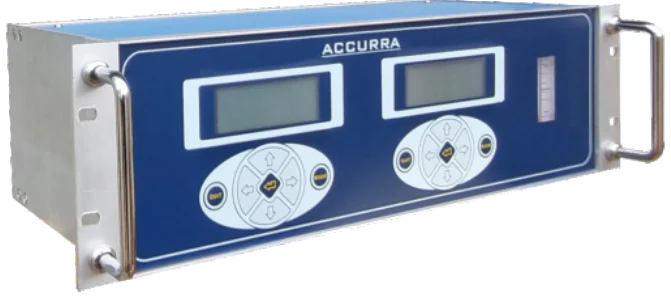
ACCURRA-S
Online analyser for trace, percent and purity O2, CO, CO2, CH4 and dew point; can measure two gases from one sample.
View ACCURRA-SACCURRA-TCD
Thermal conductivity analyser for binary mixtures of H2, He, Ar, N2 and others, with no reference gas.
View ACCURRA-TCD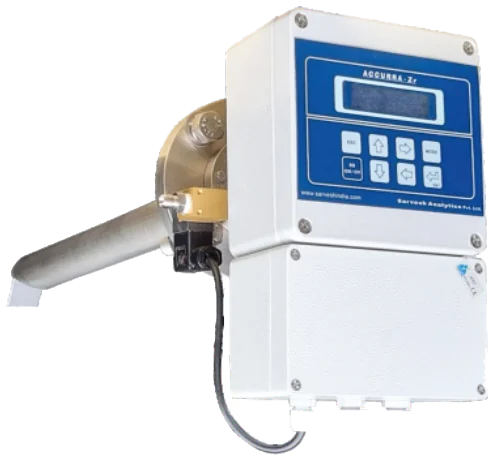
ACCURRA-Zr
Zirconia percent O2 analyser for furnaces and boilers, single-point air calibration, options to 1400 C.
View ACCURRA-Zr