
Choose by range. Trace oxygen (0 to 1000 ppm) uses ACCURRA-S 3015. Percent oxygen (0 to 25 % or 0 to 100 %) uses 3030 or 3130. Purity above 95 % uses 3090 or 3190 with pressure compensation. Hot flue gas uses ACCURRA-Zr, and classified areas use ACCURRA-Hz or INFINITY-Tx.
- Pick the oxygen analyser family from the range you need
- List the sample questions that change the choice
- Know when to involve an engineer
Step 1: the range
- Trace, ppm: nitrogen and argon purity, blanketing, furnace atmospheres. ACCURRA-S 3015, 0 to 1000 ppm, minimum range 0 to 100 ppm
- Percent, 0 to 25 % or 0 to 100 %: process monitoring, fermenters, inerting, PSA oxygen. ACCURRA-S 3030 or 3130
- Purity, 95 to 100 %: air separation, medical and industrial oxygen. ACCURRA-S 3090 or 3190, pressure and temperature compensated
- Flue gas, percent: boilers and furnaces. ACCURRA-Zr in situ
Step 2: the sample
ACCURRA-S expects a dry, non-corrosive, non-toxic, non-flammable sample at 2 to 10 psig and about 1 LPM. Hot, wet or dusty gas needs a probe and conditioner. Flammable or classified locations need ACCURRA-Hz or INFINITY-Tx. Liquid or cryogenic samples need a vaporiser.
Step 3: the options
Trace oxygen model 3015 has a sensor bypass valve, but no auto-calibration or internal pump. Models 3130 and 3190 are supplied without an internal sample pump, which suits pressurised lines. Dual-channel versions pair oxygen with dew point, CO or CO2.
Step 4: confirm with an engineer
Send us the gas, background, range, pressure, temperature, dew point, dust and area classification. Our pre-order input sheet asks for the same items. You can also use the analyser selector to get an indicative recommendation and send it to us with one click.
- Range comes first: ppm, percent or purity.
- Hot flue gas points to zirconia; classified areas point to hazardous-area units.
- Pressure compensation matters for purity above 95 %.
- Confirm the sample before you order.
Check your understanding
Answer in your head or on paper first, then open the answer. Recalling an answer teaches more than rereading.
Which oxygen analyser family suits 0 to 500 ppm in nitrogen?
The trace oxygen model, ACCURRA-S 3015 (0 to 1000 ppm, minimum range 0 to 100 ppm).
Which suits 99 % cryogenic oxygen?
A purity model with ambient pressure and temperature compensation, ACCURRA-S 3090 or 3190.
What information changes the choice besides range?
Sample temperature and pressure, dust, area classification and the output you need.
Key terms
Frequently asked questions
Which analyser for 99.99 % nitrogen?
Trace model 3015. Residual oxygen up to 100 ppm is the measurement.
Which for PSA oxygen at 93 %?
The percentage models 3030 or 3130, which cover 0 to 100 %. The purity models start at 95 %.
Which for cryogenic oxygen at 99 %?
Purity model 3090 or 3190, with ambient pressure and temperature compensation.
Which for boiler flue gas?
ACCURRA-Zr, an in-situ zirconia analyser.
Related products
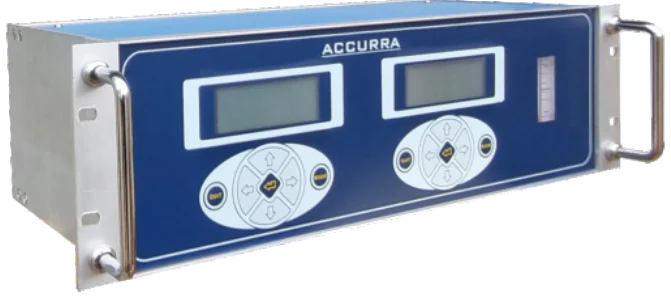
ACCURRA-S
Online analyser for trace, percent and purity O2, CO, CO2, CH4 and dew point; can measure two gases from one sample.
View ACCURRA-SACCURRA-S 3090
Oxygen purity analyser for 95 to 100 % O2 with ambient pressure and temperature compensation.
View ACCURRA-S 3090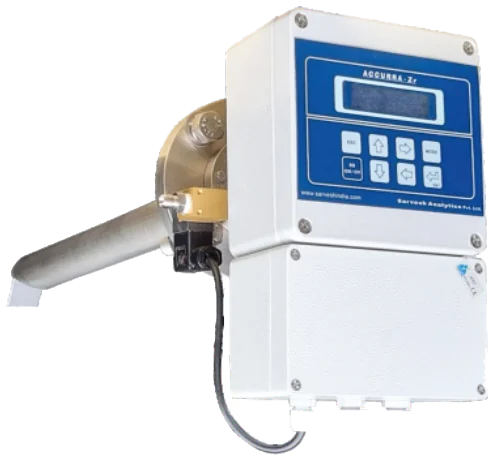
ACCURRA-Zr
Zirconia percent O2 analyser for furnaces and boilers, single-point air calibration, options to 1400 C.
View ACCURRA-ZrWhere this applies
- Oxygen purity in air separation plants
- Nitrogen purity and trace oxygen
- Medical oxygen plant purity monitoring
- ACCURRA-S oxygen analysers