
Electrochemical oxygen cells suit ppm and percent oxygen, are compact, and are consumed over time. Paramagnetic sensors suit percent and purity measurement and have no consumed part. Zirconia suits hot flue gas. The right choice follows range, sample and required life.
- Compare electrochemical, paramagnetic and zirconia oxygen sensors on range, life and sample
- Pick a sensor for a given oxygen range
- Explain why an electrochemical cell is a consumable
Electrochemical cells
An electrochemical oxygen cell is a small fuel cell. Oxygen diffuses through a membrane and is reduced at an electrode, generating a current proportional to the oxygen concentration. Cells are sensitive, compact and economical, and they cover ppm to percent. The reaction consumes the cell, so it has a finite life. In the ACCURRA-S catalogue, the trace oxygen model 3015 lists a sensor life above 18 months and the percentage model 3030 above 2 years.
Paramagnetic sensors
Oxygen is unusual among common gases in being paramagnetic, attracted into a magnetic field. A paramagnetic sensor measures that effect, for example through a force on a test body or a thermomagnetic flow. Nothing is consumed, so there is no wearing sensor to replace, and the response is related to the volumetric oxygen content. It is well suited to percent measurement and to purity near 100 %. The effect depends on temperature, so the cell is temperature controlled or compensated. ACCURRA-S 3130 and 3190 use paramagnetic sensors.
Inside the two cells
An electrochemical oxygen cell is a sealed, self-powered cell. Oxygen diffuses through a membrane to the cathode, where it is reduced. The anode is oxidised to balance it, and a current flows that is proportional to the oxygen arriving. Because the anode is used up, the cell has a life, and because the current depends on diffusion through the membrane, the cell's output depends on temperature and on the oxygen partial pressure at the membrane.
In the common dumbbell design of a paramagnetic cell, two small nitrogen-filled glass spheres hang on a taut wire in a non-uniform magnetic field. Oxygen is drawn into the strongest part of the field and pushes the spheres out, turning the dumbbell. A light beam on a small mirror measures the turn, and a feedback current holds the dumbbell in place; that current is the signal. Nothing is consumed.
Zirconia (ceramic) cells
Zirconia cells conduct oxygen ions at high temperature and are the standard for flue gas, in situ. They are covered in our article on zirconia analysers. Some analysers also use a ceramic sensor for oxygen purity, which responds to oxygen partial pressure and therefore needs pressure compensation.
Side by side
- Electrochemical: ppm to percent, consumed cell, economical, needs a steady flow and gas without interfering gases such as acid gases
- Paramagnetic: percent to purity, no consumed sensor, sensitive to temperature, not for samples with strongly paramagnetic interferents
- Zirconia: percent in hot flue gas, in situ, air calibration, reads low in the presence of combustibles
Worked examples: life, temperature and response
Cell life over ten years. The ACCURRA-S datasheet gives an electrochemical sensor life above 18 months for 3015 and above 2 years for 3030 and 3090. Over ten years, plan for up to six cells on 3015 and up to five on 3030 or 3090, and stock one spare. 3130 and 3190 are paramagnetic and have no consumable sensor.
Temperature. Paramagnetic susceptibility falls in inverse proportion to absolute temperature (Curie's law). Between 20 and 30 C it falls by 3.3 % (293 / 303 = 0.967). On a purity reading that is three percentage points, which is why the cell is temperature controlled or compensated.
Response. The datasheet T90 is below 5 seconds for 3130 and 3190, below 20 seconds for 3030 and 3090 and below 30 seconds for 3015, all at 1 LPM. A paramagnetic cell suits fast control and quick release checks.
How to choose
Trace oxygen in nitrogen, argon or helium needs an electrochemical cell. Percent oxygen in a process can use either, and paramagnetic is preferred where long life without a consumed cell matters. Purity above 95 % needs pressure and temperature compensation, whichever sensor is used. If the sample is hot flue gas, use zirconia.
Interferences to check
- Electrochemical cells can be poisoned or biased by acid gases and some reactive species, and are damaged by liquid water. The ACCURRA-S sample limits (non-corrosive, dry, oil-free) protect them.
- Paramagnetic cells respond to any paramagnetic gas. Nitric oxide and nitrogen dioxide are paramagnetic and read partly as oxygen; ask for the correction if they are present. Background gases also have a small diamagnetic effect, so the cell is calibrated in a background like the sample.
- Both respond to oxygen partial pressure in practice, so the purity models 3090 (electrochemical) and 3190 (paramagnetic) carry ambient pressure and temperature compensation and state an error below 0.5 %.
- Trace oxygen below about 100 ppm is electrochemical territory: a paramagnetic cell does not resolve ppm. 3015 has a minimum range of 0 to 100 ppm and reads to 0.1 ppm.
IEC 61207-3 sets out how paramagnetic oxygen analyser performance is to be stated, which is useful when comparing offers.
Choosing by application
| Application | Typical range | Sensor | ACCURRA-S model |
|---|---|---|---|
| Nitrogen generator product | 0 to 1000 ppm or 0 to 1 % | Electrochemical | 3015 for ppm, 3030 for percent |
| Oxygen PSA product | 90 to 95 % | Either | 3130 or 3090 |
| Cryogenic oxygen purity | 99.5 to 99.8 % | Either, compensated | 3090 or 3190 |
| Inerting of a reactor | 0 to 25 % | Either | 3030, or 3130 where long life without cell changes matters |
| Boiler flue gas | 0 to 21 %, hot and dusty | Zirconia, in situ | ACCURRA-Zr, not ACCURRA-S |
Where the sample is in a Zone 1 or 2 area, the same oxygen models are available in the ACCURRA-Hz flameproof enclosure: Hazardous area gas analysers explained.
- Electrochemical cells are compact and good for ppm to percent, but are used up over time.
- Paramagnetic sensors have no consumed part and suit percent and purity.
- Zirconia suits hot flue gas.
- Range, sample and required life decide the choice.
Check your understanding
Answer in your head or on paper first, then open the answer. Recalling an answer teaches more than rereading.
Which oxygen sensor has no consumed part?
The paramagnetic sensor. An electrochemical cell is consumed by the reaction that produces its signal.
You need 0 to 100 ppm oxygen in nitrogen. Which sensor type, and why?
Electrochemical, because it responds to trace oxygen and is compact. Paramagnetic sensors are not used for ppm levels.
Why not use zirconia on a cold, clean nitrogen line?
A zirconia cell needs to be heated and is made for in-situ combustion measurements. A cold clean line is better served by electrochemical or paramagnetic sensors.
Key terms
Frequently asked questions
Which sensor is best for ppm oxygen?
An electrochemical cell, such as ACCURRA-S 3015, which reads 0 to 1000 ppm with a minimum range of 0 to 100 ppm.
Which sensor has the longest life?
Paramagnetic sensors have no consumed element. Electrochemical cells wear out; the catalogue gives more than 18 months to 2 years depending on model.
Can a paramagnetic sensor measure trace oxygen?
Paramagnetic sensors are used for percent and purity measurement. Trace oxygen uses electrochemical cells.
Which sensor for oxygen purity?
Models 3090 and 3190, both with ambient pressure and temperature compensation. 3090 is electrochemical over 0 to 100 %; 3190 is paramagnetic over 95 to 100 %.
Related products
Where this applies
- Nitrogen purity and trace oxygen
- Oxygen purity in air separation plants
- Nitrogen blanketing and inerting
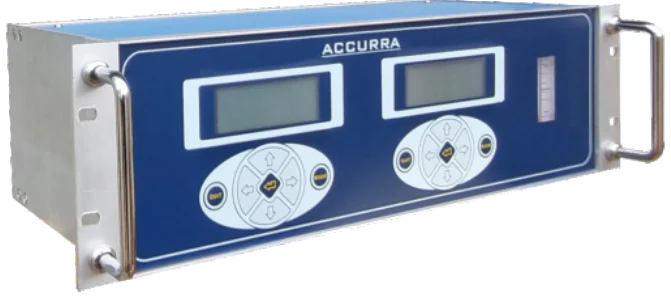
- ACCURRA-S oxygen analysers