
CPCB requires online continuous emission monitoring in 17 categories of highly polluting industry and in common treatment and incineration facilities. Its guidelines set the parameters, the measurement methods, automatic checks and real-time data transmission to the pollution control boards. Since 2024, CSIR-NPL certifies CEMS for India, and CPCB's 2025 notices tie acceptance to NPL's certificates. Check the current position with your State Pollution Control Board.
- Know which plants need online emission monitoring
- List what CPCB's guidelines ask of a CEMS
- Understand CSIR-NPL certification
- Ask the right questions of a CEMS supplier
Who must monitor
CPCB's directions of 2014 require online continuous emission and effluent monitoring in 17 categories of highly polluting industry: pulp and paper, distillery, sugar, tannery, power, iron and steel, cement, oil refinery, fertiliser, chlor-alkali, dyes and dye intermediates, pesticides, zinc, copper and aluminium smelting, petrochemicals and pharmaceuticals. Common effluent treatment plants and common biomedical and hazardous waste incinerators are covered too, and later notifications extended monitoring to other sources. The plant's consent conditions say which stacks and parameters apply to it.
What is measured
Parameters depend on the industry and are written into the consent: particulate matter, SO2, NOx, CO, and for some sources HCl, HF, NH3, Cl2, total organic carbon and mercury. Results are corrected to a reference oxygen or CO2 and to dry conditions, so the CEMS also measures the diluent gas, temperature, flow and moisture. See Emission correction to reference oxygen and Dry basis vs wet basis in gas measurement.
How it may be measured
| Method | What it does | Points from the guidelines |
|---|---|---|
| In situ (point or cross-duct) | Measures in the stack with no sample line | No sample conditioning; the instrument sits in the stack environment |
| Extractive, hot-wet | Keeps the sample hot so nothing condenses | Needs heated probe and line; suits soluble gases such as HCl and NH3 |
| Extractive, cold-dry | Cools the sample and removes the water | Reads on a dry basis; soluble gases can be lost with the condensate |
| Extractive, dilution | Dilutes the sample with clean air at the probe | No heated line, usable in hazardous areas; cannot measure O2, and dilution flow must be tightly controlled |
The general engineering behind each method is in Emission monitoring (CEMS) basics: what a system does and Extractive vs in-situ gas analysis.
Data and checks
- Real-time transmission of raw and validated data to the State Board's and CPCB's servers, directly from the system rather than through an intermediate PC.
- Remote access for the regulator, and an alarm to the server when configuration or calibration is changed.
- Automatic zero and span checks, with the calibration protocol the regulator publishes.
- Records that survive power failures and show every calibration and fault.
Certification: from TÜV and MCERTS to CSIR-NPL
The 2018 revision of CPCB's guidelines accepted instruments certified under an Indian scheme or by TÜV, MCERTS or USEPA. In August 2024 CSIR-NPL, India's national measurement institute, launched a certification scheme for CEMS, aligned with the European EN 15267 approach. CPCB's notice of 30 August 2025 names the certificates NPL issues: a Verification Certificate, a Product Conformity Certificate and a Provisional Letter of Confirmation. Reports from late 2025 describe directions accepting only NPL-certified systems for server connectivity in some regions, and CPCB revised its OCEMS calibration protocol in July 2025.
The position changed in 2024 and 2025 and is still moving. Before you buy, ask your State Pollution Control Board which certificates it accepts for your stack, and ask the supplier for the NPL certificate of the exact model.
Questions to ask a CEMS supplier
- Which NPL certificate does this exact model hold, for which parameters and ranges?
- Which measurement method does it use, and does it suit the moisture, dust and soluble gases in this stack?
- How does data reach the Board's server, and who maintains the connection?
- How are automatic zero and span checks done, and with which gases?
- Who services the system, and what does an annual maintenance contract cover? See gas analyser amc.
How this applies to us
Sarvesh makes the SGI-320 hot extractive system, i-Cons Peltier conditioners, SP-300 heated probes and supplies Headline emission filters. We make no claim of statutory approval or NPL certification. Integrators building certified systems use our sample handling; plants use our analysers for their own process and combustion monitoring. Send your consent conditions and we will say what our equipment meets.
Sources
- CPCB: Guidelines for Continuous Emission Monitoring Systems, 2017
- CPCB: first revised guidelines, August 2018 (copy published by TNPCB)
- Down To Earth: CSIR-NPL launches certification for continuous emission monitoring systems, 2024
- CPCB: OCEMS calibration protocol, July 2025 (MP copy)
- 17 categories of highly polluting industry and common facilities must monitor online.
- Parameters come from the consent; diluent, temperature, flow and moisture are measured too.
- Data goes in real time to the Boards' servers, with automatic zero and span checks.
- CSIR-NPL now certifies CEMS for India; confirm what your Board accepts before buying.
Check your understanding
Answer in your head or on paper first, then open the answer. Recalling an answer teaches more than rereading.
Which extractive method cannot measure oxygen?
Dilution extractive.
Who issues CEMS certificates in India since 2024?
CSIR-NPL, the national measurement institute.
Why does a CEMS measure oxygen or CO2 as well as pollutants?
To correct results to the reference diluent level the limits are written at.
Key terms
Frequently asked questions
Is NPL certification mandatory for CEMS in India?
CPCB's 2025 notices tie acceptance to NPL's certificates, and some regions accept only NPL-certified systems. Ask your State Pollution Control Board for the current rule for your stack.
Which industries must install online emission monitoring?
The 17 categories of highly polluting industry in CPCB's 2014 directions, common effluent treatment plants and common biomedical and hazardous waste incinerators, and other sources added by later notifications.
Can a cold-dry CEMS measure HCl or NH3?
These gases dissolve in condensate and can be lost in a cold-dry system; hot-wet extraction is usually used for them.
Does Sarvesh supply certified CEMS?
We make no statutory approval or NPL certification claim. We supply sample handling and analysers, and integrators use them in their systems.
Related products
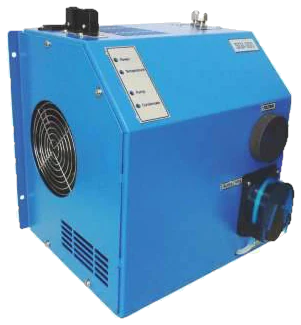
SGI-300 / SGI-320
Peltier sample cooler with integrated pump, filter and condensate detector; SGI-320 for emission monitoring.
View SGI-300 / SGI-320
i-Cons
Smart Peltier sample conditioner with diagnostics, auto blowback and Modbus, in a compact 19 inch cabinet.
View i-Cons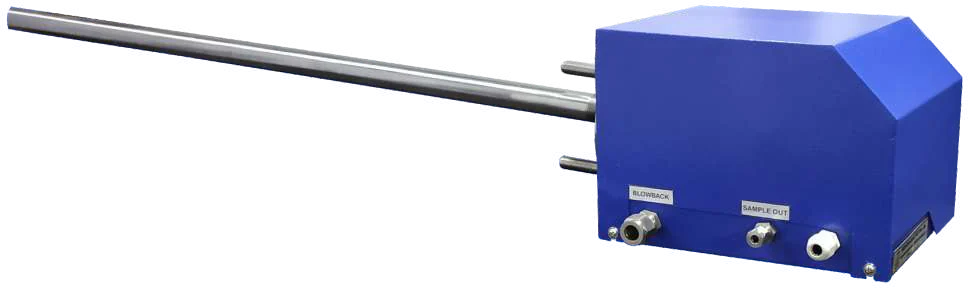
SP and SRP sample probes
Heated and non-heated probes with blowback, and retractable probes, in SS316, Inconel or ceramic.
View SP and SRP sample probes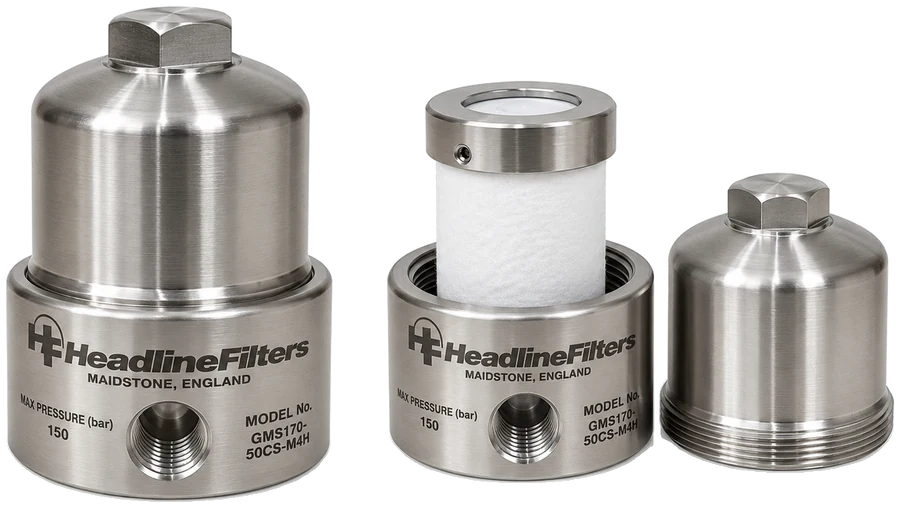

Particulate, coalescing and PTFE membrane filters from Headline Filters, for analyser protection.
View the Headline range