
A continuous emission monitoring system measures pollutants and oxygen in stack gas and reports concentrations corrected to a reference oxygen and dry basis. Most extractive systems take a sample through a heated probe and line to a conditioner and analysers; in-situ systems measure in the stack. Daily zero and span checks keep it accurate. We make no claim of statutory approval; your regulator defines what is accepted.
- List what a CEMS measures and the parts of an extractive system
- Explain reference oxygen and dry-basis reporting
- Compare extractive, hot-wet and in-situ approaches
- Understand why calibration checks are routine
What it measures
Common parameters: NO and NO2 (NOx), SO2, CO, CO2 and O2, together with flow, temperature and pressure, and dust (opacity or particulates, with other instruments). Oxygen is essential even if it is not itself a limit, because other concentrations are corrected to a reference oxygen: Emission correction to reference oxygen.
Extractive system parts
- Probe with a filter and blowback at the stack.
- Heated line keeping the sample above its dew point.
- Conditioner (a Peltier cooler or dilution) that dries the sample to a fixed dew point.
- Analysers for each gas.
- Calibration gas switching, for zero and span checks.
- Data system that corrects, averages and records.
SGI-320 combines the probe with auto-blowback, heated line, Peltier conditioner and analysers for NO, SO2, CO, CO2 and O2 as one system. It suits samples with SO2, NO and CO below 1000 ppm and excludes HCl, HF and H2S: What samples an analyser cannot take: know the limits.
Hot-wet, cold-dry and in-situ
| Approach | How | Good for | Watch |
|---|---|---|---|
| Cold-dry extractive | Cool and dry the sample, then analyse | Most gases, simple analysers | Soluble gases such as SO2 and NO2 can be lost in condensate |
| Hot-wet extractive | Keep the sample hot all the way to a heated analyser | Soluble and reactive gases | Heated everything; more cost and maintenance |
| In-situ | Measure in the stack | Oxygen, some gases, no sample line | Fewer gases; harder to check with test gas |
Dry basis and reference oxygen
Regulators state limits dry and at a reference oxygen. The system must therefore either measure moisture, or dry the sample to a known state, and measure oxygen, to restate each reading. See Dry basis vs wet basis in gas measurement and ppm to mg/Nm3: volume vs mass concentration.
Calibration, quality and approval
- Daily automatic zero and span checks with certified gas, and periodic full calibration, are normal practice: Auto-Calibration and validation checks for gas analysers.
- Quality assurance schemes require tests against a reference method.
- Regulatory approval requirements differ by country and sector. We make no claim of statutory approval for our systems; tell us your regulator's requirement and we will scope the system around it.
- A CEMS measures pollutants and oxygen, then corrects to dry basis and reference oxygen.
- Extractive systems use probe, heated line, conditioner and analysers; SGI-320 packages these.
- Hot-wet keeps soluble gases; cold-dry is simpler.
- Regular calibration checks are part of the system; approvals are the regulator's call.
Check your understanding
Answer in your head or on paper first, then open the answer. Recalling an answer teaches more than rereading.
Why does a CEMS measure oxygen even when oxygen is not a limit?
To correct other concentrations to the reference oxygen.
Why use a heated line?
To keep the sample above its dew point until the conditioner.
What gases does SGI-320 exclude?
HCl, HF and H2S.
Key terms
Frequently asked questions
What is a CEMS?
A continuous emission monitoring system that measures stack gases and reports them corrected to regulatory conditions.
Is SGI-320 approved by regulators?
We make no statutory approval claim; send your regulatory requirement.
What is the difference between hot-wet and cold-dry?
Hot-wet keeps the sample hot and wet to the analyser; cold-dry dries it first.
Do I need to measure oxygen?
Yes, normally, for reference oxygen correction.
Related products
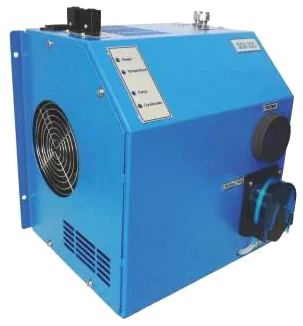
SGI-300 / SGI-320
Peltier sample cooler with integrated pump, filter and condensate detector; SGI-320 for emission monitoring.
View SGI-300 / SGI-320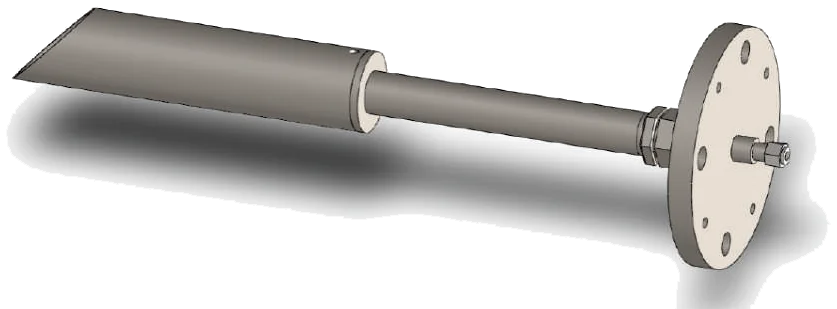
SP and SRP sample probes
Heated and non-heated probes with blowback, and retractable probes, in SS316, Inconel or ceramic.
View SP and SRP sample probes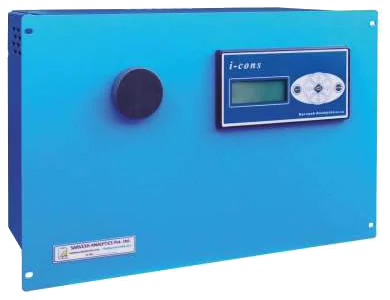
i-Cons
Smart Peltier sample conditioner with diagnostics, auto blowback and Modbus, in a compact 19 inch cabinet.
View i-Cons